
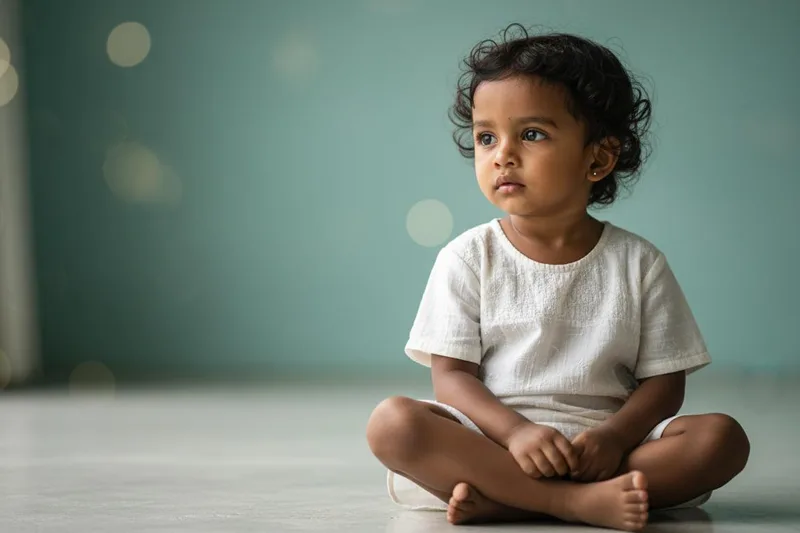
Moms and Dads, have you ever seen or heard of some young children who don't show any love or affection to their caregivers, even their own parents? It's as if they're alone in their own world. This is a very sad situation, and there is a medical explanation for it. Today we're talking about one such condition, called `Reactive Attachment Disorder (RAD).'
What is `Reactive Attachment Disorder (RAD)`?
Simply put, `Reactive Attachment Disorder (RAD)` is a condition in which a young child is unable to form healthy emotional bonds with their caregivers, such as their mother and father. The main reason for this is that the child did not receive proper emotional affection and security in his early years, or he was neglected or abused. Children with `RAD` have difficulty controlling their emotions. They also have great difficulty forming close relationships with others. Surprisingly, sometimes even though their caregivers are very loving and kind, these children may not even come close to them, and may seem afraid.
Who is more likely to develop `Reactive Attachment Disorder (RAD)`?
This condition is most common in young children who are physically or emotionally neglected or abused. However, it can also affect older children. Children who are at higher risk of developing RAD are:
- Multiple caregivers: Imagine a child being moved from one foster home to another, or from one foster family to another, and not being able to form a permanent bond with anyone.
- Separation after attachment: After the child has developed a good emotional bond with their primary caregiver, they must be separated from them.
- Traumatic losses in early life: If a child experiences multiple major losses or setbacks at a young age that they cannot bear.
- Parents who don't try to be emotionally close: Some parents or caregivers don't make any effort to be emotionally close to their child.
- Institutionalization: If you have to spend time in a place like an orphanage, without loving parental affection.
Sometimes, adoptive parents, not knowing much about the child's past, can find it difficult to bond with the new addition to the family. Especially if the child has some emotional instability. If you are a new parent, your child is showing signs of `RAD`, or you are having difficulty connecting with your child, be sure to talk to your child's doctor and get this checked out.
How common is `Reactive Attachment Disorder (RAD)`?
In fact, it is difficult to say exactly how common this is, as many cases go unreported. However, it is estimated that between 1% and 2% of children may have RAD. Children who are removed from their homes and placed in other settings, such as orphanages, are more likely to develop RAD. About half of these children have difficulty forming relationships with others over time.
What are the symptoms of `Reactive Attachment Disorder (RAD)`?
The symptoms of RAD can vary from child to child, but some of the common symptoms seen in infants and young children include:
- Not showing positive emotions: When with others, they do not show positive emotions like comfort, love, and happiness.
- Avoiding eye contact and physical contact: Not wanting to look someone in the eye or touch them.
- Showing fear and anger: Always getting angry, crying, and sad.
- Trying to control: They try to control things around them. This leads them to break the rules.
What is the difference between `Inhibited Reactive Attachment Disorder` and `Disinhibited Social Engagement Disorder (DSED)`?
Another condition related to `Inhibited Reactive Attachment Disorder (RAD)` is `Disinhibited Social Engagement Disorder (DSED).` But there are differences between the two. Let's see what they are.
`RAD` (Inhibited)
Children with `RAD` are aware of what is going on around them, but do not respond emotionally to it. They do not show or seek affection from caregivers or others. They prefer to be alone. Characteristics include:
- Avoiding caregivers.
- Staying away from social situations.
- Resists comforting things (e.g., cuddling).
`DSED` (Disinhibited - open to the outside, but unrestricted)
Children with `Disinhibited Social Engagement Disorder (DSED)` may be overly friendly with strangers. They may even follow them around without asking their parents. Often, these children act younger than their age and may seek affection from others in an insecure manner. The symptoms are:
- No selective connections (just like with anyone).
- Seeking attention from everyone.
- Behaving in a way that is not appropriate for one's age.
- Does not understand social boundaries.
For example, a child with `RAD` may withdraw from others at a party and sit in a corner by themselves. But a child with `DSED` will go up to and talk to everyone he doesn't know, perhaps even climb on their laps. Both have healthy attachment issues, but the way they express themselves is different.
What are the causes of `Reactive Attachment Disorder (RAD)`?
There is no single cause for children with RAD. Studies show that there are several reasons why a child may not be able to bond with their caregivers:
- Abuse or neglect: The child feels abandoned and alone. For example, if the parents fight often and do not check on the child, the child does not get the love and affection he or she needs.
- Food insecurity: When a child does not receive adequate food and drink, which is a basic need.
- Safety concerns: If the child feels afraid that they are in danger.
- Lack of cleanliness: The child stays in wet diapers for hours, if no one changes them.
- Frequent changes in caregivers: The child may not know who to trust.
- Inconsistent care: If a child's needs are met only occasionally, especially if the child does not know when to expect affection and comfort from caregivers.
Young children form healthy attachments when their basic needs are met consistently and consistently . This builds trust between the child and caregivers. If a child's physical and emotional needs are not met properly, they are at risk of developing `RAD`.
How is `Reactive Attachment Disorder (RAD)` diagnosed?
To diagnose RAD, your child's doctor will ask you about your child's medical history and the symptoms your child is showing. To better understand your child's symptoms, the doctor may ask questions like these:
- Has your child ever been abused or neglected?
- When did you first notice these symptoms?
- What features did you notice first?
- How is the relationship between you and your child?
- How is your living situation?
- Are there other caregivers involved with the child?
If your doctor suspects that you have RAD, they will likely refer you and your child to a pediatrician, psychologist, and psychiatrist to help diagnose your child's condition and recommend treatments that can help.
Is it possible to confuse `Reactive Attachment Disorder (RAD)` with `Autism Spectrum Disorder`?
Before concluding that a child has `RAD`, the doctor will conduct tests to rule out other causes, especially conditions such as `Autism Spectrum Disorder`. `Autism Spectrum Disorder` is a developmental condition that affects a person`s behavior and communication. On the surface, it can have similar symptoms to `RAD`. The most important difference is that abuse or neglect is not a cause of `Autism Spectrum Disorder`, but it can affect the diagnosis of `RAD`.
How is `Reactive Attachment Disorder (RAD)` treated?
Treatment for RAD focuses on building emotionally healthy relationships between children and their caregivers and/or restoring fearful, difficult relationships. These treatments strengthen the child emotionally, which in turn helps the child develop healthy relationships with others. Both children and caregivers benefit from these treatment plans. Treatment may include:
- Psychotherapy/Counseling: A mental health counselor works with the child and parents to help them develop healthy emotional skills and reduce problematic behaviors that interfere with bonding.
- Family Therapy: This involves primary caregivers and the child working together to help develop healthy ways of interacting.
- Social Skills Intervention: This therapy teaches the child how to behave appropriately with other children of the same age in normal social situations. Parents are also involved in this, helping the child use these learned skills outside of therapy.
- Special Education: If a child needs it, school-level programs can help children learn the skills they need to succeed academically and socially.
- Parenting Skills Classes: In these sessions, parents can learn more effective ways to manage their child's difficult behaviors.
Are there other complications that can be associated with `Reactive Attachment Disorder (RAD)`?
Yes, children with `RAD` are at increased risk of developing various complications during their childhood and adolescence due to physical, emotional, and social neglect and abuse. These complications may include:
- Delayed developmental milestones and reduced physical growth.
- Emotional problems, for example, depression, anxiety, post-traumatic stress disorder (PTSD), and anger management problems.
- Eating disorders.
- Substance use disorders.
- Problems at school (learning and/or behavioral problems).
- Problems in relationships (with peers, adults, then partners).
- Risky behaviors, for example engaging in sexual activity at a young age or frequently.
How soon will my child develop healthy relationships after treatment?
Without treatment, children with RAD can have symptoms well into adulthood. It can affect how they function in society. Treatment is a long-term process that provides emotional support to the child. It may even be needed throughout life. There is no set time frame for when your child will develop healthy relationships. However, treatment with the support of caregivers produces the best results.
How to prevent `Reactive Attachment Disorder (RAD)`?
The best way to prevent RAD is to help children develop healthy relationships with their parents and/or other primary caregivers. Healthy relationships are formed when caregivers do the following:
- Promoting family bonds through stable and secure relationships.
- Making children feel loved and accepted.
- Supporting children at different stages of their development.
- Always meet the child's basic needs.
How can I help my child build healthy relationships?
As a caregiver, you can help your child develop healthy attachments by:
- Setting boundaries: A consistent environment is good for all children. Therefore, setting boundaries is very important. With reasonable limits and appropriate, non-physical discipline, children understand what is expected of them and what will happen if they break the rules. This reduces children's fears and encourages them to behave appropriately.
- Stay calm when your child misbehaves: When your child misbehaves, stay calm; don't react if you get angry. Discipline your child according to the rules you have established in advance and that your child knows. Once your child has calmed down and is ready for a positive relationship, show love and kindness. This shows your child that you are there for them, even in difficult times.
- Show consistent love and attention: Spend time alone with your child. Talk to him, sing to him, play with him. Hold him, cuddle him, or do other things that show him love and affection from a caregiver. However, remember that some children may be less open to this kind of affection than others. Withholding love and affection is never an acceptable form of punishment.
What should I expect if I have a child with `Reactive Attachment Disorder (RAD)`?
Many children who receive treatment for RAD develop stable, healthy relationships with their primary caregivers and other people in their lives. Children who do not receive treatment are at risk for ongoing emotional problems. Fortunately, it is never too late to seek treatment for developmental and mental health conditions, including RAD. It is important to remember these things:
- Many children adopted from orphanages live very healthy and well-adjusted lives. Not every adopted child develops `RAD`.
- Children who have experienced severe trauma in the past may have other risk factors for mental health and behavioral challenges. For example, exposure to drugs or alcohol during pregnancy, or a family history of emotional disorders, can contribute to RAD.
How long has `Reactive Attachment Disorder (RAD)` been around?
Reactive Attachment Disorder (RAD) is a lifelong condition. However, treatment and support can help a child develop healthy relationships throughout their life, and can improve their emotional and social well-being.
When should I see a doctor?
If you notice that your child is having difficulty forming normal relationships, or if you see any symptoms of `Reactive Attachment Disorder (RAD)` in your child, see your child's doctor immediately for an evaluation or referral to a specialist. Early diagnosis and treatment can help children with this condition achieve better outcomes.
What questions should I ask my doctor?
- Should I refer my child to counseling?
- What is causing my child to show symptoms of `Reactive Attachment Disorder (RAD)`?
- Can you refer me to a specialist or support group who works with children and families with this diagnosis?
- Will my child's symptoms change as they get older? Are there any things I should be especially aware of?
It's important to bond with your child and treat them in a way that makes them feel loved. If your child isn't developing a comfortable emotional bond with you or their primary caregiver, see your primary care provider. Seeking advice or treatment doesn't mean you're a bad parent. Instead, it opens the door to building a strong, healthy, lifelong relationship with your child.
The most important things to remember (Take-Home Message)
Reactive Attachment Disorder (RAD) is not something to be discouraged about. With early detection, proper treatment, and a loving, stable environment, children can live happy, healthy lives. Remember:
- Every child is different: Not every child responds to treatment in the same way. Be patient and understanding.
- You are not alone: There are other parents going through similar situations. Get help from doctors, counselors, and support groups.
- Love and stability: The best thing you can give a child is unconditional love and a stable, safe environment.
- Professional help: If in doubt, don't be shy or afraid to seek medical advice. That's the biggest help you can give your child.
We all have a responsibility to provide our children with a safe and loving childhood. Let's all work together to achieve that!
` Reactive Attachment Disorder, RAD, child mental health, emotional attachment, parent-child relationships, child abuse, neglect, child development


💬 Comments (0)
No comments yet. Be the first to share your thoughts here.
Add Your Comment