
Even after using all three types of medication, the blood pressure still won't go down. Let's talk about Resistant Hypertension.

Even after using all three types of medication, the blood pressure still won't go down. Let's talk about Resistant Hypertension.

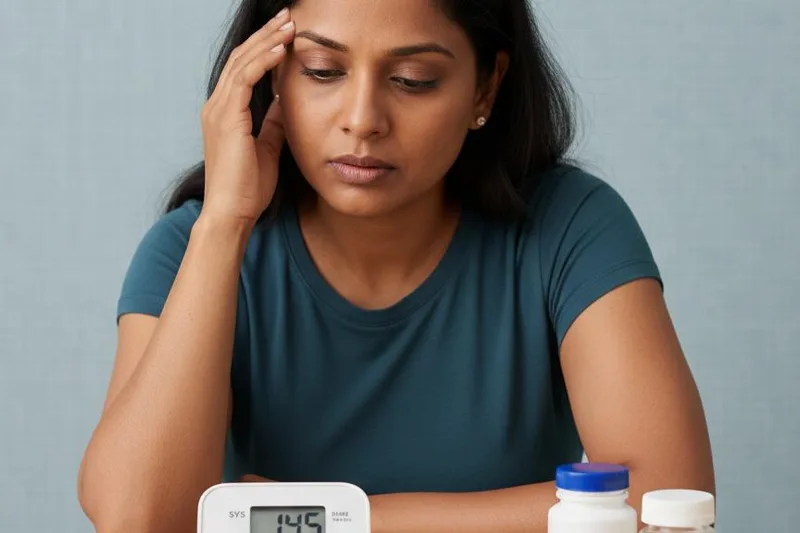
Are you someone who has high blood pressure, or as we all know it, is taking medication for "pressure"? You take all the medications prescribed by the doctor on time, and you control your diet and drink, but every time you check your blood pressure at home, it's always above 140/90. Do you also wonder why this is happening? Maybe you have what we're talking about today, called 'resistant hypertension' or resistant hypertension . Don't worry, we'll talk about everything in simple terms.

What exactly is Resistant Hypertension?

Simply put, this is a condition where your high blood pressure is "very resistant" to treatment. Medically speaking, if your blood pressure remains above 140/90 mmHg despite your doctor giving you three or more medications to control your high blood pressure, at the maximum dose, then that condition is called Resistant Hypertension.

These three types of medications usually include:

  • A type of diuretic: These are what we call 'water pills.' They work by causing the body to excrete extra water and salt through urine.
  • A type of calcium channel blocker: These relax blood vessels and facilitate blood flow.
  • An ACE inhibitor or an ARB: Both of these medications (Angiotensin-Converting Enzyme inhibitor / Angiotensin II Receptor Blocker) work by affecting the blood vessels and lowering blood pressure.

If you are unable to control your blood pressure after six months of taking all three of these medications at maximum doses, your doctor may suspect that you have resistant hypertension.

How common is this condition?

High blood pressure is a very common condition in Sri Lanka as well as the world. Studies have found that approximately 10% to 12% of people with high blood pressure may have this condition called Resistant Hypertension. This means that this is not a rare condition.

What are the symptoms of Resistant Hypertension?

The most dangerous thing here is that high blood pressure is a "silent killer." Many people don't show any symptoms. Some people don't even know they have high blood pressure for years. But when left untreated, it can cause serious damage to the body.

However, some people may experience the following symptoms:

  • Headache
  • Chest tightness or pressure
  • Difficulty breathing

The most important thing is not to wait for symptoms to appear. As you get older, especially if someone in your family has high blood pressure, have your doctor check your blood pressure regularly. It is also worth getting a good electronic BP meter, asking your doctor for the correct way to use it, and keeping records at home.

Why can't the pressure be controlled this way? What are the reasons?

There are several reasons for this. Let's break them down into parts.

Reason category Description and examples
Lifestyle and diet

  • Overweight: Losing weight that is appropriate for your height (BMI greater than 25).
  • Lack of exercise: The body does not get any exercise.
  • High-salt foods: Not only the salt we put in curries, but also store-bought foods, sausages, sauces, pickles, dried fish, and sprats contain a lot of salt.
  • Excessive alcohol use: Drinking alcohol daily or in excess.

Some medications

Some medications you take for other illnesses can also increase your blood pressure.

  • Painkillers: Especially the type called NSAIDs (Nonsteroidal Anti-inflammatory Drugs). Examples: Ibuprofen, Naproxen, Diclofenac.
  • Nasal decongestants.
  • Birth control pills (Oral Contraceptives).
  • Some Ayurvedic or herbal products: For example, ginseng, licorice, etc.

Other medical conditions (Secondary Causes)

Sometimes, the cause of high blood pressure can be another disease in the body. Treating this disease will also control the blood pressure.

  • Primary Hyperaldosteronism: Excessive production of certain hormones by the adrenal glands.
  • Renal Artery Stenosis: Narrowing of the blood vessels that carry blood to the kidneys.
  • Chronic Kidney Disease (CKD).
  • Sleep Apnea: Momentary cessation of breathing during sleep (common among snorers).
  • Pheochromocytoma: A tumor that occurs in the adrenal gland (this is quite rare).
  • Cushing Syndrome: Excessive production of certain steroid hormones in the body.

Who is at higher risk of developing resistant hypertension?

The following people are at slightly higher risk of developing this condition:

  • For those with Chronic Kidney Disease
  • For those with diabetes
  • For those of African-American descent
  • For women (relative to men)

What complications can occur due to this condition?

A person with resistant hypertension, which is difficult to control in this way, is at a much higher risk of the following than someone whose blood pressure is controlled with medication.

  • Stroke
  • Kidney Disease
  • Heart disease and heart failure

Therefore, it is not good to take this situation lightly.

How does a doctor diagnose this?

To determine exactly whether you have resistant hypertension, your doctor will look at several factors.

1. Ask about your medical history and lifestyle.

The doctor may ask you questions like these:

  • "How long have you had the pressure?"
  • "What do you do when you check your blood pressure at home? Are you using the machine correctly?"
  • "What medications are you currently taking? (including vitamins and herbal remedies). Are you taking your medications as prescribed by your doctor, on time, and in the prescribed dosage?"
  • "Do you use alcohol or cigarettes?"
  • "Do you snore in your sleep? Do you feel like you're suffocating?"

2. Doing a physical examination

During this examination, the doctor will specifically look for the following:

  • Eye exam: This checks for damage to the blood vessels in the eye due to high blood pressure. This is called `Hypertensive Retinopathy`.
  • Listening to major blood vessels: Listening to the sound of blood passing through some major blood vessels (e.g., those in the neck or kidneys) to see if there is an abnormal sound (`bruit`). This can give an idea of ​​whether the vessels are narrowed.

3. Laboratory and other tests

  • Urine test: Check for protein in the urine.
  • Blood tests: Check kidney function (Creatinine), sugar levels (Glucose), and electrolytes like sodium and potassium.
  • Hormone tests: Check for problems with the functioning of the adrenal glands or thyroid gland.
  • Scans: Ultrasound and CT scans can be done to check the condition of the kidneys and adrenal glands.
  • Sleep Study: If you suspect you have sleep apnea, you may be referred for a special sleep study.

How is this treated?

Don't worry. There is a treatment for this. There are two main parts.

1. Lifestyle changes

These are the most important things you can do. It's useless to just take medicine and not do these things.

  • Salt control: Limit your salt intake to 2,400 milligrams (less than a teaspoon) per day. Stop bringing salt to the table. Reduce your intake of processed and packaged foods.
  • Limiting alcohol.
  • Painkillers: Do not take medications like Ibuprofen and Diclofenac without consulting your doctor. If necessary, talk to your doctor about a medicine like Paracetamol.
  • Exercise: Do some exercise, such as walking or cycling, for at least 30 minutes a day, several days a week.

2. Using medicines correctly

This is where many people go wrong.

Surveys have found that 40% of people who think they have resistant hypertension actually have a problem with not taking their medication properly.

For medicine to work, it must be taken every day, at the right time, and in the right dose . Some people have difficulty taking their medicine because of side effects (e.g., dizziness, cough). If you have such a problem, tell your doctor. He or she can then prescribe a different medicine. Never stop taking your medicine or change the dose without asking your doctor.

If your blood pressure is not controlled even after taking your medication correctly, your doctor may add a fourth or fifth medication. For example, a diuretic called Spironolactone or a beta-blocker .

When should you go to the hospital (ETU) immediately?

Sometimes blood pressure can suddenly become very high. This is called a hypertensive crisis . This is a condition that requires emergency medical treatment.

If your blood pressure is higher than 180/120 mmHg and you also have the following symptoms, go to the nearest hospital's Emergency Treatment Unit (ETU) immediately.

  • Severe headache
  • Palpitations (feeling like your heart is beating fast)
  • Dizziness
  • Difficulty breathing

Questions to ask your doctor

It's important to have a good understanding of your condition. Don't hesitate to ask these questions the next time you see your doctor.

  • "Doctor, do I need to change my medications?"
  • "What combination of medications is best for me?"
  • "How often should I check my blood pressure at home?"
  • "When should I come see the doctor again?"

It's normal to feel frustrated when you've taken a lot of medication but haven't seen any improvement. However, the best thing to do is to talk openly with your doctor and find solutions to your problems.

Take-Home Message

  • Resistant hypertension is a condition where blood pressure is not controlled by multiple medications. This is something that should be taken seriously.
  • This could be due to your lifestyle, other medications you are taking, or another underlying medical condition.
  • The most important parts of treatment are taking the medication exactly as prescribed by the doctor and making lifestyle changes (reducing salt intake, exercising).
  • If you are having difficulty controlling your blood pressure, don't be discouraged, talk openly with your doctor and find the best solution. With the right treatment and dedication, this condition can be controlled.

Resistant Hypertension, Hypertension, Pressure, uncontrolled hypertension, blood pressure, medication, heart disease, high blood pressure Sinhala

⚠️ Important: The medical articles and information on Nirogi Lanka are for general awareness only, and are by no means a substitute for professional medical advice, diagnosis, or treatment. For any medical problem you have, consult a qualified physician immediately.

💬 Comments (0)

No comments yet. Be the first to share your thoughts here.

Add Your Comment

Please calculate: 9 + 4 =
Even after using all three types of medication, the blood pressure still won't go down. Let's talk about Resistant Hypertension.
MedicationsJuly 7, 2026

Even after using all three types of medication, the blood pressure still won't go down. Let's talk about Resistant Hypertension.

Are you someone who has high blood pressure, or as we all know it, is taking medication for "pressure"? You take all the medications prescribed by the doctor on time, and you control your diet and drink, but every time you check your blood pressure at home, it's always above 140/90. Do you also wonder why this is happening? Maybe you have what we're talking about today, called 'resistant hypertension' or resistant hypertension . Don't worry, we'll talk about everything in simple terms.

What exactly is Resistant Hypertension?

Simply put, this is a condition where your high blood pressure is "very resistant" to treatment. Medically speaking, if your blood pressure remains above 140/90 mmHg despite your doctor giving you three or more medications to control your high blood pressure, at the maximum dose, then that condition is called Resistant Hypertension.

These three types of medications usually include:

  • A type of diuretic: These are what we call 'water pills.' They work by causing the body to excrete extra water and salt through urine.
  • A type of calcium channel blocker: These relax blood vessels and facilitate blood flow.
  • An ACE inhibitor or an ARB: Both of these medications (Angiotensin-Converting Enzyme inhibitor / Angiotensin II Receptor Blocker) work by affecting the blood vessels and lowering blood pressure.

If you are unable to control your blood pressure after six months of taking all three of these medications at maximum doses, your doctor may suspect that you have resistant hypertension.

How common is this condition?

High blood pressure is a very common condition in Sri Lanka as well as the world. Studies have found that approximately 10% to 12% of people with high blood pressure may have this condition called Resistant Hypertension. This means that this is not a rare condition.

What are the symptoms of Resistant Hypertension?

The most dangerous thing here is that high blood pressure is a "silent killer." Many people don't show any symptoms. Some people don't even know they have high blood pressure for years. But when left untreated, it can cause serious damage to the body.

However, some people may experience the following symptoms:

  • Headache
  • Chest tightness or pressure
  • Difficulty breathing

The most important thing is not to wait for symptoms to appear. As you get older, especially if someone in your family has high blood pressure, have your doctor check your blood pressure regularly. It is also worth getting a good electronic BP meter, asking your doctor for the correct way to use it, and keeping records at home.

Why can't the pressure be controlled this way? What are the reasons?

There are several reasons for this. Let's break them down into parts.

Reason category Description and examples
Lifestyle and diet

  • Overweight: Losing weight that is appropriate for your height (BMI greater than 25).
  • Lack of exercise: The body does not get any exercise.
  • High-salt foods: Not only the salt we put in curries, but also store-bought foods, sausages, sauces, pickles, dried fish, and sprats contain a lot of salt.
  • Excessive alcohol use: Drinking alcohol daily or in excess.

Some medications

Some medications you take for other illnesses can also increase your blood pressure.

  • Painkillers: Especially the type called NSAIDs (Nonsteroidal Anti-inflammatory Drugs). Examples: Ibuprofen, Naproxen, Diclofenac.
  • Nasal decongestants.
  • Birth control pills (Oral Contraceptives).
  • Some Ayurvedic or herbal products: For example, ginseng, licorice, etc.

Other medical conditions (Secondary Causes)

Sometimes, the cause of high blood pressure can be another disease in the body. Treating this disease will also control the blood pressure.

  • Primary Hyperaldosteronism: Excessive production of certain hormones by the adrenal glands.
  • Renal Artery Stenosis: Narrowing of the blood vessels that carry blood to the kidneys.
  • Chronic Kidney Disease (CKD).
  • Sleep Apnea: Momentary cessation of breathing during sleep (common among snorers).
  • Pheochromocytoma: A tumor that occurs in the adrenal gland (this is quite rare).
  • Cushing Syndrome: Excessive production of certain steroid hormones in the body.

Who is at higher risk of developing resistant hypertension?

The following people are at slightly higher risk of developing this condition:

  • For those with Chronic Kidney Disease
  • For those with diabetes
  • For those of African-American descent
  • For women (relative to men)

What complications can occur due to this condition?

A person with resistant hypertension, which is difficult to control in this way, is at a much higher risk of the following than someone whose blood pressure is controlled with medication.

  • Stroke
  • Kidney Disease
  • Heart disease and heart failure

Therefore, it is not good to take this situation lightly.

How does a doctor diagnose this?

To determine exactly whether you have resistant hypertension, your doctor will look at several factors.

1. Ask about your medical history and lifestyle.

The doctor may ask you questions like these:

  • "How long have you had the pressure?"
  • "What do you do when you check your blood pressure at home? Are you using the machine correctly?"
  • "What medications are you currently taking? (including vitamins and herbal remedies). Are you taking your medications as prescribed by your doctor, on time, and in the prescribed dosage?"
  • "Do you use alcohol or cigarettes?"
  • "Do you snore in your sleep? Do you feel like you're suffocating?"

2. Doing a physical examination

During this examination, the doctor will specifically look for the following:

  • Eye exam: This checks for damage to the blood vessels in the eye due to high blood pressure. This is called `Hypertensive Retinopathy`.
  • Listening to major blood vessels: Listening to the sound of blood passing through some major blood vessels (e.g., those in the neck or kidneys) to see if there is an abnormal sound (`bruit`). This can give an idea of ​​whether the vessels are narrowed.

3. Laboratory and other tests

  • Urine test: Check for protein in the urine.
  • Blood tests: Check kidney function (Creatinine), sugar levels (Glucose), and electrolytes like sodium and potassium.
  • Hormone tests: Check for problems with the functioning of the adrenal glands or thyroid gland.
  • Scans: Ultrasound and CT scans can be done to check the condition of the kidneys and adrenal glands.
  • Sleep Study: If you suspect you have sleep apnea, you may be referred for a special sleep study.

How is this treated?

Don't worry. There is a treatment for this. There are two main parts.

1. Lifestyle changes

These are the most important things you can do. It's useless to just take medicine and not do these things.

  • Salt control: Limit your salt intake to 2,400 milligrams (less than a teaspoon) per day. Stop bringing salt to the table. Reduce your intake of processed and packaged foods.
  • Limiting alcohol.
  • Painkillers: Do not take medications like Ibuprofen and Diclofenac without consulting your doctor. If necessary, talk to your doctor about a medicine like Paracetamol.
  • Exercise: Do some exercise, such as walking or cycling, for at least 30 minutes a day, several days a week.

2. Using medicines correctly

This is where many people go wrong.

Surveys have found that 40% of people who think they have resistant hypertension actually have a problem with not taking their medication properly.

For medicine to work, it must be taken every day, at the right time, and in the right dose . Some people have difficulty taking their medicine because of side effects (e.g., dizziness, cough). If you have such a problem, tell your doctor. He or she can then prescribe a different medicine. Never stop taking your medicine or change the dose without asking your doctor.

If your blood pressure is not controlled even after taking your medication correctly, your doctor may add a fourth or fifth medication. For example, a diuretic called Spironolactone or a beta-blocker .

When should you go to the hospital (ETU) immediately?

Sometimes blood pressure can suddenly become very high. This is called a hypertensive crisis . This is a condition that requires emergency medical treatment.

If your blood pressure is higher than 180/120 mmHg and you also have the following symptoms, go to the nearest hospital's Emergency Treatment Unit (ETU) immediately.

  • Severe headache
  • Palpitations (feeling like your heart is beating fast)
  • Dizziness
  • Difficulty breathing

Questions to ask your doctor

It's important to have a good understanding of your condition. Don't hesitate to ask these questions the next time you see your doctor.

  • "Doctor, do I need to change my medications?"
  • "What combination of medications is best for me?"
  • "How often should I check my blood pressure at home?"
  • "When should I come see the doctor again?"

It's normal to feel frustrated when you've taken a lot of medication but haven't seen any improvement. However, the best thing to do is to talk openly with your doctor and find solutions to your problems.

Take-Home Message

  • Resistant hypertension is a condition where blood pressure is not controlled by multiple medications. This is something that should be taken seriously.
  • This could be due to your lifestyle, other medications you are taking, or another underlying medical condition.
  • The most important parts of treatment are taking the medication exactly as prescribed by the doctor and making lifestyle changes (reducing salt intake, exercising).
  • If you are having difficulty controlling your blood pressure, don't be discouraged, talk openly with your doctor and find the best solution. With the right treatment and dedication, this condition can be controlled.

Resistant Hypertension, Hypertension, Pressure, uncontrolled hypertension, blood pressure, medication, heart disease, high blood pressure Sinhala

⚠️ Important: The medical articles and information on Nirogi Lanka are for general awareness only, and are by no means a substitute for professional medical advice, diagnosis, or treatment. For any medical problem you have, consult a qualified physician immediately.

💬 Comments (0)

No comments yet. Be the first to share your thoughts here.

Add Your Comment

Please calculate: 9 + 4 =