
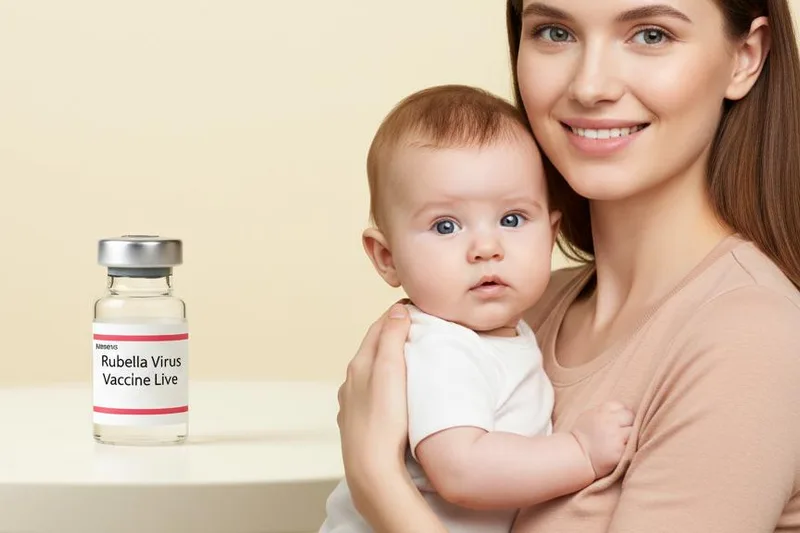
Every woman who is expecting a baby, as well as our little ones, is familiar with the name 'Rubella'. Some people also call it 'German measles'. It is a viral infection. So today we are talking about the vaccine we give to protect against this disease, Rubella. This is a very important topic, especially for our healthy future generation.
Simply put, what is this rubella vaccine?
Rubella Virus Vaccine Live is a protective shield that helps us prevent infections caused by the rubella virus. Usually, if a healthy person gets rubella, it is not very serious. It heals with a slight fever and a rash.
However, if a pregnant mother contracts rubella in the early months of pregnancy, it can have very serious effects on the unborn child. This condition is called 'Congenital Rubella Syndrome'.
This can lead to serious complications such as congenital heart disease, vision problems (such as cataracts), hearing problems (deafness), and brain development problems. It is to prevent these dangerous conditions that we provide this vaccine. Under our country's national vaccination program, it is usually given to children as part of the MMR (measles, mumps, and rubella) vaccine.
Things you need to tell your doctor before getting vaccinated
Before getting this vaccine, it is very important to give your doctor a complete explanation of your health condition, as there are some cases where this vaccine may not be appropriate.
| If you have these conditions... | Please inform the doctor. |
|---|---|
| If you are pregnant or trying to get pregnant | This is very important. You should avoid getting pregnant for 3 months after getting the vaccine. |
| Fever or any infectious condition | Vaccination may need to be postponed until an existing medical condition has resolved. |
| Immune system weaknesses | If you have conditions such as HIV/AIDS or are taking medications that suppress the immune system. |
| Decreased blood cell count | If the number of white blood cells, red blood cells, or platelets is low. |
| Tuberculosis | If you have tuberculosis or are being treated. |
| Allergies | If you are allergic to other vaccines, neomycin (an antibiotic), gelatin , sorbitol , beef products, other medicines, foods or preservatives. |
| If you are a breastfeeding mother | It is important to talk to your doctor about this as well. |
How to administer the vaccine and other important points
This vaccine is given as an injection under the skin by a healthcare professional. You will not be given this to take home, it will be given at the clinic.
This vaccine is usually given to children over 12 months of age. However, in some special cases, the doctor may decide to give it to children even younger. It all depends on the child's health condition.
What if I miss a dose of the vaccine?
Don't miss your scheduled vaccination dates. If for some reason you can't go on your scheduled date, talk to your doctor as soon as possible and get advice on the next best day to come.
Other medications that may interact with the vaccine
If you are taking medication for other conditions, you should also tell your doctor about it, as some medications can affect the effectiveness of this vaccine.
- Immunosuppressant drugs (e.g. adalimumab, infliximab)
- Chemotherapy (drugs used for cancer)
- Steroid-type medications (such as `prednisone` or `cortisone`)
- Immunoglobulins
- Other types of vaccines
It is very important to inform your doctor about the vitamins and even traditional medicines (herbs) you are taking.
Things to be especially careful about after getting vaccinated
Pay special attention to these points.
1. Avoid pregnancy: This is the most important thing. Avoid getting pregnant for any reason for 3 months after getting the vaccine. This vaccine contains a live, but weakened virus. So if you get pregnant during this time, there is very little chance that it will affect the baby in the womb. This advice is given to completely avoid that risk.
2. Complete protection: Like all vaccines, this vaccine may not provide 100% protection for everyone. However, getting vaccinated can greatly reduce the risk of contracting the disease and its complications.
3. Tuberculin Skin Test: If you are scheduled to have a skin test for tuberculosis, do not have it done at the same time as this vaccine. This vaccine may affect the results of the skin test. Consult your doctor about this.
4. Blood transfusion: If you have recently received blood or plasma, or have had an injection of immunoglobulin, tell your doctor before receiving the vaccine, as these may reduce the effectiveness of the vaccine.
What are the possible side effects?
Like any medicine, this vaccine can cause minor side effects. However, serious side effects are very rare. It is important to know the difference between the two.
| Serious side effects that require immediate medical attention | |
|---|---|
| Severe allergic reaction (swelling of the face, lips, tongue, severe skin rash, itching) | Difficulty breathing |
| Hearing or vision changes | Fever over 102 degrees F (38.9 C) |
| Severe changes in behavior, fainting, and falls | Unusual bruising or bleeding |
| Pain, numbness, and tingling in the limbs | Joint pain (Arthritis pain) |
| Side effects that are usually not serious, but should be reported to the doctor if they persist: | |
| Soreness, swelling, redness at the injection site | A low-grade fever of less than 102 degrees F |
| Body pain, feeling of weakness | Sore throat, cough , hoarseness |
| Vomiting, nausea, indigestion | Swelling of the ankle |
If you develop any severe allergic symptoms, immediately go to the Emergency Department (ETU) of the nearest hospital. If you suspect a vaccine overdose, immediately call the National Poisons Information Centre at the Colombo National Hospital .
Take-Home Message
- The rubella vaccine prevents German measles, and it is essential to protect the unborn child from serious birth defects, especially during pregnancy.
- Before getting the vaccine, tell your doctor completely about all your health conditions, allergies, and all medications you are taking.
- Very important: Avoid pregnancy completely for 3 months after vaccination.
- Although minor side effects (low fever, body aches) are common, seek medical advice immediately if you experience severe allergic symptoms (difficulty breathing, facial swelling).
- Always follow your doctor's advice. If you have any concerns, talk to your doctor instead of relying solely on information on the internet.





💬 Comments (0)
No comments yet. Be the first to share your thoughts here.
Add Your Comment