
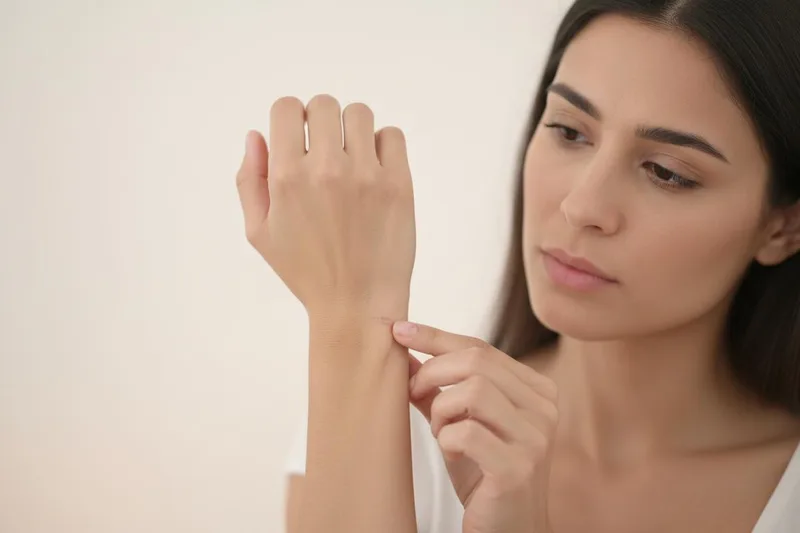
It's hard to find someone who hasn't had a minor injury or scratch at some point in their life, isn't it? Maybe it was from a fall while playing as a child, or a burn in the kitchen, or some kind of operation. When these injuries heal over time, a scar is what remains as a memory. While some scars fade away after a while to the point of being barely noticeable, some scars continue to haunt us, sometimes even reducing our confidence. So today, let's talk about these scars. Why do they form, what are the types, and what can be done about them.
What exactly is a scar?
Simply put, a scar is the end result of our skin's natural process of healing a wound. Think of your skin as a protective wall around your body. When this wall is damaged, whether it's a cut, scrape, or burn, your body quickly starts working to close the gap.
In this process, the body creates a new type of tissue. This tissue is mainly made up of a protein called collagen . These collagen fibers come in and fill the gap where the wound was, as if gluing the two sides together. This new tissue is what we see as a scar. It's actually like a natural patch that the body makes to protect itself from germs.
Why aren't all scars the same?
You may also be wondering why some scars are barely visible, while others are very prominent. The appearance, size, and color of a scar depend on several factors.
- The nature of the wound: The appearance varies depending on whether it is a cut from an operation, a burn, or a scar from acne.
- Size and depth of the wound: The scar from a large, deep wound is usually more noticeable than the scar from a small scratch.
- Location of the wound: The scar from a wound in a place that is frequently moved, such as a joint, may be different than a scar in a place that is not.
- Treatment received: Whether the wound was stitched in time, cleaned properly, and medicated also has an impact.
- Your genes and skin color: Some people are more prone to developing skin scars. People with darker skin tones (such as African and Asian) and red hair are especially likely to develop keloid scars , a type of raised, spreading scar.
- Age and health: As we age, our skin's ability to heal changes. And medical conditions like diabetes can affect how wounds heal.
At first, a new scar on light-colored skin will appear as a pinkish-red color. Over time, this color fades and may become slightly lighter or darker than your normal skin tone. In people with darker skin, scars often appear as dark spots. Sometimes, scars can itch or cause mild pain.
What are the main types of scars?
Scars come in different forms. Let's see what are the main types of scars that are seen. I will put this in a table like this to make it easier for you to understand.
| Type of Scar | Appearance and Characteristics |
|---|---|
| Contracture Scars | These often develop after a burn. These scars cause the skin to become rough and hard. If they develop over a joint (e.g., elbow, knee), it can be difficult to bend or straighten that joint. Sometimes they can even affect muscles and nerves. |
| Depressed/Atrophic Scars | These are scars that look like pits that have sunken into the skin. They most commonly develop after a cold sore or severe acne. They are most commonly seen on the face. These scars can become more noticeable as the skin's collagen decreases as we age. |
| Flat Scars | This is the most common type of scar. At first, it may appear slightly pink or red, but as the wound heals, it will flatten out to match the skin. Over time, it may become a slightly lighter or darker color than the skin. |
| Keloid Scars | This is a rather annoying type of scar. Not only do they form on the surface of the skin, but they also spread and grow beyond the wound. It's like excess collagen is being produced. Some people can develop these after getting pierced ears or tattoos. They can grow and even interfere with movement. |
| Raised/Hypertrophic Scars | These are also oval, like keloids. But the most important difference is that they do not spread beyond the wound. Over time, their oval appearance may decrease slightly, but they will not completely flatten. |
| Stretch Marks | When the skin stretches or contracts rapidly (e.g. during pregnancy, sudden weight gain/loss, or height gain in youth), the connective tissue beneath the skin is damaged. The resulting scars are called stretch marks. They are most commonly seen on areas such as the stomach, breasts, thighs, and upper arms. |
Important: Scars don't just form on the skin. Internal scar tissue can also form inside the body after surgery. This can sometimes lead to other health problems.
What can be done to treat scars?
First of all, not all scars need treatment. Most scars will fade over time. But if your scar is causing you emotional distress, causing you pain, or restricting your mobility, there are treatments that can be done.
Your doctor will examine your scar and determine the most appropriate treatment, taking into account factors such as its type, size, location, and your age.
Dermabrasion
This is like gently "scraping" away the top layer of skin. This treatment is especially used for scars, such as those caused by acne. It can soften the skin and reduce the appearance of scars.
Injections
In this method, the doctor injects a medication directly into the scar. This helps the scar shrink and flatten. Corticosteroid injections are especially effective in reducing the size of keloid scars. They can also sometimes help reduce the itching and pain of the scar.
Laser Treatments
This is a very popular method now. Various types of lasers can be used to reduce the appearance of scars.
- Some types of lasers target and destroy the tiny blood vessels that cause the red/pink color of the scar. This causes the scar to fade.
- Other types of lasers break down the dense collagen fibers in the scar, helping to soften and flatten the scar.
- However, for people with darker skin, laser treatment can cause skin discoloration (darkening or lightening). Therefore, you should discuss all of this with your doctor before starting treatment.
Pressure Therapy
This involves applying constant pressure to the wound while it heals. This involves using special elastic bandages and clothing. This pressure can help prevent scarring or reduce the size of the scar that does form. This method is often used after burns.
Surgery (Scar-Revision Surgery)
This involves surgically removing an old, unsightly scar and replacing it with a more visible, subtle scar. Sometimes , a skin graft is also used.
Topical Creams and Ointments
There are various creams on the market for scars.
- Using silicone- containing gels or sheets has been found to help prevent scarring and reduce the appearance of existing scars.
- A doctor may also recommend creams containing hydroquinone to lighten dark scars.
The most important thing is, don't just go and apply creams to your scars on your own. Always consult a dermatologist to find out what is best for your scars.
Can scars be prevented?
We can't always prevent injuries from happening, but there are a few things we can do to reduce the risk of leaving a big scar after an injury.
- Treat the wound properly: As soon as you get a wound, wash it with soap and clean water. Remove any dirt or dust. Then cover it with a clean bandage.
- Seek medical advice: If the wound is large or deep, you should definitely see a doctor. Stitches may be needed. Stitches help the wound heal properly, reducing scarring.
- Keep the wound moist: Drying the wound and forming a large scab is a cause of the scar becoming larger. Applying something like petroleum jelly (Vaseline) to keep the wound moist can reduce the formation of scabs and minimize scarring.
- Protect yourself from the sun: This is something that many people overlook, but it's very important . When a new scar is exposed to sunlight, it's more likely to become dark (hyperpigmentation). So keep the scar covered with clothing, or apply a good sunscreen with SPF 30 or higher several times a day.
- Get good nutrition: The body needs good nutrition to heal wounds. Eating foods rich in protein, vitamin C, and vitamin D helps the skin heal.
When to see a doctor about a scar
A scar is usually nothing to worry about. However, in the following cases, you should definitely see a doctor.
- If the appearance of the scar (color, size, shape) suddenly changes.
- If the scar is painful, persistently itchy, or excessively sensitive.
- If the scar is oozing pus or is swollen, red, or showing signs of infection.
- If a new spot or mole develops on or near the scar (although very rare, it is important to be aware of this as skin cancer can develop on scars).
- If you have previously had keloid scars, it is very important to talk to a doctor before getting a new piercing, tattoo, or cosmetic surgery.
Take-Home Message
- Scarring is a natural and normal result of wound healing. It is part of the body's defense mechanism.
- There are several types of scars. The treatment depends on the type of scar you have.
- Not all scars require treatment, but if your scar is bothering you, there are effective treatments available today to reduce its appearance.
- By treating an injury properly from the moment it occurs and protecting it from the sun, you can minimize the risk of a large scar.
- If you have any doubts or concerns about your scar, or notice any changes, it's never too late to talk to a doctor about it.




💬 Comments (0)
No comments yet. Be the first to share your thoughts here.
Add Your Comment