

Have you ever had a `(Colonoscopy)` test? Or, you may have heard someone say, ``They removed some small growths in the colon.'' Most of the time, these are what we call `(Colon Polyps)`` or polyps that grow in the colon. Among them, there is a special type called `(Serrated Polyps).`` Does the name sound a little scary? Don't worry, we will talk about everything in a simple way that you can understand.
What are these `(Serrated Polyps)`? Let's understand it simply!
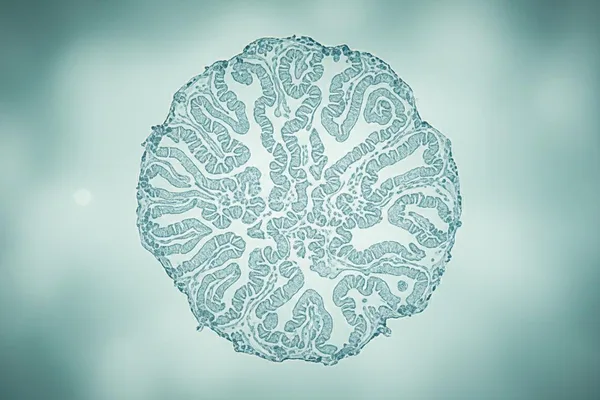
Simply put, serrated polyps are growths that form on the inside wall of your colon and look like saw-toothed growths under a microscope. They are actually tumors, but they are benign. This means that they are not cancerous when they first form. However, some serrated polyps can become cancerous over time. That is why doctors remove these growths as soon as they are found to prevent colon cancer.
The serrated appearance of these `(Serrated Polyps)` is related to the way they form. The process by which they form is a little different from the other type of polyps that we usually see in the colon, `(Adenomas). Also, if `(Serrated Polyps)` turns into cancer, the process is different from the process by which `(Adenomas)` turns into cancer. It is said that about 25% of colon cancers arise from these `(Serrated Polyps)`. However, if they do develop into cancer, they can grow a little faster than other types.
What are the main types of `(Serrated Polyps)`?
The World Health Organization (WHO) has divided serrated polyps into four main types. These are classified according to their appearance, that is, their physical characteristics. These characteristics indicate how different the cellular processes that influence the growth of these polyps are. Importantly, not all of these types are precancerous . Doctors classify them when they are found to determine how likely they are to develop into cancer.
Here are those four types:
- `(Hyperplastic Polyps)` Hyperplastic polyps
- `(Sessile Serrated Lesions - SSLs)` Sessile Serrated Lesions
- `(Traditional Serrated Adenomas)` Traditional Serrated Adenomas
- Unclassified Serrated Adenomas
`(Hyperplastic Polyps)` Hyperplastic polyps
These are the most common type of serrated polyps, accounting for about 75% of cases. The good news is that these hyperplastic polyps are harmless and do not become cancerous . "Hyperplastic" simply means an overgrowth of cells. It means that there are just too many cells growing together. Many precancerous polyps become "dysplastic," meaning that they have abnormal changes in the cells. These changes in the cells can lead to cancer.
`(Sessile Serrated Lesions - SSLs)` Sessile Serrated Lesions
About 20% of serrated polyps are of the subtype called Sessile Serrated Lesions (SSLs). This is the type of serrated polyp that has the highest risk of becoming cancerous . "Sessile" refers to the fact that they are flat, disc-like, or slightly raised. However, this shape can also be seen in the harmless hyperplastic polyps. Therefore, it is a bit difficult to distinguish the two by appearance. However, specialists can recognize some differences in their structure.
These `(Sessile Serrated Lesions)` used to have several names. Now this new name is used to reduce unnecessary confusion. Another thing is that some of these `(SSLs)` have the previously mentioned `(Dysplasia)` (cell abnormalities) features, while others do not. Doctors further classify those with `(Dysplasia)` as "sessile serrated lesions with dysplasia". However, all `(SSLs)` are considered to be precancerous conditions .
`(Traditional Serrated Adenomas)` Traditional Serrated Adenomas
These are the rarest type of `(Serrated Polyps)`, seen in less than 1% of the population . These are also precancerous conditions . Their appearance is similar to normal `(Adenomas)`, that is, they have a mushroom-like shape, and they also have the normal `(Dysplasia)` features. However, they also have the `(Serrated)` features like the edges of a saw. In the past, these were often mistaken for normal `(Adenomas)`. They have only recently been recognized as a type of `(Serrated Polyp)`.
Unclassified Serrated Adenomas
The last type is polyps that don't fit neatly into any of the above categories. They may have a flat, serrated appearance, but they can also have features similar to ``Dysplasia'' or ``Adenomas.'' Although they are rare, doctors believe it is important to recognize these polyps that cannot be clearly classified, because future research may reveal more about them. We are still learning about ``Serrated Polyps.''
How common are Serrated Polyps?
Serrated polyps are found in about 30% of colonoscopies. Most of the time, these are harmless hyperplastic polyps. However, about 10% are precancerous polyps, such as Sessile Serrated Lesions (SSLs). During a colonoscopy, the doctor may not always be able to tell the difference between the two. That's why, if there is any doubt, the tissue is removed, sent to a laboratory, and examined under a microscope by a pathologist.
What is `(Serrated Polyposis Syndrome - SPS)`?
Serrated Polyposis Syndrome (SPS) is a rare condition. It is characterized by the development of large numbers of serrated polyps throughout your colon . It was previously called hyperplastic polyposis syndrome. You may have more than 20 polyps, or they may be larger than normal. They are also more likely to be precancerous. People with this condition have a 25% chance of developing cancer. This condition affects about 0.4% of the population.
Do serrated polyps cause symptoms?
Most of the time, polyps in the colon, including serrated polyps, don't cause any symptoms . Very rarely, large polyps can cause bleeding or a change in your bowel habits. Some people may notice blood in their stools, or have unexplained diarrhea or constipation. But these symptoms can also be caused by other things. Many people with polyps don't even know they have them . That's why doctors recommend regular colonoscopy exams.
What causes these `(Serrated Polyps)` to form?
Serrated polyps are a common condition that usually develops as we age. We don't know exactly why they form. But we do know that genetic mutations are involved . Genetic mutations are errors in the coding of your cells when they divide and make new cells. These errors cause the new cells to grow in a different way than they should. Serrated polyps are caused by a different genetic mutation than other types of polyps.
What are the risk factors for developing `(Serrated Polyps)`?
The risk factors for developing serrated polyps are very similar to those for developing polyps in the large intestine. They are:
- Being over 50 years of age.
- Smoking.
- Excessive alcohol consumption.
- Excessive consumption of red meat (such as beef, goat meat).
- Obesity.
- Having conditions such as Inflammatory Bowel Disease.
How to identify `(Serrated Polyps)`?
The best way to find serrated polyps is through a colonoscopy . However, sometimes, they can be missed. This is because the two most common types of serrated polyps, hyperplastic polyps and sessile serrated lesions (SSLs), are not very obvious. They are usually small (about 5 mm) , flat or slightly raised, and have the same color as the surrounding tissue, with no clear boundaries.
Think of it like looking for a tiny, barely visible stain on a wall that's the same color as the paint. That's not easy, is it?
Newer, higher resolution, and magnification-capable colonoscopes are better at detecting serrated polyps than older devices . Bowel preparation and doctor training are also important. Doctors should be aware of the latest guidelines for detecting serrated polyps. Some colonoscopy techniques have been found to work better than others and may change the appearance of polyps.
During your colonoscopy, your doctor may suspect a Sessile Serrated Lesion or a Serrated Polyp, which is a type of cancer that can develop into a polyp. If there is any doubt, he or she will remove it during the procedure (Polypectomy) . The polyp will then be sent to a laboratory for examination by a Pathologist. Only then will the doctor be able to determine exactly what type of polyp it is and make a final diagnosis.
However, if you have Serrated Polyposis Syndrome (SPS), your doctor may be able to identify it during a colonoscopy. The way to diagnose SPS is to look at the number of serrated polyps found, their size, and where they are located in the colon. Statistically, serrated polyps that are larger than normal or in unusual locations in the colon are more likely to be precancerous when examined closely.
What happens if `(Serrated Polyps)` are found during `(Colonoscopy)`?
Hyperplastic polyps are common and nothing to worry about. However, if your doctor suspects that you have a serrated polyp, they should be removed . This is to find out exactly what type it is and to stop it from becoming cancerous. If it is confirmed that it is indeed a precancerous polyp, your doctor will schedule your next colonoscopy relatively soon , so that you can be sure to get any new ones checked out.
How soon should I have a colonoscopy because of a serrated polyp?
Doctors classify the risk of developing colorectal cancer as low, moderate, or high, depending on the type of serrated polyps they find. That risk is used to determine when the next colonoscopy should be performed. According to current guidelines,
- If there is a medium risk , once every five years .
- If there is a high risk, every three years .
- If you have `(SPS)`, it is recommended to get tested once a year .
- Low-risk ``(Hyperplastic Polyps)'' do not require special monitoring.
What to expect if you have precancerous ``Serrated Polyps''?
If your doctor removed precancerous serrated polyps during your colonoscopy, you are safe for now . Removing them will reduce the risk of them becoming cancerous. However, your doctor will want to keep a close eye on your colon for several reasons. One reason is that these sessile serrated polyps can be difficult to remove completely with a polypectomy because of their flat shape and fuzzy edges.
Think of it like picking up a piece of jelly that has fallen on the floor. Sometimes there are small pieces left over, right? That's how it is.
If small pieces of cells are left behind when removed, or if there are polyps that were missed during a previous colonoscopy and were not so obvious, they can continue to grow into precancerous conditions. They may also grow faster than a new polyp. In addition, serrated polyps are more likely to become cancerous than other types. They are also more likely to develop into cancer in more than one place at the same time .
When should I see a doctor about intestinal polyps?
If you are at average risk, doctors recommend that you have a colonoscopy every 10 years, starting at age 45. If someone in your family has had colon cancer or polyps (a genetic link), or if you have a health condition that increases your risk of developing polyps, such as inflammatory bowel disease, you may need to have a colonoscopy earlier. Ask your doctor when it is time to have your regular colonoscopy.
Like most colon polyps, serrated polyps are common and often harmless . Some of them have a small risk of becoming harmful over time. That's why we have colonoscopies. As long as we screen for them and remove them if they are found, serrated polyps don't have a chance of becoming cancerous. We're still learning about serrated polyps and how they behave, but we now know enough to offer preventive treatment .
The most important things to remember (Take-Home Message)
Okay, so let's look at some of the most important things to keep in mind from what we've talked about:
- Serrated polyps are a type of fleshy growth that forms in the large intestine and looks like the edges of a saw.
- Some types of serrated polyps, especially sessile serrated lesions (SSLs), can become cancerous over time.
- Most of the time, these are asymptomatic , so it is very important to have regular colonoscopy tests.
- By identifying and removing these during a colonoscopy, cancer can be prevented .
- If you are diagnosed with `(Serrated Polyps),` follow your doctor's instructions exactly. It is essential to go for follow-up examinations at regular intervals.
- Don't be afraid , the most important thing is to be aware of these and identify them early.
If you have any further questions about this, don't hesitate to talk to your doctor. He or she can advise you in the most appropriate way.
` Serrated Polyps, Colon Polyps, Colonoscopy, Colon Cancer, Hyperplastic Polyps, Sessile Serrated Lesions, Gastroenterology




💬 Comments (0)
No comments yet. Be the first to share your thoughts here.
Add Your Comment