
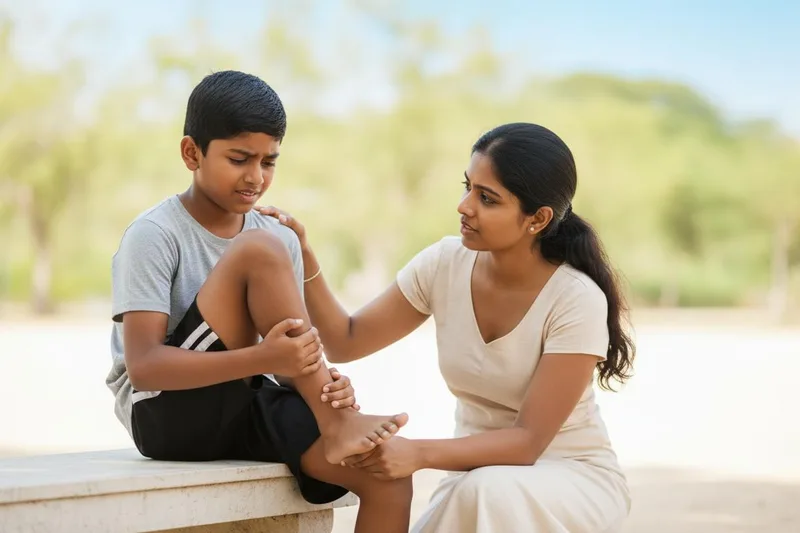
Does your child love to play cricket, run and jump, right? But after playing like this, do you often say, 'Mom/Dad, my heel hurts'? Sometimes it seems a little difficult to walk, and it seems like he is limping? Although many parents are worried about this, this is usually a condition that occurs with the development of children and is not something to be worried about. That's what we are talking about today.
What is Sever's Disease? Is it really a disease?
Although the name says "Disease", this is not actually a disease. It is more like a disorder. In medical terms, we call this `(Calcaneal Apophysitis)`. The name sounds a bit complicated, doesn't it? Let's keep it simple.
`Calcaneus` is the bone in our heel. `Apophysitis` is an inflammation of a part of that bone. Simply put, when a child is active, the stress on their heel bone causes the area where it grows to become swollen. This is a Repetitive Stress Injury . The best part is, this condition heals completely with proper rest.
Think of it this way: a child's bones are like a branch of a tree that hasn't fully grown yet. The ends of the bones, especially the growth plates, are very soft. They are made up of a soft substance called cartilage. These cartilage pieces are not as strong as fully grown bones. Therefore, they are more susceptible to damage. As children grow older, this cartilage gradually turns into strong bone.
Apophysitis is a condition that causes swelling of the growth plates of bones in children. It is a very common condition. It is especially common during growth spurts, especially between the ages of 8 and 14.
How do I know if my child also has this condition?
If your child has this condition, they may show one or more of the symptoms below. Let's take a look at what they are.
| Symptom | A simple explanation |
|---|---|
| Pain in one or both heels | Many children experience pain in both heels, especially after running, jumping, and playing. |
| Pain when squeezing or putting weight on the heel | The pain will increase if you press on the child's heel from both sides or if the child puts weight on the heel. |
| Swelling or discoloration of the heel | Some children may notice a slight swelling or redness on their heels, but not everyone will see this. |
| Limping or walking on tiptoes | Due to the pain, the child may walk on their toes or limp without putting their heels on the ground. |
| Heel stiffness in the morning | You may feel stiffness in your heels, especially when you get out of bed in the morning or after sitting for a while. |
Why do children get this condition?
The main reason for this is the constant pressure on the growth plate of the heel. Think of it like putting a little pressure on the same spot over and over again. Over time, that spot starts to get damaged.
Another important factor that affects this is the Achilles tendon . This is the strong band that connects the muscles in the back of our legs to the heel bone. As children's bodies grow rapidly, sometimes this tendon doesn't stretch as fast as the bones do. Then it gets tight and starts pulling back on the heel bone. This pulling can put pressure on that soft growth plate and cause it to swell.
Inflammation is our body's way of healing a wound. But the healing process takes time. If the child continues to engage in activities that put pressure on the heel, the swelling will continue.
In addition to this main cause, several other factors can contribute to this condition:
- Flat feet: Some children have flat feet, which can put extra pressure on their heels when walking.
- Childhood obesity: If a child's weight is higher than normal for their age and height, they have to bear more weight on their heels every time they walk or run.
How do you find this, Doctor?
In most cases, a doctor can diagnose this condition by physically examining the child.
- The doctor will gently touch the child's heel and foot, pressing a little to find out exactly where it hurts.
- You may want to ask the child to walk, run, or jump.
An X-ray is usually not necessary for this. However, if the doctor suspects another condition, such as a stress fracture, they may recommend an X-ray or MRI to make sure there is no underlying cause.
What are the treatments for this?
The treatment for this is very simple. The main thing is to give the heel some rest.
| Treatment method | What to do |
|---|---|
| Rest | This is the most important thing . You will need to stop running, jumping, or any sports or activities that put pressure on your heel for a few days or weeks. Ask your doctor how long you need to rest. |
| Pain relief | Your doctor may recommend NSAIDs to reduce swelling and pain. However, do not give your child any painkillers without medical advice. In addition, applying an ice pack to the heel for about 15 minutes several times a day can greatly reduce pain and swelling. |
| Special supports (Orthotics) | Your doctor may recommend special heel cups or special shoes to help reduce pain. In some cases, you may also be advised to wear a brace or splint. |
| Physical therapy | It's very important to do the stretching exercises that we talked about for that tight Achilles tendon. You can also reduce the pressure on your heel by strengthening the leg muscles that support your foot and heel. |
Can this situation be prevented from happening again?
Yes, it definitely is. Once your child's pain has completely subsided and they are able to resume activities, there are a few steps you can take to prevent this condition from recurring.
- Appropriate footwear: Buy your child a good pair of shoes that provide good heel support and shock absorption, especially when playing sports.
- Exercise: Make it a habit to warm up before playing sports and do daily Achilles tendon stretching exercises.
- Weight control: It is also very important to keep your child's weight at a healthy level for their age and height.
- Listen to your body: Teach your child to stop the activity and rest as soon as they feel pain. It's important to say, "Don't play until it hurts."
Sever's disease is not serious, and it does not cause long-term harm to your child. However, it can be very painful for your child to have. So if your child has these symptoms, see your doctor as soon as possible. If you start treatment early, the swelling will go down quickly and your child will be able to get back to their favorite activities.
Take-Home Message
- Sever's Disease is not a disease to be afraid of, it is a disorder that occurs with the development of children.
- This is very common in active, running and playing children.
- The main and best treatment for this is rest.
- With proper treatment and rest, this condition is completely curable. It will not affect the child's future.
- If your child complains of heel pain, don't ignore it. See a doctor immediately for a proper diagnosis and advice.


💬 Comments (0)
No comments yet. Be the first to share your thoughts here.
Add Your Comment