
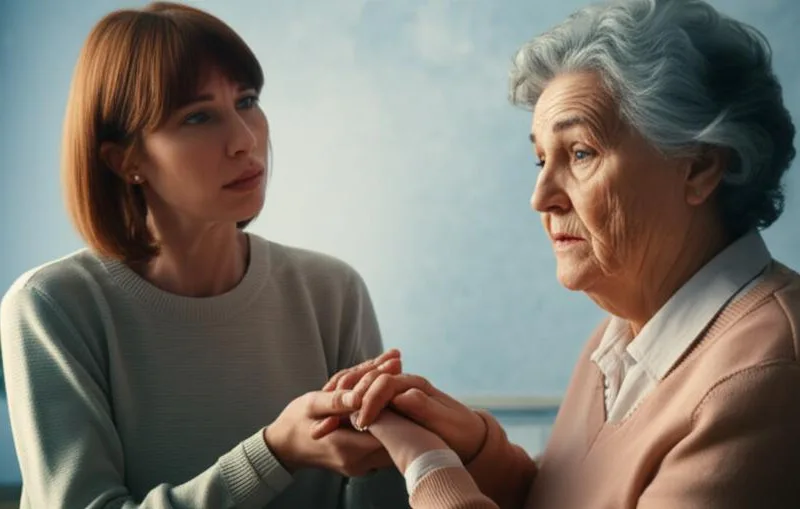
It's normal for your mom, dad, or grandma to forget things as they get older. But have you ever noticed that this forgetfulness is more than normal, to the point where you can't even do your daily tasks? Are you constantly angry, acting like you're not the same person you used to be? These things can sometimes be the first signs of a condition called 'Dementia'. Don't be scared when you hear this name. Let's talk about it in more detail and how to deal with this condition with love.
Simply put, what is dementia?
Dementia is not a specific disease. It is a general term for a collection of symptoms that affect the way our brain functions. Specifically, it is a condition in which memory, thinking, reasoning, and the ability to perform daily tasks gradually decline. These changes can gradually increase and reach the point where a person is no longer able to live independently.
This condition occurs when brain cells are damaged and gradually die due to various diseases, such as Alzheimer's disease. Dementia is most common in people over the age of 65. Also, if a close family member has had this condition, you may also be at risk.
What are the main types of dementia?
There are several diseases that can cause dementia. Let's take a look at the most common types.
| Type of dementia | Simply explained |
|---|---|
| Alzheimer's disease | This is the most common type. Brain cells gradually die and the brain shrinks. |
| Vascular dementia | It is caused by blockage or damage to the blood vessels that supply blood to the brain. |
| Lewy body dementia | Brain function is impaired due to the deposition of abnormal proteins (Lewy bodies) in the brain. |
| Frontotemporal dementia | It is caused by the destruction of cells in the frontal and temporal lobes of the brain. |
| Mixed dementia | A person may have more than one of the above types of dementia. |
The types mentioned above are often irreversible, meaning they cannot be completely cured. Symptoms gradually worsen over time.
However, there are sometimes conditions that present with dementia-like symptoms but can be treated and cured . That's why it's so important to seek medical advice.
Some such reasons are:
- Some infectious conditions
- Vitamin deficiencies (especially vitamin B12)
- Side effects of some medications used
- Brain tumors
- Decreased oxygen supply to the brain
- Poisoning (In such cases, you can also call the National Poison Information Center at the National Hospital for advice, but see a doctor first)
- Thyroid problems
What symptoms should we look out for?
The symptoms of dementia can vary from person to person and depending on the type of disease, but there are some common symptoms.
| Symptom | Explanation and examples |
|---|---|
| Severe memory loss | It's normal to forget small things as you get older. But in dementia, this is even more so. For example: forgetting the day you were supposed to see the doctor, forgetting even the names of your closest relatives, constantly losing things like keys and mirrors, asking the same question over and over again. |
| Behavior and mood changes | A person who was previously very calm and kind now gets angry and upset over small things. They can be happy one moment and sad or angry the next. |
| Anxiety and Depression | When you realize what's happening to you, when you feel like you're changing, you can feel a lot of fear, anxiety, and sadness. You lose interest in the things you used to enjoy. |
| Wandering | You may leave the house for no reason, go for a walk, or get lost, unable to find your way. Even your own home may feel like a new place. Even after years of retirement, you may be ready to say, "I need to go to work." |
| Paranoia and delusions | Suspicious thoughts about others. You may think things like, "Someone stole my money," or "My family is trying to poison me." These are things that can be caused by memory loss and changes in the brain. |
| Fear and aggression | When they can't understand their surroundings, they feel very scared and helpless. So they may scold, scream, and even raise their hands or feet at those who are caring for them. This is not their fault, it is part of the disease. |
| Difficulty speaking and writing | When you're talking, you suddenly forget the words you were going to say. It becomes difficult to understand what other people are saying. |
| Difficulty doing familiar tasks | My mother, who used to cook well, now doesn't know how to make tea. She has difficulty using a phone or operating the TV remote. She gets confused when she goes to the store to buy things. |
What to do in an emergency?
If the patient's condition suddenly worsens, for example, if they show excessive agitation, aggression, or if they become disoriented and have an accident, immediately take them to the nearest hospital's Emergency Treatment Unit (ETU) .
How to help someone living with dementia?
Being diagnosed with dementia can be a challenge for both the person and their caregivers. However, with love, patience, and proper planning, this journey can be made easier.
- Create a consistent routine: Create a routine of eating, bathing, and sleeping at the same time every day. Write this down on a large piece of paper and post it somewhere visible. Having a consistent routine will reduce their confusion.
- Maintain social connections: Don't leave them alone. Talk to family and friends, and let them be together. Direct them to simple things that make them happy (e.g., listening to old songs, going to the temple).
- Write down familiar things: Write down important phone numbers and the day's schedule in large letters and stick them in a place you see often, like on the fridge or door.
- Use a pill organizer: Forgetting to remember whether or not you've taken your medication is a big problem. Using a pill organizer that's labeled with the days of the week and divided into morning, afternoon, and evening sections can be a big help.
- Be careful about safety: Put extra locks on your doors. Be careful about slippery floors, sharp objects, etc. Leave a card or band with your name, address, and phone number on it so that you can find them if they get lost.
- Think about yourself: Caring for someone with dementia is not easy. So get some rest, have someone to support you , and your mental health is also very important.
Where can I get help and support?
You are not alone. There are places where you can get help to manage this situation.
1. Your Family Doctor: First, see your doctor and discuss these symptoms. He or she can perform basic tests and refer you to a specialist if necessary.
2. Specialists: People with dementia are usually referred to neurologists or psychiatrists.
3. Lanka Alzheimer's Foundation: An organization that helps people with Alzheimer's and other dementia conditions and their caregivers in Sri Lanka. You can get valuable advice and support from them.
Take-Home Message
- Dementia is a more serious condition than the normal forgetfulness that occurs with aging.
- In addition to memory loss, watch for symptoms such as behavioral changes, difficulty speaking, and inability to perform daily tasks.
- If you notice these symptoms, ignore the "this is just how it is when you get older" and see a doctor as soon as possible.
- Early detection makes it easier to find other treatable causes and manage the disease.
- What a dementia patient needs more than medication is your love, patience, kindness, and protection.


💬 Comments (0)
No comments yet. Be the first to share your thoughts here.
Add Your Comment