
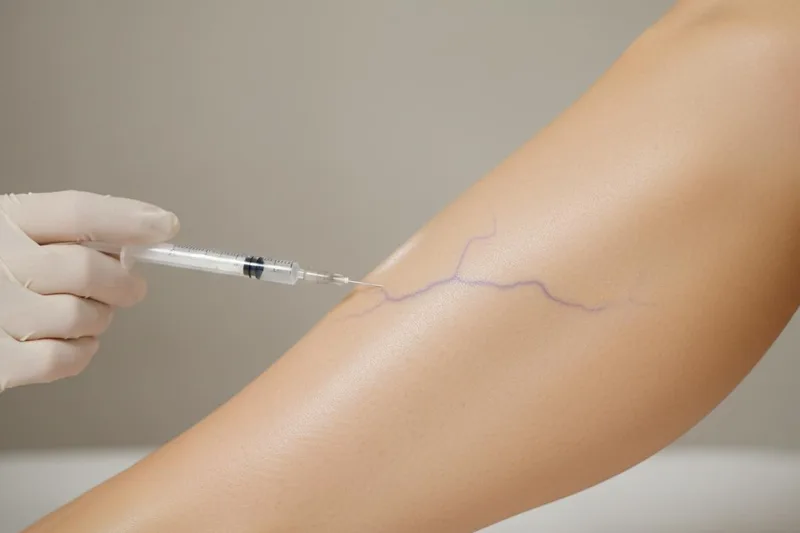
You may have noticed that some people, especially those who work on their feet for a long time, have blue or purple veins on their legs, twisted and knotted like worms. For some, this causes pain, heaviness, and itching in the legs. In medical terms, we call this condition Varicose Veins . In addition to being unsightly, it can also be painful at times. So, one effective treatment for this condition of Varicose Veins is an injection called Sodium Tetradecyl Sulfate. Let's talk about this in detail and very simply today.
What is this Sodium Tetradecyl Sulfate vaccine? How does it work?
Simply put, Sodium Tetradecyl Sulfate is a drug that belongs to the group of drugs called Sclerosants . "Sclerosant" means "thickening" or "hardening". We call this treatment method Sclerotherapy .
Think of a varicose vein in your leg as an old water pipe that's just been sitting idle. It's filled with blood, swollen, and stretched. The doctor injects this medicine called Sodium Tetradecyl Sulfate directly into the varicose vein with a very fine needle.
When this medicine is injected into the vein, it "scrapes" the inner wall of the vein, causing a slight irritation. This causes the inner walls of the vein to stick together, closing the vein. Over time, your body turns the closed vein into a scar, which gradually dissolves and is removed. Eventually, the visible vein disappears. Blood flows normally through other healthy veins in the body.
Things you should definitely tell your doctor before getting vaccinated
This is very important. It is essential for your doctor to know your complete medical history to determine if this treatment is right for you and safe. If you have any of the conditions listed below, be sure to tell your doctor.
| Your medical condition | Why should you inform the doctor? |
|---|---|
| Diabetes (Diabetes Mellitus) | Diabetes can delay wound healing and increase the risk of infection. |
| Heart disease or blood vessel disease | People with pre-existing heart disease should be especially careful with this treatment, as there is a risk of blood clots. |
| Having a history of cancer | Some cancers and treatments can change the risk of blood clots. |
| Peripheral Artery Disease (e.g. Buerger's Disease) | If there is a problem with the arteries that supply blood to the legs, treating the veins can be risky. |
| Hyperthyroidism | The doctor should be aware of this condition because it affects the entire body's processes. |
| Lung disease or asthma | In a very rare allergic reaction, breathing difficulties may increase. |
| Infections of the skin or tissues | If there is an infection near the injection site, it must be healed before treatment. |
| Being pregnant, trying to get pregnant, or breastfeeding | In these cases, this treatment is not usually given because there is no specific data on the possible effects on the child. |
| Having had an allergy to this medicine or other medicines, foods, or dyes in the past | This is very important to assess the risk of allergic reactions. |
Other drugs that may cause problems with this medicine
You should also tell your doctor about any other medications you are taking. In particular, medications containing female hormones , such as birth control pills, patches, rings, or injections , may interact with this medication. Some hormones slightly increase the risk of blood clots, and sclerotherapy may increase that risk even more. So tell your doctor about all medications, vitamins, and herbal remedies you are taking.
What should you pay attention to after treatment?
It is very important to follow the doctor's instructions exactly after the treatment is complete.
- Compression Stockings: You will often be instructed to wear special stockings (compression stockings) for a few days or weeks after treatment. These apply pressure to the treated veins from the outside, helping to keep the vein walls together. This also helps to reduce the risk of blood clots.
- Walking: The doctor will tell you to walk a little after the treatment. This will help improve blood circulation.
- Things to avoid: You are advised to temporarily stop doing things like strenuous exercise, taking hot baths, and going to the sauna.
What to do if you overdose ? This vaccine is given by a doctor in a hospital or clinic, so the chances of this happening are very low. However, if you think you may have overdosed, go to the Emergency Department (ETU) immediately. If necessary, you can also call the National Poisons Information Centre at the Colombo National Hospital for advice.
Possible side effects of this vaccine
As with any medical treatment, there are potential side effects. However, serious side effects are rare. It is important to be aware of these.
| Side effects that should be reported to your doctor immediately | |
|---|---|
| Serious Allergic Reactions | Skin rash, severe itching, swelling of the face, lips or tongue. |
| Difficulty breathing | Shortness of breath, feeling of tightness in the chest. |
| Symptoms of a blood clot | Sudden swelling, pain, redness, or a feeling of warmth in the leg. |
| Side effects that are usually not serious, but should be reported to the doctor if they persist | |
| The injection site | There may be temporary pain, itching, numbness, or slight skin discoloration (brown spots). These spots will disappear within a few months. |
| Headache | A slight headache may occur. |
| Nausea or vomiting | Some people may feel nauseous. |
If you experience any other unusual symptoms not mentioned on this list, don't be afraid to talk to your doctor about them.
Take-Home Message
- Sodium Tetradecyl Sulfate Injection is a safe and effective treatment for varicose veins.
- Before undergoing this treatment, be sure to tell your doctor about all medical conditions you have and all medications you are taking (especially hormones).
- Follow the doctor's instructions carefully after treatment, especially regarding wearing compression stockings and walking.
- Seek immediate medical attention if you experience any serious symptoms, such as difficulty breathing, facial swelling, or sudden pain and swelling in your leg.
- If you have any further questions about this treatment, please ask your doctor for clarification.


💬 Comments (0)
No comments yet. Be the first to share your thoughts here.
Add Your Comment