
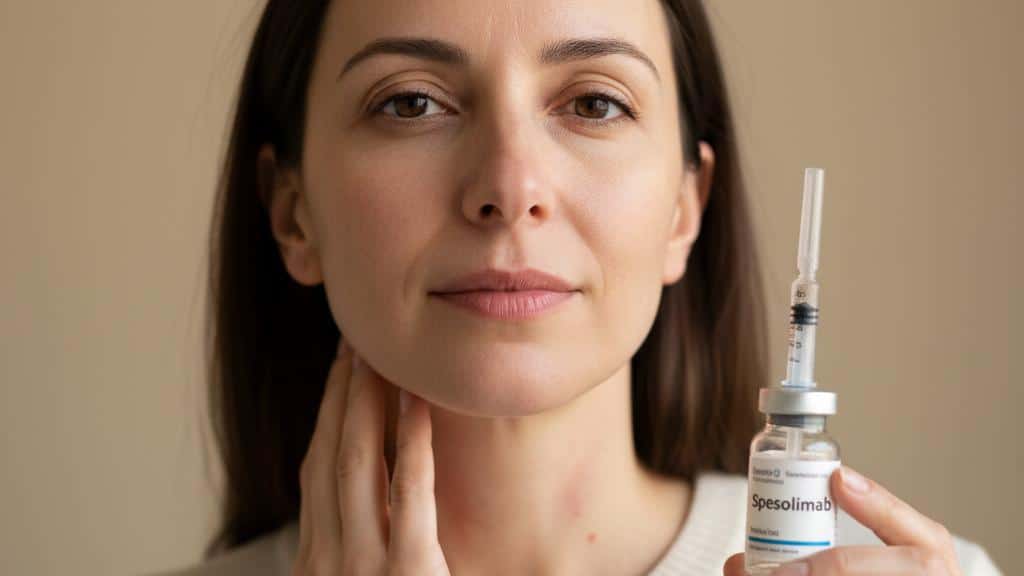
Dealing with sudden, painful skin bumps filled with pus can be overwhelming and exhausting. If you or a loved one lives with generalized pustular psoriasis, known as GPP, you know how intense those flare-ups can be. This guide explains Spesolimab, a modern medical treatment designed to calm these severe skin flares quickly and safely.
Because this medicine is given only in a hospital or clinic setting, understanding what it does and how it works helps you feel more prepared and confident. Let us walk through everything you need to know about Spesolimab in clear, simple terms.
Key Takeaways About Spesolimab
- Spesolimab (brand name Spevigo) treats sudden, severe flare-ups of generalized pustular psoriasis (GPP).
- It is a prescription medicine given directly into your vein (intravenously) by a trained healthcare team in a hospital.
- The medicine works by calming your overactive immune system to stop skin inflammation and pus-filled bumps.
- You must share your complete medical history, including any current infections, before starting treatment.
- Your care team will monitor you closely during and after the infusion for any side effects or allergic reactions.
BMI Calculator
Know your body mass index (BMI) and weight classification
What Is Spesolimab Injection?
Spesolimab is a specialized prescription medicine created to stop sudden, severe flare-ups of generalized pustular psoriasis, or GPP. GPP is a rare and serious skin condition that causes widespread red skin covered with painful, pus-filled blisters.
Your immune system is your body defense network against germs. Sometimes, this system becomes overactive and mistakenly attacks your own healthy tissues. In GPP, this overactivity triggers rapid inflammation and painful skin lesions.
Spesolimab acts as a biological therapy, specifically a monoclonal antibody. It targets and blocks specific signals in your immune system that cause these severe flares. By calming down this immune response, the medicine helps clear your skin and brings relief.
You receive this treatment strictly in a hospital or specialized outpatient clinic under the direct supervision of your doctor. It is given through an intravenous infusion, meaning the medicine flows slowly into your vein through a small needle.
Things Your Doctor Needs to Know Before Treatment
Before you receive your first dose of Spesolimab, your medical team needs a complete picture of your health. Sharing accurate details ensures the treatment is safe for you.
Be sure to tell your doctor if any of the following apply to you:
- Current Infections: If you have any active infection, such as a fever, cough, cold, or chronic conditions like tuberculosis (TB), tell your doctor right away.
- Vaccination Plans: Mention if you have received any vaccines recently or if you plan to get vaccinated soon.
- Allergies: Report any past allergic reactions to Spesolimab, other biological medicines, foods, dyes, or preservatives.
- Pregnancy and Breastfeeding: Let your doctor know if you are pregnant, planning to become pregnant, or currently breastfeeding your baby.
Important Tip: Bring a complete list of every medicine you take to your appointment. Include prescription drugs, over-the-counter tablets, herbal supplements, vitamins, and traditional remedies.
Important Safety Precautions During Treatment
While you receive Spesolimab, your medical team will keep a close eye on your vital signs and general well-being. You also need to watch for specific signs and symptoms during your recovery.
1. Infusion Reactions
Some people experience mild to moderate reactions while the medicine enters their vein. To lower this risk, your doctor may give you other medicines beforehand. If you feel chest pain, shortness of breath, dizziness, or lightheadedness during the infusion, tell your nurse right away.
2. Higher Risk of Infections
Because Spesolimab temporarily calms your immune system, your body may fight off germs less effectively. Watch out for signs of infection like fever, chills, sore throat, persistent cough, burning when you urinate, or unusual fatigue. Contact your doctor right away if you notice any of these signs.
3. Lower Response to Vaccines
Your body may not build normal immunity from vaccines while you take this medicine. Avoid live vaccines during your treatment period unless your doctor explicitly approves them. Always check with your care team before scheduling any immunizations.
4. Serious Skin Reactions
In rare cases, serious skin reactions can develop weeks after starting treatment. Watch for a widespread rash accompanied by fever, swollen lymph nodes, or blistering and peeling skin. Report these symptoms to your medical team right away.
Possible Side Effects of Spesolimab
Like all medical treatments, Spesolimab can cause side effects, though not everyone experiences them. Most side effects are manageable when reported early.
| Side Effect Category | What to Look For |
|---|---|
| Allergic Reactions | Skin rash, itching, swelling of the face, lips, tongue, or throat. |
| Infection Signs | Fever, chills, sore throat, burning urine, unusual tiredness. |
| Infusion Reactions | Chest discomfort, trouble breathing, sudden dizziness. |
| Common Mild Effects | Headache, mild nausea, fatigue, or soreness at the injection site. |
What Happens If You Receive Too Much Medicine?
Because medical professionals give this drug in a controlled hospital setting, receiving an accidental overdose is very rare. If you ever suspect you received too much medicine, notify your care team right away for prompt medical evaluation.
What Happens If You Miss a Dose?
Keeping your scheduled hospital appointments for your infusions is crucial for managing your skin condition. If you miss an appointment, call your doctor or clinic right away to reschedule your infusion as soon as possible.
When to Seek Emergency Help
Call 911 (US/Canada), 999 (UK), or go to your nearest Emergency Department right away if you experience severe allergic symptoms, sudden chest pain, severe breathing trouble, or fainting.
💡 Take-Home Message
Managing generalized pustular psoriasis requires expert care and close teamwork with your doctors. Spesolimab offers a powerful way to calm severe flare-ups and protect your skin health.
Always communicate openly with your medical team about new symptoms, infections, or questions. By staying informed and keeping your appointments, you take active control of your health and well-being.






No comments yet. Be the first to share your question or experience below.