

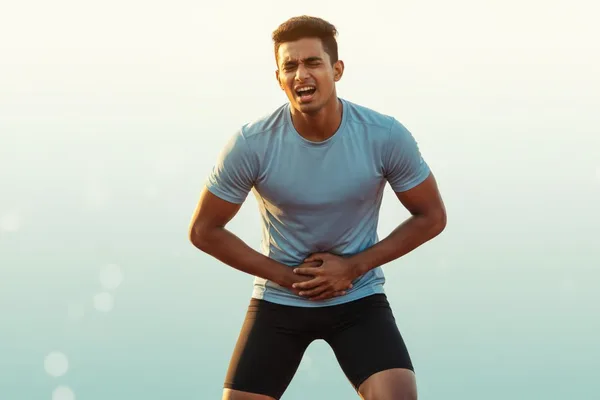
Are you a cricket or football player? Or do you exercise a lot? Have you ever suddenly felt a sharp pain in your groin or lower abdomen? Does it subside after a short rest, and then return to play? Many athletes have this experience. So today, let's talk about a condition called "Sports Hernia," which may be the cause of this.
What exactly is a Sports Hernia?
Even though it says "Hernia" in the name, this is not a typical hernia as we know it. That's why the name is a bit misleading. The name doctors prefer to call this condition is Athletic Pubalgia .
Simply put, a Sports Hernia is an injury to the muscles or tendons in your groin or groin area. Specifically, these muscles or tendons are torn. This causes chronic pain. Sometimes, this injury can even put pressure on the nerves in that area, making the pain worse.
This condition is most common among people who play sports that require sudden changes in direction or twisting their bodies. However, it can also occur in people who do not play sports.
What is the difference between a sports hernia and a regular hernia?
This is a place where many people get confused. Although the names sound the same, there is a big difference between the two. Let's understand this difference clearly.
The most important thing is that a Sports Hernia is a muscle tear. A normal Hernia is a protrusion of an organ, such as the intestine, through a hole in the abdominal wall.
The table below will help you understand this difference better.
| Specialty | Sports Hernia (Athletic Pubalgia) | A typical hernia |
|---|---|---|
| The cause of the pain | Tear or damage to soft tissues (muscles, tendons) in the abdomen or groin. | A hole in the abdominal wall that results in a portion of the intestine protruding through a weakness in the muscles. |
| Do you see a lump/swelling under the skin? | There is no visible lump or swelling. | There is often a lump or swelling that is visible under the skin and can be felt in the hand. |
But remember, sometimes an untreated sports hernia can weaken the area over time and lead to a regular hernia.
Who is most likely to experience this condition? In what types of sports?
This risk is highest for those who play sports that involve frequent, rapid rotations, especially those that use the pelvis. For example, when you run fast in cricket and suddenly change direction, when you kick fast in football, or when you swing and hit the ball in tennis, there is a lot of pressure on the muscles in this area.
The games where this situation is most common are:
- Soccer/Football
- Rugby
- Ice hockey
- Tennis
- Wrestling
- Hurdling
According to statistics, this condition is more common in men than in women . It is also most common in athletes between the ages of 26 and 28. It is very rare in children and the elderly.
See if you have these symptoms too.
The main symptom of a sports hernia is persistent pain in the lower abdomen or groin. However, there are several specific symptoms that can indicate the pain.
- When the injury occurs, there is a sudden, severe pain .
- Then, it continues to feel like a burning or dull pain .
- It's hard to point your finger exactly where the pain is coming from.
- The pain may feel like it is radiating from the lower abdomen to the scrotum or the inner thigh .
- The pain increases during activities such as sprinting, twisting, kicking, and getting out of bed.
- I feel pain in my groin when I cough or sneeze .
- Pain forces you to stop or significantly reduce your activity .
- The pain subsides when you rest, but the pain reappears when you start playing again. This is one of the main characteristics of this condition.
How do you find this, Doctor?
It's actually a bit difficult to diagnose a Sports Hernia precisely because there can be many other causes of groin pain. This type of pain can be caused by many things, such as hip joint problems and other muscle disorders.
Therefore, the first thing your doctor will do is ask you carefully about your symptoms and examine you.
- Physical examination: Your doctor will ask you to do an exercise that tightens your abdominal muscles, such as a sit-up. If you have a sports hernia, you will feel pain during this time.
- Imaging Tests: To confirm the diagnosis or check for other problems, you may be asked to do tests like these:
- MRI scan
- Ultrasound scan
- X-ray
- CT scan
After these tests, the doctor can tell you exactly whether you have a sports hernia or something else.
How is it treated?
There are several main goals when treating a sports hernia. These are to reduce pain, restore flexibility and strength, and get you back to your sport or daily activities.
Often, doctors first try non-surgical treatments.
Non-surgical treatment
- Rest: Rest and ice for the first 7-10 days after the injury can help reduce pain and swelling.
- Physical therapy: After about two weeks, you can begin exercises that strengthen the muscles of the lower abdomen and inner thighs and increase flexibility, under the guidance of a physiotherapist.
- Painkillers: Your doctor may recommend medications like ibuprofen to reduce swelling and pain.
- Corticosteroid injections: If the pain does not subside with regular painkillers, your doctor may decide to give you a steroid injection into the area of pain.
Surgical treatment
If the pain does not subside after several months of non-surgical treatment, surgery may be necessary. This involves repairing the torn muscle or tendon. There are two main types of surgery.
1. Open surgery: Here, the skin in the area is cut and the surgery is performed while looking directly at the damaged area.
2. Laparoscopic surgery: Instead of a large incision, only a few small incisions are made. A camera is inserted through one incision, viewed on a monitor, and fine instruments are inserted through other incisions to perform the surgery. This method has a shorter recovery time.
Physical therapy is essential to regain strength after surgery.
How long does it take to heal?
This depends on the severity of your condition and the treatment you receive.
- If you do physical therapy alone: You may see a significant reduction in pain and symptoms after about 6-8 weeks.
- If you have surgery: Surgery is 90% successful. If you follow proper physical therapy after surgery, you should be able to return to full activity within 6 to 12 weeks .
But remember, sometimes when you start playing again, the tissue can tear again. If that happens, you will have to have another surgery. That's why it's very important to take the exact rest period that your doctor tells you.
Take-Home Message
- A sports hernia is not actually a hernia. It is a tear or damage to the muscles or tendons in the lower abdomen or groin.
- If this pain subsides after rest and reappears when playing sports, that is a major symptom.
- This condition will not heal on its own, so if you have persistent groin pain, be sure to see a doctor.
- Physical therapy and sometimes surgery can completely cure this condition. Follow your doctor's instructions exactly.
- While it's sad to have to say goodbye to your sport for a while, giving your body the time it needs to heal is very important to prevent this situation from happening again.




💬 Comments (0)
No comments yet. Be the first to share your thoughts here.
Add Your Comment