
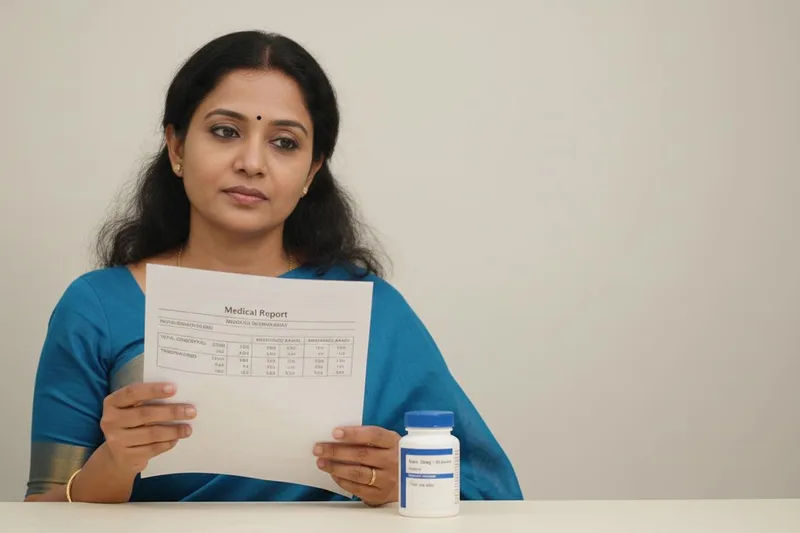
Did your latest blood test show that your cholesterol level is a little high? Did you feel a little scared and worried when you saw that your "bad cholesterol" or LDL level was also high? If so, your doctor may have prescribed you to start taking a 'Statin' type of medication. So today, let's talk very simply about 'Statins', which are important to many people.
Okay, what are these 'Statins'?
Simply put, 'Statins' are a type of medication that doctors prescribe to lower the level of cholesterol in your blood, especially the "bad" cholesterol.
When we talk about cholesterol, we always hear about two types, right?
1. LDL (Low-Density Lipoprotein): This is what we call "bad" cholesterol . Think of your blood vessels as a pipe that carries water. What this LDL cholesterol does is deposit like oily sludge on the inside of that pipe, gradually narrowing the way for blood to flow. Some types of 'statins' can reduce this bad cholesterol by 50% or more.
2. HDL (High-Density Lipoprotein): This is what we call "good" cholesterol . It picks up bad cholesterol that has built up in the arteries and delivers it to the liver to be removed from the body. It's like a garbage collector.
Statins not only reduce bad LDL cholesterol, but also help reduce triglycerides, another type of fat in the blood, and slightly increase good HDL cholesterol levels.
These medications are usually prescribed to be taken once a day, at the same time. Some statins work best when taken at night. This is because our bodies produce more cholesterol at night. However, some newer statins work just as well when taken at any time of day. Your doctor will explain this to you.
How does this medicine work inside the body?
This is a very interesting story. Imagine that your liver is the main factory that makes cholesterol. In fact, 75% of the cholesterol our body needs is produced in our liver. The rest comes from the food we eat.
So, the liver has an enzyme that is essential for this cholesterol-making process. It's called `HMG-CoA reductase`. The `Statin` drug acts like a gatekeeper, blocking the `HMG-CoA reductase` enzyme from reaching the liver. Then the liver loses a raw material needed to make cholesterol. As a result, the amount of cholesterol produced by the liver decreases significantly. Do you understand?
Simply put, a 'Statin' is a drug that reduces the amount of bad cholesterol in the blood by interfering with the production of cholesterol in the liver.
Why do we need 'Statins'?
The main reason is to reduce the risk of heart attack and stroke.
As I said before, when bad cholesterol increases in the blood, it gets deposited on the walls of the blood vessels. In medicine, we call this 'Atherosclerosis' . The cholesterol that builds up in this way is called 'plaque'. This reduces the space inside the blood vessels and hinders blood flow.
Imagine what happens if an artery supplying blood to the heart becomes blocked like this? The heart doesn't get the oxygen and nutrients it needs. That leads to a heart attack. And if this 'plaque' bursts in an artery supplying blood to the brain and a blood clot forms, it causes a stroke.
Statins lower cholesterol, significantly reducing the risk of these dangerous conditions.
What are the most commonly used types of 'statins'?
There are several types of 'statins'. Your doctor will prescribe the type that is most suitable for you, taking into account your health condition, cholesterol level, and other factors.
| Generic Name of 'Statin' | Common Brand Names |
|---|---|
| Atorvastatin | Lipitor®, Caduet® |
| Rosuvastatin | Crestor®, Ezallor Sprinkle® |
| Simvastatin | Zocor®, Vytorin® (with ezetimibe) |
| Pravastatin | Pravachol® |
| Lovastatin | Mevacor® |
| Fluvastatin | Lescol® |
Sometimes a 'statin' comes in the same pill with another drug. For example, a drug called ezetimibe with simvastatin.
Who is recommended to take 'Statins'?
A doctor will prescribe a statin for you based on your overall risk of heart disease. This depends on many factors, including your age, gender, family history, and whether you smoke. Statins are usually recommended for the following people:
- For those who are unable to reduce their cholesterol levels (especially LDL levels above 190 mg/dL) despite diet and exercise .
- For people with diabetes mellitus and between the ages of 40-75 years, with LDL cholesterol levels greater than 70 mg/dL.
- For those who have already had a heart attack, stroke, or peripheral artery disease (PAD) .
- For people aged 40-75 with an LDL level above 70 mg/dL, who are at high risk of heart disease.
- If someone in the family (parents, siblings) has had heart disease at a young age and has high cholesterol levels.
Are there any side effects to this?
This is a problem for many people. It is true that, like any medication, statins can have side effects. But the important thing is that most people do not experience any side effects. Even minor side effects that do occur will go away as the medication is continued.
| Side effect | Description |
|---|---|
| Common (usually not serious) side effects | |
| Muscle and joint pain | This is the most commonly reported side effect. It may feel like a general ache. |
| Headache | A slight headache may occur. |
| Digestive system problems | Nausea, bloating, flatulence, or constipation may occur. |
| Rarely seen serious side effects (requiring medical advice) | |
| Liver damage | Symptoms such as yellowing of the eyes (jaundice), dark urine, and extreme fatigue. |
| Rhabdomyolysis | This is a very rare condition. Symptoms include severe pain in the groin, weakness, and dark-colored urine. |
| Increased blood sugar levels | This risk may be slightly increased in those at risk for diabetes. |
Important: If you experience any side effects, never stop taking your medication on your own. The best thing to do is talk to your doctor about it. You may be able to resolve the problem by changing the type of statin you are taking or by adjusting the dosage.
Are there people who should not take statins?
Yes. Statins are not recommended for pregnant women, nursing mothers, and people with certain serious liver diseases. You should also tell your doctor about any other medications you are taking. Fruit juices, especially grapefruit and pomegranate juice, can interact with some statins, so ask your doctor about that as well.
What happens if you stop taking the medicine?
Once you stop taking a statin, your cholesterol levels go back up to where they were. That means your risk of heart attack and stroke goes back up. So it's usually a lifelong medication.
When to see a doctor immediately
If you experience any of the following symptoms while taking a statin, seek medical advice immediately.
- If you feel unbearable, severe pain or weakness in your muscles or joints.
- If you have body aches with a fever .
- If your eyes or skin look yellow (jaundice) .
- If your urine turns a dark color like tea leaves water .
In such a situation, it is best to go to a hospital's Emergency Treatment Unit (ETU).
Take-Home Message
- Statins are a very effective class of medications that lower bad cholesterol (LDL) and reduce the risk of heart attack and stroke.
- This drug works by stopping the liver from producing cholesterol.
- Even if you are taking a statin, it is very important to continue a healthy diet and exercise. Don't assume that just because you are taking a medication, you can eat whatever you want.
- If you experience any side effects, talk to your doctor without stopping the medication.
- Never stop taking a statin without your doctor's advice, as this can increase your health risks again.


💬 Comments (0)
No comments yet. Be the first to share your thoughts here.
Add Your Comment