

Have you ever had an endoscopy for a stomach problem or a condition like gastritis? At that time, the doctor may have told you, "You have some small growths inside your stomach, which we call polyps." This may sound a little scary, right? But don't worry. Most of the time, these are not dangerous. Let's learn more about stomach polyps today.
What are these polyps in the stomach?
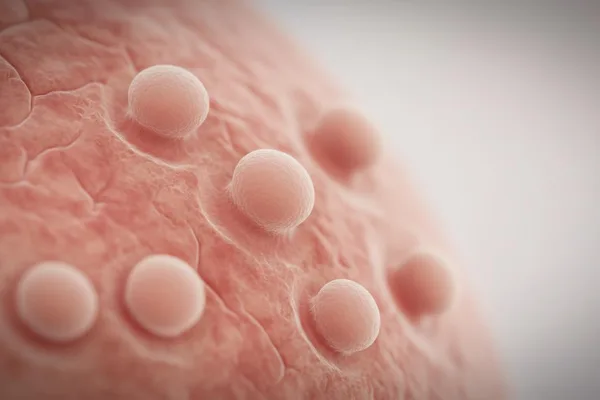
Simply put, Stomach Polyps are small growths or growths that develop on the lining of your stomach . They are also called Gastric Polyps. Think about it, our stomach has a mucous lining, and that's where these polyps grow. These are just like polyps that develop in other parts of our body, for example, in the large intestine.
The important thing is that most of these stomach polyps are not cancerous (benign) . That means they do not cause much harm. However, there are some types that can turn into cancer over time. That is why it is important to be aware of these.
Are these stomach polyps dangerous?
This is a big problem for many people. In fact, the risk of cancer in most of the most common types of stomach polyps is very low, sometimes even non-existent. Some types are precancerous . But even those are usually not cancerous when doctors find them. It takes a long time for a polyp to turn into cancer. That's why doctors remove them as soon as they are found, to prevent future cancer.
Important: Don't panic if you see a polyp. Listen carefully to what your doctor says. Most of the time, these can be easily removed.
What are these types of tumors that form in the stomach?
There are several types of polyps in the stomach. The most common are epithelial polyps . These are those that grow from the top layer of the lining (epithelium) of the stomach. In addition, there are also types that start from a little deeper layer and emerge, which are called mesenchymal polyps . These are a little less common.
Types of Epithelial Polyps:
The most commonly seen types of polyps fall under this category.
- Fundic Gland Polyps: These are the most common type of stomach polyps . They usually develop in the upper part of the stomach (fundus). If they are just there, the risk of cancer is very low, if not non-existent. However, they can develop more frequently with certain rare hereditary cancer conditions (for example, `Familial Adenomatous Polyposis (FAP)` and `Gastric Adenocarcinoma and Proximal Polyposis of the Stomach (GAPPS)`). In such cases, they may be precancerous.
- Hyperplastic Polyps: These are the second most common type. These are also not usually cancerous. They are often associated with gastritis . However, they can sometimes be present with other cancers, so they are also considered a warning sign. When doctors find them, they also examine the surrounding tissue to see if there are any cancer cells.
- Adenomatous Polyps (Adenomas): About 10% of all stomach polyps are of this type. These are the most common type of precancerous polyps that have the highest risk of becoming cancerous . They usually occur singly. However, they can also occur more frequently in people with hereditary conditions such as Familial Adenomatous Polyposis (FAP). Doctors remove these polyps as soon as they are found and test them for cancerous growths.
- Gastric Neuroendocrine Tumors (also known as Carcinoid Tumors): These arise from neuroendocrine cells in the lining of the stomach. They account for about 1% of all tumors in the stomach. They can be cancerous or benign. There are four different types, each with a slightly different prognosis. Doctors determine the risk of cancer by identifying the type.
- Hamartomatous Polyps (or Hamartomas): These are a small number, about 1% of gastric polyps. They can occur spontaneously, or they can be associated with rare hereditary diseases such as `Peutz-Jeghers syndrome`, `Juvenile Polyposis Syndrome`, `PTEN Hamartoma Tumor Syndrome`. When they occur spontaneously, they are usually an innocuous tumor that grows alone. However, when they occur with the aforementioned hereditary diseases, they grow in greater numbers and there is a risk of cancer.
Types of Mesenchymal Polyps:
These are relatively rare types of polyps that come from slightly deeper layers.
- Inflammatory Fibroid Polyps: These are a very rare, benign type of tumor. The exact mechanism of their formation is not yet known. Sometimes they are also called granulomas . These are collections of immune cells that accumulate during an inflammatory process. They usually grow alone and are small. However, if they grow large, they can cause problems. If a large one develops in the stomach, it can block the pylorus, the opening at the bottom of the stomach.
- Gastrointestinal Stromal Tumors (GIST): These are a rare, precancerous tumor. They start in the deepest layer of the stomach lining (the muscularis propria). Doctors remove them when they are found. They may need a separate procedure (Endoscopic Mucosal Resection (EMR) or Endoscopic Submucosal Dissection (ESD)) to remove them.
- Leiomyomas: These are rare, smooth muscle tumors. They form in the layer called the `Muscularis Propria` and can appear as lumps on the inner wall of the stomach. Sometimes these can be cancerous (Leiomyosarcomas). A separate procedure may be required to remove these tumors.
How common are stomach polyps?
In fact, overall, stomach polyps are not that common. Out of 100 upper endoscopy examinations, they are found in about 4 of them. About half of these polyps are the previously mentioned `Fundic Gland Polyps`. About 30% are `Hyperplastic Polyps`, 10% are `Adenomatous Polyps`. The remaining 10% are other rare types.
Do stomach polyps have symptoms?
Most of the time, stomach polyps don't cause any symptoms. They're usually discovered incidentally during a test you're doing for another reason. However, some types of polyps can bleed . Very rarely, some types can grow large enough to cause an obstruction . Here are some symptoms you may experience:
- Bleeding: You may not feel the bleeding inside your stomach. But if there is a lot of bleeding, you may notice signs of blood in your stool. (When bleeding comes from the upper part of your stomach , the stool will be black, tarry, rather than red.) Over time, the blood loss can lead to anemia . This can cause symptoms such as paleness, weakness, and fatigue.
- Blockage: If a polyp is large enough to block your digestive tract, you may experience symptoms such as nausea, bloating, and stomach pain . Your stomach may also hurt when you press on it. If a polyp actually blocks the entrance to your stomach, you may experience vomiting, loss of appetite, and weight loss .
What do these polyps look like?
Different types of stomach polyps can look different. Some are raised, somewhat like a tumor, while others are relatively flat. Doctors call polyps that are wide, slightly raised "sessile," and polyps that have a stalk-like head "pedunculated." Some types may have ulcers on the surface and may bleed.
Polyps can range in size from a millimeter to several centimeters. Most are small, because they grow very slowly. Large polyps are more likely to be cancerous, because they are older. But it is difficult for doctors to say for sure whether they are cancerous or not without looking at them under a microscope.
What causes stomach polyps?
Stomach polyps that develop in association with hereditary conditions are genetic. However, sporadic polyps are influenced by genetic causes as well as other factors. That is, different types of polyps develop due to different genetic mutations, but it seems that other factors are also involved in causing these mutations.
Here are some of the reasons researchers have found:
- Chronic Gastritis: Gastritis is an inflammation of the stomach lining. It can be erosive or nonerosive. Erosive gastritis is the most common. It is caused by chemical erosion or a chronic infection such as H. pylori. Nonerosive gastritis can cause the stomach lining to become thin (atrophic gastritis), which causes various cellular changes. Both types can lead to the development of various types of tumors, especially hyperplastic polyps, adenomas, inflammatory fibroids, and neuroendocrine tumors.
- Proton-Pump Inhibitors (PPIs): These are the drugs we take regularly for gastritis, heartburn, and acid reflux, like Omeprazole. When these are used long-term and frequently, they can affect the way the stomach lining works. When these drugs stop some cells from producing acid, other cells start producing more acid than necessary to make up for the deficiency. This is a common cause of those innocent `Fundic Gland Polyps`. Sometimes, this can also affect the development of `Gastric Neuroendocrine Tumors`.
How are polyps found (diagnosed)?
Most stomach polyps are found during an upper endoscopy (EGD) . The gastroenterologist or surgeon who performs this test takes a small piece of tissue (biopsy) from the polyp, or removes the polyp completely (polypectomy). The tissue samples are then sent for further testing. A pathologist examines them under a microscope to determine what type of polyp it is and whether it is cancerous.
What does it mean if you have polyps in your stomach?
Different types of polyps can mean different things. Depending on the type of polyp found, your doctor may order further tests to check for other conditions that may be involved. For example, they may order tests to check for an H. pylori infection or other chronic inflammatory conditions.
The number of polyps you have and their size are also important. If you have a lot of polyps, your doctor may recommend genetic testing to look for hereditary conditions. If it is confirmed that you have such a hereditary condition, you will need to check for polyps in other parts of your body. If precancerous polyps are found, you may need to have another endoscopy soon.
What are the treatments for stomach polyps?
Treatment depends on the type of polyps you have and their condition. Depending on this, the following treatments may be recommended:
- Stomach Polyp Removal: Your doctor may have removed polyps during an endoscopy (polypectomy). However, sometimes more polyps may need to be found or removed. Some difficult, deep polyps may require special procedures (`EMR`, `ESD`) or, rarely, surgery.
- Additional Polyp Screenings: If your doctor finds and removes polyps that are cancerous or may be cancerous, you should be rescreened soon to see if new ones develop. Your doctor will tell you how often to get rescreened, depending on the type and nature of the polyps found. They may also want to monitor how your body is responding to treatment.
- Treatment for Related Conditions: Sometimes, you may first be diagnosed with a treatable condition, such as gastritis, because of these stomach polyps. Your doctor may treat the polyps while also treating the underlying condition. Polyps that are directly related to H. pylori infection or the use of proton pump inhibitors (PPIs) may go away when those conditions are treated.
Can you prevent the formation of stomach polyps?
Treating chronic gastritis and its causes can help prevent some types of stomach polyps. Also, reducing the use of medications called `Proton Pump Inhibitors (PPIs)` can help reduce the formation of some types of polyps. However, most polyps that develop in association with `PPIs` are benign. So there is no rule that you have to stop taking the medication to prevent them. It is best to discuss this with your doctor.
What happens when you have polyps in your stomach?
If your doctor finds polyps in your stomach, they will do tests to find out what type they are and what they mean. Most of the time, they are not serious. The chance of finding a polyp that turns into stomach cancer is less than 2%. You may also be diagnosed with another condition that can be treated.
Do I need to change my diet after having polyps removed?
A nutritious diet helps the stomach heal after polyps are removed through an endoscopy. Also, a good diet is important to prevent gastritis, which is a major cause of stomach polyps. Doctors advise following an anti-inflammatory diet . That is, instead of artificial foods, excess sugar, and saturated fats, natural foods containing whole grains, lean proteins, and unsaturated fats should be prioritized.
When should I see a doctor?
After the polyps are removed , it is very important to go back for screening appointments as your doctor tells you. He will tell you how often to come back. Also, if you have any unusual symptoms, such as stomach pain or changes in your stool, you should also let your doctor know. He can then tell you if it is normal or if it needs to be checked out.
What questions should I ask the doctor?
You can ask questions like these:
- What type of polyps do I have?
- Are my polyps at risk of becoming cancerous?
- Am I at higher or lower risk of developing stomach cancer?
- What is the most likely cause of my stomach polyps?
- What changes should I make to prevent stomach polyps from developing in the future?
- When should I have my next endoscopy?
Finally, remember this (Take-Home Message)
Finding polyps in your stomach is usually an accident, when you're having a medical exam for something else. It can be a little disconcerting. But remember, most stomach polyps are not cancerous, and they have a low risk of becoming cancerous. In most cases, they're just another symptom of the condition that brought you to the doctor.
Depending on the type of stomach polyps you have, your doctor will have a lot of important information about your gastrointestinal health. He or she will know what to do to treat your condition and manage your risk of stomach cancer. If there is a risk, it is always better to find out sooner than later, right? So don't be afraid, listen to what your doctor says, and get the right treatment.
` Stomach polyps, stomach tumors, gastritis, endoscopy, stomach cancer, stomach problems, types of polyps




💬 Comments (0)
No comments yet. Be the first to share your thoughts here.
Add Your Comment