
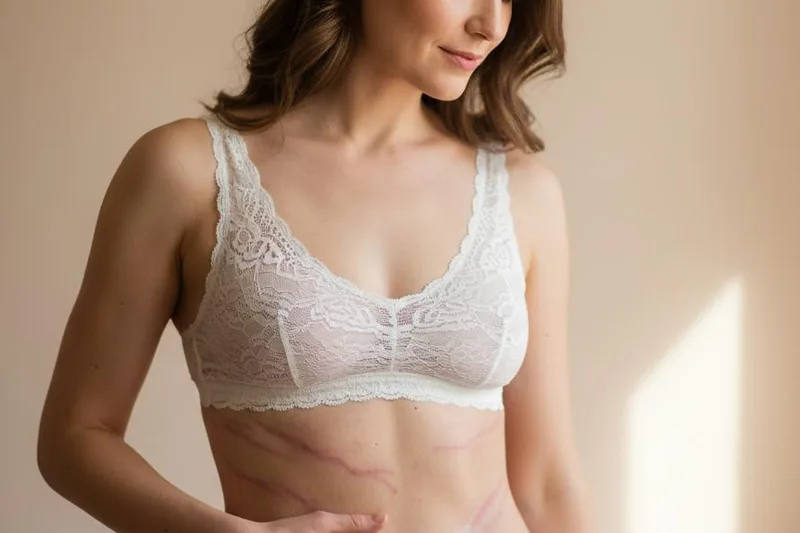
Have you ever looked in the mirror and noticed pink, purple, and sometimes white lines on your stomach, legs, hips, or arms? This is a very familiar experience for many people. We call these stretch marks. Some people look at them and think, "Oh, this is normal," while for others, they are a source of great stress and worry. So today, let's talk about what stretch marks are, why they appear, whether they can be prevented, and what can be done about them.
What are these stretch marks?
Simply put, stretch marks are lines that appear slightly deeper than the skin, and look like scars, that form when our skin stretches or contracts too quickly. In medical terms, we call these striae.
These are usually found in these places on our body:
- In the stomach (abdominal area)
- In the thighs
- In the hip area
- In the breasts
- In the upper arms
- Lower back
- In the buttocks area
These lines may initially appear red, pink, purple, or even black/brown. They may also feel a bit itchy. However, over time, the lines fade to a white or silvery, shiny appearance.
Who is more likely to develop stretch marks?
Actually, this is something that anyone can come to, regardless of gender or age. But for some people, this risk is a little too high. Let's see who they are.
| Risk factor | Explanation |
|---|---|
| Pregnancy | During pregnancy, especially in the last few months, the skin stretches rapidly as the belly grows rapidly. This is something that happens to many mothers. |
| Sudden weight gain or loss | When you suddenly gain weight or lose weight, your skin doesn't have enough time to adjust to the changes. These stretch marks can also appear. |
| Bodybuilders | When you suddenly increase muscle size after exercising, the skin in that area can stretch and stretch marks can appear. |
| Adolescence | As children grow older, that is, as they grow taller, their bodies grow rapidly. This growth spurt can also cause the skin to stretch and these lines to form. |
| Genetics | If your mother, father, or someone in your family has stretch marks, you are more likely to develop them too. |
| Some medical conditions | Stretch marks can also be caused by certain medical conditions, such as Cushing's syndrome or Marfan syndrome. |
| Long-term use of some medications | Prolonged use of steroid medications like prednisone can also cause the skin to thin and stretch marks to appear. |
Why do stretch marks really occur?
This is very simple to understand. Think of our skin as a rubber band. The elasticity, or flexibility, of this skin is given by a protein called elastin . And the strength, structure, or strength of the skin is given by a protein called collagen .
Now, if the skin is suddenly stretched too quickly, like a rubber band being pulled, the elastin and collagen fibers in the middle layer of our skin (dermis) break. As our body tries to heal these broken areas, those lines, or stretch marks, appear. At first, they appear red/purple because the blood vessels under the skin are visible. Over time, the wound heals and turns white, like a scar.
The most important thing is that stretch marks are not contagious. They do not spread from person to person through skin-to-skin contact. So don't worry about it.
How do these affect our bodies?
Stretch marks don't actually cause physical pain, but they can affect many people mentally.
This can be a big problem, especially for someone who is very concerned about their appearance. They may think things like, "How will other people look at me?", "Is my body no longer beautiful?", "I can't wear shorts." Because of this, some people have to deal with stress, anxiety, and even depression.
What are the treatments for stretch marks?
The first thing to note is that stretch marks are a bit difficult to treat. While treatments can help reduce their appearance and make them fade, they may not be able to completely eliminate them.
For best results, you should start treating stretch marks when they are new, meaning they are red/purple. It is a bit more difficult to treat them once they have turned white.
These are some of the main treatment options available. However, before trying any of these treatments, it is essential to talk to your doctor to choose the one that is best for you.
| Treatment method | What happens to it? | Possible side effects |
|---|---|---|
| Laser Treatment (Laser Skin Resurfacing) | A special light beam (laser) is used to very gently remove the top layers of the skin. This stimulates the production of new collagen, making the skin smoother. | White spots on the skin (milia), swelling, darkening of the skin (hyperpigmentation) or lightening (hypopigmentation). |
| Dermabrasion | Using a special device, the top layer of skin with stretch marks is scraped off. This also creates new, smoother skin. | In addition to the above side effects, skin pores may also enlarge. |
| Microneedling | A device with many very fine needles creates tiny holes in the skin. This stimulates the body to produce new collagen and elastin, strengthening the skin. Typically, 3-6 treatments are required. | Skin redness, swelling, skin discoloration, and peeling. |
| Retinol Cream | These are creams made from vitamin A. They can stimulate collagen production. However, you need to use them continuously for at least 6 months to see results. | Dry skin, redness, itching, skin discoloration, and sensitivity to sunlight. Pregnant or nursing mothers should definitely seek medical advice before using these. |
Things you can do at home and myths
Things you can try at home
Some studies have found that several natural things can help reduce the appearance of stretch marks.
- Aloe vera gel
- Cosmetics containing hyaluronic acid
- Cosmetics containing Centella asiatica extract
For best results, massage these into the stretch marks daily. However, you need to be patient and do it for at least a few weeks.
Important: If you are pregnant, it is best and safest to talk to your doctor before using anything like this.
The myths between us
Many people think that applying things like cocoa butter, coconut oil, olive oil, and almond oil will make stretch marks better and prevent them from coming back. Especially during pregnancy, mothers often apply these to their stomachs. However, scientific studies have clearly shown that these are not very effective in preventing or treating stretch marks.
Can't these be prevented?
To be honest, it's impossible to guarantee that stretch marks can be prevented 100% of the time, as there is also a genetic influence. But there are a few things we can do to reduce the risk.
1. Drink plenty of water.
Water is the best thing that helps our skin retain its elasticity and moisture. When the skin is well hydrated, it does not break easily. It is a good habit to drink at least 2-3 liters of water a day. If you drink a lot of caffeine-containing drinks like coffee and tea, you need to drink even more water, because caffeine can dehydrate the body.
2. Eat a balanced diet
It is very important to eat foods that contain nutrients that help with skin health.
- Foods rich in zinc: Nuts (cashews, peanuts), fish.
- Foods rich in vitamins A, C and D: Carrots, citrus fruits (oranges, tangerines), milk.
- Protein-rich foods: lentils, beans, broccoli, lean beef, chicken.
3. Exercise
Regular exercise improves blood circulation in the body. This helps the skin get the oxygen and nutrients it needs. Exercise also stimulates collagen production, helping to keep the skin strong and supple.
When should I see a doctor?
Stretch marks are not a serious condition that requires a visit to a doctor. However, it is a good idea to see a doctor in the following situations:
- If these have spread over a large area of your body.
- If these things cause you great worry and mental stress.
- If you are interested in this treatment and want to know more about it.
- If stretch marks appear suddenly, for no apparent reason (such as weight gain, pregnancy).
Because sometimes the creams and medications you use can cause adverse reactions to your skin. Therefore, it is always safer to undergo treatment under the guidance of a doctor.
Take-Home Message
- Stretch marks are very common. They form when the skin stretches or contracts rapidly.
- These are not harmful to physical health, but they can have a psychological impact.
- Treatment can reduce the appearance of these, but may not eliminate them completely. The earlier you treat them, the better the results.
- Drinking plenty of water, eating a balanced diet, and exercising can reduce the risk of stretch marks.
- If these lines are bothering you, don't be embarrassed to talk to your doctor about it. He or she will help you choose the best solution for you.


💬 Comments (0)
No comments yet. Be the first to share your thoughts here.
Add Your Comment