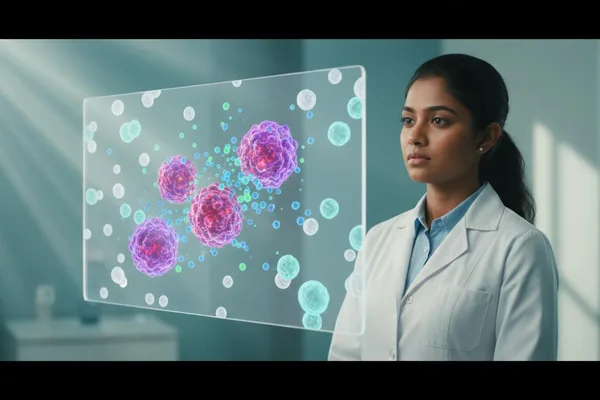
Let's learn about Targeted Therapy, a treatment that targets only cancer cells.

Let's learn about Targeted Therapy, a treatment that targets only cancer cells.

When we talk about the treatment given to someone fighting cancer, one word that immediately comes to mind is "Chemotherapy." But did you know that with the advancement of medical science, there are now new methods that can target only cancer cells and treat them while minimizing the damage to healthy cells? Today, we are going to talk about one such very specific, very advanced treatment method. We call this "Targeted Therapy."

Simply put, what is Targeted Therapy?

Imagine that your house has a lot of weeds. Now you have two ways to get rid of these weeds. One way is to spray the entire garden with herbicide. This will kill the weeds, but it may also damage the beautiful flowers and vegetables that you have grown with pleasure. That is how traditional chemotherapy often works. It kills rapidly dividing cells, including cancer cells, as well as healthy cells in our body (for example, hair cells, cells that heal wounds in the mouth).

Now the other method is to manually identify each weed one by one and apply herbicide only to it. Then the good flowers will not be harmed. Similarly, Targeted Therapy is a treatment method that identifies a specific characteristic of cancer cells and targets that characteristic. Due to this, the damage to healthy cells is very minimal. To put it precisely, this is like opening only a specific lock with a specific key. That is why this treatment method is also called "Precision Medicine". That means it is a very accurate, targeted medical treatment.

How exactly does this treatment work?

To understand this, we first need to understand a little about how cancer develops. Every cell in our body has something called genes. This is like an instruction book that tells the cell how to function. Sometimes, genetic mutations occur in this instruction book, that is, in the genes. Then a healthy cell starts to turn into a cancer cell. That means that cell starts to divide uncontrollably.

Here's what oncologists do during targeted therapy:

1. First, the genetic change that caused the cancer is identified: Your cancer cells are examined to find out exactly what specific genetic mutation caused the cancer to develop. Not all cancers have these targetable changes, but many types of cancer have them.

2. Target selection: Next, a specific protein or process that is produced on the surface or inside the cancer cell due to that genetic change is selected as a target. This target is usually not found in healthy cells, or is very rare.

3. Delivering the right drug: A special drug has been designed to bind to and block the selected target. When this drug enters the body, it goes directly to the target in the cancer cells.

This attack either destroys the cancer cell or blocks the signal that tells the cancer cell to divide and grow. As a result, the cancer stops growing and gradually begins to shrink.

Are there types of targeted therapy?

Yes, this treatment can be divided into several main types based on how it works. These names may sound strange to you, but it's good to know a little bit.

  • Small-molecule drugs: These are very small molecules. So they can go right into the cancer cell and attack the targets inside. These are usually taken as pills.
  • Immunotherapies: This involves stimulating our own immune system to recognize and destroy cancer cells. Under this, there are advanced treatments such as `(Monoclonal antibodies)`, `(Bispecific antibodies)` and `(CAR T-cell therapy)`.
  • Antibody-drug conjugates: This is a very cleverly designed drug. What happens here is that an anti-cancer drug (like a chemo drug) is attached to an antibody that seeks out cancer cells and sent into the body. When that antibody finds the exact cancer cell and attaches to it, the drug goes directly into the cancer cell and destroys it. It's like delivering a package to the right address.

What types of cancer is this treatment most often used for?

Targeted therapy is a successful treatment method currently used for many types of cancer. It is especially widely used for breast cancer, lung cancer, and prostate cancer. Not only that, but this treatment is also given for many other types of cancer.

System to which the cancer type belongs Examples
Blood-related cancers Multiple Myeloma, Acute Leukemia, Non-Hodgkin Lymphoma
Bone and soft tissue cancer Some soft tissue sarcomas
Cancer of the digestive system Colorectal cancer, Esophageal cancer
Cancer of the female reproductive system Cervical cancer, endometrial cancer
Head and neck cancer Laryngeal cancer, Nasopharyngeal cancer
Skin cancer Melanoma, Squamous cell carcinoma
Thyroid cancer Anaplastic thyroid cancer, Medullary thyroid cancer
Cancer of the urinary system Bladder cancer, Kidney cancer

Is this treatment suitable for everyone?

This is a very important question. Targeted therapy is not suitable for all cancer patients. Because, for this treatment to work, the "target" we talked about earlier must be present in the cancer cells. This treatment is only suitable for you if there is a specific genetic change or protein in your type of cancer that can be targeted by a drug. Your doctor will do the necessary tests and decide whether this treatment is suitable for your cancer or not.

How the treatment is given and what to expect

There are over 100 types of targeted therapy drugs, so the way they are administered can vary.

  • As a pill: Many medications are available as pills that are swallowed.
  • As an injection (shot): Some medications are given as an injection under the skin.
  • Through saline (IV): Some medications are given into the body through a saline solution given into a vein.

The treatment schedule also varies depending on the medication you are given. You may need to take it daily, weekly, or monthly. Some treatments are continuous, while others have a specific duration.

During your treatment, your doctor will check on you regularly. During this time, he or she may do blood tests, X-rays, and CT scans to see how you are doing and if the treatment is working. The doctor will also ask you about any side effects of the treatment and give you any necessary advice and treatment.

What are the possible side effects?

Although targeted therapy is less likely to harm healthy cells, it can still cause side effects. However, these are often different from the side effects of chemotherapy. The side effects you experience depend on the drug you are given and your body type.

Common side effects
Diarrhea
Dry skin or rash
Elevated liver enzymes - This can be detected through blood tests.
High blood pressure (Hypertension)
Delayed wound healing
Bleeding in the stomach or intestines (blood in the stool or black stools)
Blood clots
Heart conditions (e.g., arrhythmia)
Hair color change

The most important thing is to tell your doctor right away if you experience any side effects, even if they are minor. If something is more severe than expected, never be afraid to talk about it. The medical team will help you find the right medication or other treatment.

Is Targeted Therapy or Chemotherapy Better?

This is a question that many people have. It's not possible to say for sure that one is "better" than the other. It depends on the patient, the type of cancer, and many other factors.

  • Targeted therapy: Targeted therapy is more precise in that it targets only cancer cells, causing less damage to healthy cells.
  • Adaptation: However, as we mentioned earlier, targeted therapy is not suitable for everyone. For someone without a suitable "target", chemotherapy is still a very successful and effective treatment.
  • Combination therapy: In some cases, giving both targeted therapy and chemotherapy together can yield better results than giving either one alone.

Ultimately, your doctor will decide what treatment is best for you. He or she will review all of your medical records and the nature of your cancer and explain to you the best options available to you.

Targeted therapy is a revolutionary new treatment for cancer. As scientists continue to uncover the genetic secrets of cancer cells, more accurate and effective treatments are being developed every day. You may have many questions about this treatment. Don't be afraid to ask your doctor about it.

Take-Home Message

  • Targeted Therapy is an advanced cancer treatment method that attacks only specific targets in cancer cells, minimizing damage to healthy cells.
  • This treatment works by targeting genetic mutations that cause cancer cells to grow and divide.
  • The side effects may be different from chemotherapy, and may include skin problems, diarrhea, and high blood pressure.
  • This treatment is not suitable for every cancer patient. It depends on the genetic characteristics of your cancer.
  • It is very important to talk openly with your oncologist about all the treatment options available to you, their pros and cons.

Targeted Therapy, Cancer Treatment, Chemotherapy, Cancer, Cancer treatment in Sinhala, Oncologist, genetic mutation, Sri Lankan medical advice

⚠️ Important: The medical articles and information on Nirogi Lanka are for general awareness only, and are by no means a substitute for professional medical advice, diagnosis, or treatment. For any medical problem you have, consult a qualified physician immediately.

💬 Comments (0)

No comments yet. Be the first to share your thoughts here.

Add Your Comment

Please calculate: 8 + 2 =
Let's learn about Targeted Therapy, a treatment that targets only cancer cells.
MedicationsJuly 7, 2026

Let's learn about Targeted Therapy, a treatment that targets only cancer cells.

When we talk about the treatment given to someone fighting cancer, one word that immediately comes to mind is "Chemotherapy." But did you know that with the advancement of medical science, there are now new methods that can target only cancer cells and treat them while minimizing the damage to healthy cells? Today, we are going to talk about one such very specific, very advanced treatment method. We call this "Targeted Therapy."

Simply put, what is Targeted Therapy?

Imagine that your house has a lot of weeds. Now you have two ways to get rid of these weeds. One way is to spray the entire garden with herbicide. This will kill the weeds, but it may also damage the beautiful flowers and vegetables that you have grown with pleasure. That is how traditional chemotherapy often works. It kills rapidly dividing cells, including cancer cells, as well as healthy cells in our body (for example, hair cells, cells that heal wounds in the mouth).

Now the other method is to manually identify each weed one by one and apply herbicide only to it. Then the good flowers will not be harmed. Similarly, Targeted Therapy is a treatment method that identifies a specific characteristic of cancer cells and targets that characteristic. Due to this, the damage to healthy cells is very minimal. To put it precisely, this is like opening only a specific lock with a specific key. That is why this treatment method is also called "Precision Medicine". That means it is a very accurate, targeted medical treatment.

How exactly does this treatment work?

To understand this, we first need to understand a little about how cancer develops. Every cell in our body has something called genes. This is like an instruction book that tells the cell how to function. Sometimes, genetic mutations occur in this instruction book, that is, in the genes. Then a healthy cell starts to turn into a cancer cell. That means that cell starts to divide uncontrollably.

Here's what oncologists do during targeted therapy:

1. First, the genetic change that caused the cancer is identified: Your cancer cells are examined to find out exactly what specific genetic mutation caused the cancer to develop. Not all cancers have these targetable changes, but many types of cancer have them.

2. Target selection: Next, a specific protein or process that is produced on the surface or inside the cancer cell due to that genetic change is selected as a target. This target is usually not found in healthy cells, or is very rare.

3. Delivering the right drug: A special drug has been designed to bind to and block the selected target. When this drug enters the body, it goes directly to the target in the cancer cells.

This attack either destroys the cancer cell or blocks the signal that tells the cancer cell to divide and grow. As a result, the cancer stops growing and gradually begins to shrink.

Are there types of targeted therapy?

Yes, this treatment can be divided into several main types based on how it works. These names may sound strange to you, but it's good to know a little bit.

  • Small-molecule drugs: These are very small molecules. So they can go right into the cancer cell and attack the targets inside. These are usually taken as pills.
  • Immunotherapies: This involves stimulating our own immune system to recognize and destroy cancer cells. Under this, there are advanced treatments such as `(Monoclonal antibodies)`, `(Bispecific antibodies)` and `(CAR T-cell therapy)`.
  • Antibody-drug conjugates: This is a very cleverly designed drug. What happens here is that an anti-cancer drug (like a chemo drug) is attached to an antibody that seeks out cancer cells and sent into the body. When that antibody finds the exact cancer cell and attaches to it, the drug goes directly into the cancer cell and destroys it. It's like delivering a package to the right address.

What types of cancer is this treatment most often used for?

Targeted therapy is a successful treatment method currently used for many types of cancer. It is especially widely used for breast cancer, lung cancer, and prostate cancer. Not only that, but this treatment is also given for many other types of cancer.

System to which the cancer type belongs Examples
Blood-related cancers Multiple Myeloma, Acute Leukemia, Non-Hodgkin Lymphoma
Bone and soft tissue cancer Some soft tissue sarcomas
Cancer of the digestive system Colorectal cancer, Esophageal cancer
Cancer of the female reproductive system Cervical cancer, endometrial cancer
Head and neck cancer Laryngeal cancer, Nasopharyngeal cancer
Skin cancer Melanoma, Squamous cell carcinoma
Thyroid cancer Anaplastic thyroid cancer, Medullary thyroid cancer
Cancer of the urinary system Bladder cancer, Kidney cancer

Is this treatment suitable for everyone?

This is a very important question. Targeted therapy is not suitable for all cancer patients. Because, for this treatment to work, the "target" we talked about earlier must be present in the cancer cells. This treatment is only suitable for you if there is a specific genetic change or protein in your type of cancer that can be targeted by a drug. Your doctor will do the necessary tests and decide whether this treatment is suitable for your cancer or not.

How the treatment is given and what to expect

There are over 100 types of targeted therapy drugs, so the way they are administered can vary.

  • As a pill: Many medications are available as pills that are swallowed.
  • As an injection (shot): Some medications are given as an injection under the skin.
  • Through saline (IV): Some medications are given into the body through a saline solution given into a vein.

The treatment schedule also varies depending on the medication you are given. You may need to take it daily, weekly, or monthly. Some treatments are continuous, while others have a specific duration.

During your treatment, your doctor will check on you regularly. During this time, he or she may do blood tests, X-rays, and CT scans to see how you are doing and if the treatment is working. The doctor will also ask you about any side effects of the treatment and give you any necessary advice and treatment.

What are the possible side effects?

Although targeted therapy is less likely to harm healthy cells, it can still cause side effects. However, these are often different from the side effects of chemotherapy. The side effects you experience depend on the drug you are given and your body type.

Common side effects
Diarrhea
Dry skin or rash
Elevated liver enzymes - This can be detected through blood tests.
High blood pressure (Hypertension)
Delayed wound healing
Bleeding in the stomach or intestines (blood in the stool or black stools)
Blood clots
Heart conditions (e.g., arrhythmia)
Hair color change

The most important thing is to tell your doctor right away if you experience any side effects, even if they are minor. If something is more severe than expected, never be afraid to talk about it. The medical team will help you find the right medication or other treatment.

Is Targeted Therapy or Chemotherapy Better?

This is a question that many people have. It's not possible to say for sure that one is "better" than the other. It depends on the patient, the type of cancer, and many other factors.

  • Targeted therapy: Targeted therapy is more precise in that it targets only cancer cells, causing less damage to healthy cells.
  • Adaptation: However, as we mentioned earlier, targeted therapy is not suitable for everyone. For someone without a suitable "target", chemotherapy is still a very successful and effective treatment.
  • Combination therapy: In some cases, giving both targeted therapy and chemotherapy together can yield better results than giving either one alone.

Ultimately, your doctor will decide what treatment is best for you. He or she will review all of your medical records and the nature of your cancer and explain to you the best options available to you.

Targeted therapy is a revolutionary new treatment for cancer. As scientists continue to uncover the genetic secrets of cancer cells, more accurate and effective treatments are being developed every day. You may have many questions about this treatment. Don't be afraid to ask your doctor about it.

Take-Home Message

  • Targeted Therapy is an advanced cancer treatment method that attacks only specific targets in cancer cells, minimizing damage to healthy cells.
  • This treatment works by targeting genetic mutations that cause cancer cells to grow and divide.
  • The side effects may be different from chemotherapy, and may include skin problems, diarrhea, and high blood pressure.
  • This treatment is not suitable for every cancer patient. It depends on the genetic characteristics of your cancer.
  • It is very important to talk openly with your oncologist about all the treatment options available to you, their pros and cons.

Targeted Therapy, Cancer Treatment, Chemotherapy, Cancer, Cancer treatment in Sinhala, Oncologist, genetic mutation, Sri Lankan medical advice

⚠️ Important: The medical articles and information on Nirogi Lanka are for general awareness only, and are by no means a substitute for professional medical advice, diagnosis, or treatment. For any medical problem you have, consult a qualified physician immediately.

💬 Comments (0)

No comments yet. Be the first to share your thoughts here.

Add Your Comment

Please calculate: 8 + 2 =