

What is 'Poison Ivy'?
You've probably heard the saying "Leaves of three, let them be!". This is often used to refer to the plant Poison Ivy. But did you know that not only Poison Ivy, but also Poison Oak and Poison Sumac contain the same chemical that causes severe itching and rashes on our skin? This dangerous chemical is called Urushiol. To be precise, it is a colorless, odorless , oily substance. Some people also call it resin. Urushiol is found in the leaves of these plants, and when it comes into contact with our skin, it causes all these problems. This affects our skin in a very subtle way.What are the symptoms of Poison Ivy?
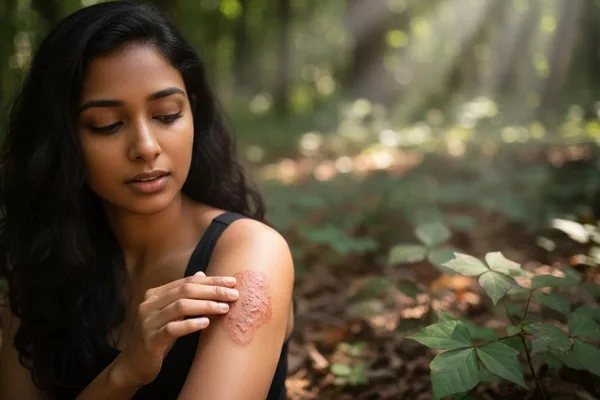
The chemical 'Urushiol' that we talked about earlier actually acts as an 'allergen' in our body. Simply put, when it comes into contact with our skin, our body's immune system reacts against it, which means it causes an 'allergic reaction' . In this reaction caused by 'Poison Ivy', the main symptoms that are seen are a skin rash , unbearable itching , and sometimes swelling of the skin . However, not everyone's skin reacts the same to this 'Urushiol'. Some people may not have anything happen to them, which is lucky for them. But for many people, this allergy will definitely occur. This allergic reaction takes some time to start. Some people may start showing symptoms within hours of contact with Urushiol. Others may not show any symptoms for up to 5 days. Imagine that you are walking in the woods with friends and accidentally touch your hand with a poison ivy plant. You may notice that part of your hand is red and itchy, or it may take a few days for the rash to appear. Then, small blisters will appear. That's what poison ivy is all about! These symptoms usually appear like this:- First, the skin turns red , starts to itch incessantly , and sometimes the area swells .
- Then, the water in that placeBlisters , which look like small water-filled blisters, begin to appear.
- After a few days, these blisters gradually dry out, become crusty , and begin to flake off .
When should we see a doctor?
If you have a rash of any kind and you are not sure if it is caused by poison ivy, especially if you have a fever along with the rash , it is best to see a doctor. Sometimes it can be caused by something more serious than poison ivy. Therefore, it is important to get a proper diagnosis. So, if your doctor determines that your rash is caused by poison ivy or another similar plant, he or she will likely tell you to take cool showers . They will also tell you to use a soothing, cooling lotion, such as calamine lotion . These can help reduce the itching and burning to a great extent. However, in severe cases, the condition can be quite severe . For example, if the rash is all over the body, or if it is infected in sensitive areas such as the face, around the eyes, or genitals, or if there is unbearable itching, pain, or severe swelling, the doctor may prescribe antihistamines or creams. These antihistamines mainly reduce the unbearable itching. In some very severe cases, steroids may also be prescribed. (These are not the same steroids that bodybuilders use, are they? These are drugs used for medical treatment.) These steroids help reduce redness, swelling, and itching quickly, helping to heal faster.Is this 'Poison Ivy' rash contagious?
This is a big problem and misconception among many people. To put it simply and clearly, the 'Poison Ivy' rash itself is not contagious. That is, if the fluid from a blister comes into contact with another person's skin, they will not get the rash. Therefore, there is no need to isolate or distance yourself from someone who has 'Poison Ivy'.But, here's the most important thing you need to understand: You can get this rash without touching the poison ivy plant directly! How do you know? The oil called 'Urushiol' remains active for a long time after it leaves the plant. So, that oil can be transferred to your body from someone else's skin, from the clothes they were wearing, or from the equipment they used (e.g., gardening tools). Imagine, if someone with poison ivy touches your body, or if you touch their clothes, the 'Urushiol' oil on their skin can get on your skin and cause a rash.Another dangerous thing is that if someone tries to destroy these 'Poison Ivy' plants by burning them, that 'Urushiol' (Urushiol) gets into the air along with the smoke. That smoke can cause this rash if you inhale it or if it comes into contact with your skin. Therefore, burning these 'Poison Ivy' plants is not at all safe. It can even damage the respiratory system.
How are we protected from this 'Poison Ivy'?
Poison Ivy can grow just about anywhere – not just in a big forest, but in your own backyard or on the side of the road (especially in countries like North America, where it is common). It can also be difficult to spot. Because the leaves of these poisonous plants blend in with other, harmless plants and look the same, they are hidden in plain sight. Not only that, there are different types of Poison Ivy, and their appearance, leaf shape, and color can change at different times of the year. If a Poison Ivy leaf is crushed, bruised, broken, or simply scratched, the oil inside the leaf called Urushiol is released. When that happens, sometimes the leaves may look a little shiny , or you may see black spots on the leaves. These are warning signs! That's when the Urushiol oil is most likely to get on your skin. So, here are some important things you can do to stay safe from this annoying Poison Ivy rash:- Learn to identify as many of the plants as possible, such as 'Poison Ivy', 'Poison Oak', and 'Poison Sumac'. You can find pictures of these online. Look for signs like clusters of three leaves and shiny leaves. This will help you stay away from them. (Be especially careful of plants that appear shiny and have recently released oil.)
- Minimize your visits to areas where you know or suspect there is poison ivy. Avoid unnecessary exposure to such areas.
- When going into areas with bushes or bushes where you think there may be 'Poison Ivy', be sure to wear long-sleeved shirts and long pants. Put on socks and shoes. This will go a long way in preventing your skin from coming into direct contact with the plant.
- If your beloved pet dog or cat comes back from a walk in the woods or bushes, bathe them thoroughly and remove any 'Urushiol' oil that may be on their fur. Because when the oil in the dog's or cat's fur touches you, it can also get on your skin and cause a rash.
What to do if you get poison ivy on your skin?
If you suddenly feel that Urushiol oil has come into contact with your skin, or if you suspect that you have come into contact with such a plant, do not delay for a minute, but wash the area thoroughly with soap and running water as quickly as possible. Then take a good shower. This is a very, very important step. Because if you wash quickly, you can remove the oil before it is absorbed into the skin.Never take a bath in a tub of water! If you do, the 'Urushiol' oil will get mixed with the bath water and spread to other areas of your body that weren't previously exposed, making the rash worse. Therefore, it's best and safest to always take a 'shower'.
So, what are the main things we need to remember?
Okay, we've talked a lot about 'Poison Ivy' now. I think you have a good understanding of it now. Simply put, it's a severe allergic reaction that occurs on our skin due to contact with plants that contain a chemical called 'Urushiol'. So, here are some of the most important things we all need to remember:- Be aware of and stay away from poison ivy, poison oak, and poison sumac, especially when walking in wooded areas.
- When going to places where you think there might be such plants, wear long clothing that covers your skin well. It's a great way to protect yourself.
- If you accidentally get this plant on your skin, immediately, that is, as soon as possible, take a good shower with soap and clean your skin. Do not take a bath for any reason .
- If you develop symptoms such as a rash, severe itching, or blisters, especially if you have a fever, be sure to see a doctor without delay.
- Poison Ivy itself is not contagious. However, be aware that the Urushiol oil in the plant can get on your skin and cause an allergic reaction if it comes from clothing, someone else's skin, pets, or even smoke from burning plants.
Poison Ivy, Urushiol, Allergy, Skin Eczema, Itching, Plant Poison, Skin Disease




💬 Comments (0)
No comments yet. Be the first to share your thoughts here.
Add Your Comment