
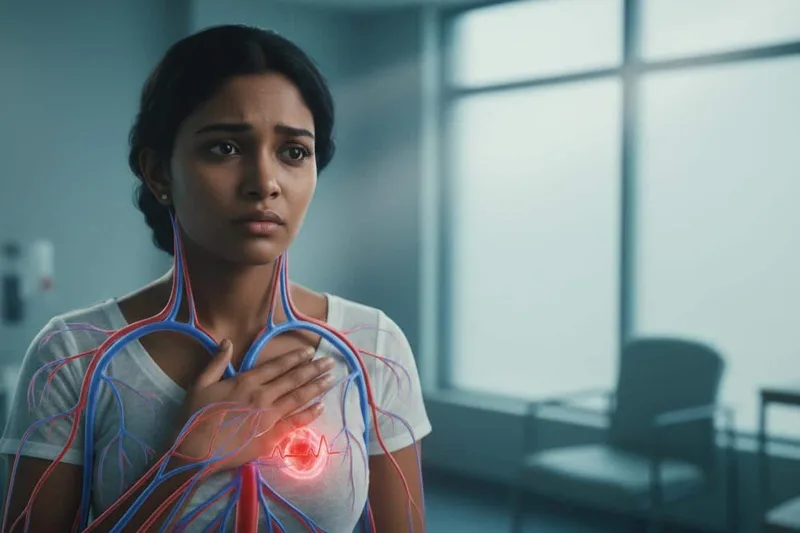
Have you ever wondered what would happen if a blood clot suddenly formed somewhere in the body? Sometimes this can be very serious, even life-threatening. Today, we will talk in detail about this blood clot, which is a condition medically known as thrombosis . If we know this properly, we can avoid many problems.
What is Thrombosis? Let's understand it simply!
Simply put, thrombosis is the formation of a blood clot (thrombus) inside a blood vessel or in a chamber of your heart. Think of it like a small piece of dirt blocking a water pipe and reducing the flow of water. This blood clot can block the flow of blood. The most dangerous thing is that sometimes this blood clot can break away from its original location, travel with the blood throughout the body, and get stuck in a blood vessel somewhere else, especially in the lungs or brain. If that happens, the blood flow to that organ will be cut off, which can be a life-threatening medical emergency . The symptoms of this vary depending on where the blood clot is located. They can include chest pain, difficulty breathing, and skin changes.
Some people are at higher risk of developing thrombosis, due to other medical conditions or other factors. Knowing if you are at risk can help you prevent it. Also, being aware of the symptoms can help you recognize a problem early.
Thrombosis is a very serious condition that can become more dangerous over time. Therefore, if you have these symptoms, it is best to seek medical attention immediately.
What are the complications that can occur due to thrombosis?
Depending on where this blood clot forms or where it travels and gets stuck, various complications can occur. Imagine how serious this can be:
- Lungs: If a blood clot gets stuck in the lungs, it's called a pulmonary embolism . You may experience sudden difficulty breathing and chest pain.
- Brain: If a blood clot blocks a blood vessel in the brain, it can cause a transient ischemic attack (TIA) . It can be like a mini-stroke. Or, it can be a severe stroke , which can lead to paralysis.
- Heart (coronary artery): If a blood clot blocks one of the main arteries that supply blood to the heart (coronary artery), a heart attack can occur.
- Neck (carotid artery): If a blockage occurs in the carotid artery, a major blood vessel in the neck that carries blood to the brain, it can cause a TIA or stroke.
- Stomach (superior mesenteric artery): If a blood clot blocks the superior mesenteric artery, a major blood vessel that supplies blood to the intestines, it is called mesenteric ischemia . This can cause severe abdominal pain, vomiting, and diarrhea.
What are the main types of thrombosis?
There are two main types of thrombosis. Let's see what they are:
1. Arterial thrombosis: This is when a blood clot forms in an artery. Arteries, as you know, are the blood vessels that carry oxygen-rich blood from the heart to all parts of the body. Arterial thrombosis is a major cause of heart attacks and strokes.
2. Venous thrombosis: This is when a blood clot forms in a vein . Veins are the blood vessels that carry used blood, or blood with high levels of carbon dioxide, back to the heart from various parts of the body. This is the most common cause of pulmonary embolism, a condition in which a blood clot gets stuck in the lungs.
These blood clots are dangerous whether they form in an artery or a vein. There are two reasons for this:
- Localized occlusion: The blood clot gradually grows in size at the site of formation , eventually blocking the flow of blood through it completely. The severity of this depends on where the clot formed and how large it has become.
- Blocking blood flow elsewhere: Sometimes this blood clot breaks away from where it formed and travels with the blood as an embolus . After traveling like that, it can get stuck in another small blood vessel in the body, blocking blood flow there. This is called an embolism . This is often the cause of conditions like ``stroke'' and ``pulmonary embolism''.
How common is thrombosis?
Thrombosis is more common than you might think. In fact, statistics show that thrombosis is the underlying cause of about one in four deaths worldwide . The reason for this is that thrombosis can lead to dangerous conditions such as heart attacks, strokes, and blood clots in the lungs.
People with certain medical conditions are especially at higher risk of developing this:
- Irregular heartbeat (`(Atrial fibrillation)`)
- Cancer (`(Cancer)`)
- Coronary artery disease (`(Coronary artery disease)`)
- Diabetes (`(Diabetes)`)
- Blood clotting disorders (e.g. `(Antiphospholipid syndrome)`)
- Tobacco use (smoking, smokeless tobacco)
What are the symptoms of (Thrombosis)?
The symptoms of thrombosis vary depending on the size of the blood clot, where it is located (i.e. where it formed or where it has become lodged), and the complications it causes. Blood clots are most likely to form in areas with very thin blood vessels. This is especially true in your lungs, brain, and lower legs and arms. Let's look at the common symptoms associated with each of these areas:
Pulmonary embolism (in the lungs)
- A sudden, sharp pain in and around the chest (jaw, neck, shoulder, back, arm).
- Feeling pain when breathing in.
- Sudden shortness of breath, whether during exercise or just at rest.
Transient ischemic attack (TIA) or stroke in the brain or neck
- Inability to control or weakness of muscles on one side of the body.
- Slurring words and stuttering when speaking.
- Uncontrolled drooping of one side of the face.
- Confusion, agitation, or other unusual behavioral changes.
Heart attack
- Chest pain or discomfort (angina).
- Difficulty breathing.
- Dizziness or lightheadedness.
- Women may also experience other symptoms in addition to these.
Abdominal (`(Mesenteric ischemia)`)
- Severe stomach pain, especially after eating.
- Stomach bloating, nausea, and vomiting.
- Diarrhea (maybe with blood).
- Fever.
In an artery in an arm or leg
- The skin appears paler than other areas.
- Feeling cold to the touch.
- Inability or weakness to move the affected arm or leg.
- Numbness or tingling (pins and needles), sometimes with pain.
- Blisters, sores, or ulcers.
- Skin sloughing (`(Skin sloughing)`).
- Tissue death (`(Necrosis)`).
In a vein in an arm or leg
- Skin that appears redder or darker than other areas.
- Pain, especially around the affected area.
- Swelling due to fluid accumulation.
- Feeling warm to the touch.
What are the causes of thrombosis?
Why do blood clots form like this? There are two main reasons. One is when something damages the lining of a blood vessel (the ``endothelium''). The other is when blood flows too slowly. Either way, the cells in your blood start to clump together, when they shouldn't.
Normally, the different types of cells in your blood live together peacefully, working together only when needed. For example, if you get a cut, platelets and proteins come together to form a clot to stop the bleeding. This process is called hemostasis . This is necessary. The clot dissolves as the wound heals. It's like an emergency meeting at the office, and once the problem is resolved, everyone goes back to their work.
However, due to various diseases, medications, and other factors, these components in your blood can clump together when they shouldn't, or the clot that forms may not dissolve when it should. As a result, a blood clot (`(thrombus)`) can form, grow larger, or even break loose and get stuck somewhere else (`(embolus)`).
Both of these situations are very dangerous and can cause life-threatening complications. That's why it's important to know what you're at risk for.
What are the risk factors?
Anything that interferes with your blood's ability to flow properly or clot normally increases your risk of developing thrombosis. This can be affected by many diseases, medications, and lifestyle habits.
Here are some specific risk factors:
- Fatty deposits inside blood vessels (`(Atherosclerosis)`)
- Irregular heartbeat (`(Atrial fibrillation)`)
- Over 60 years of age
- Blood clotting disorders
- Cancer (`(Cancer)`)
- Chemotherapy for cancer
- Diabetes (`(Diabetes Mellitus)`)
- If someone in your family has had blood clots before (family history)
- Some surgeries or medical procedures (e.g. central line placement)
- Heart failure
- Heart valve disease (`(Heart valve disease)`)
- High blood pressure
- High cholesterol
- Inflammatory or autoimmune diseases
- Obesity
- Loss of a leg
- Pregnancy
- If you have had a previous heart attack or stroke
- Sitting in the same position for a long time (e.g., long flights, staying in bed)
- Tobacco use
- Use of birth control pills containing estrogen
- Taking hormone replacement therapy for postmenopausal symptoms
How is Thrombosis diagnosed?
Doctors diagnose thrombosis based on:
- Physical exam: A doctor will examine you. They will ask you questions about your symptoms and medical history. They will look for areas of your body where blood clots may be present, palpate them for swelling, changes in tissue, and changes in temperature. They will listen to your heart, lungs, and digestive system with a stethoscope. They will check your arms and legs for pulses.
- Imaging tests: These tests can look inside your body. The tests you may have are:
- `(Computed tomography (CT) scans)`
- `(Magnetic resonance imaging (MRI))`
- Ultrasound tests
- X-rays of blood vessels (also called an angiogram or venogram)
- Blood tests: Blood tests can help find out if your blood is clotting too quickly and why. These tests usually look for:
- Blood components: There are several tests that measure the levels of certain types of blood cells, such as platelets, and chemicals that affect blood clotting.
- Blood clot markers: These are usually only present in your blood if there is a blood clot at the time. These can help determine whether or not there is a blood clot currently present.
- Signs of heart damage: An example is a protein called troponin . There is a special type of troponin that is only found in your heart muscle cells. When heart cells are damaged, such as during a heart attack, this troponin builds up in the blood. Troponin tests can confirm or rule out a heart attack. Troponin levels can also be elevated if there is a blood clot in the lungs, because the heart has to work harder to pump blood through the lungs.
How is thrombosis treated?
There are medications, minor surgical procedures, and major surgery to treat thrombosis. Your doctor will choose the treatment that is best for you.
Some possible treatments:
- Blood-thinners: These medications prevent your blood from clotting easily. They won't remove a blood clot that has already formed, but they can stop it from getting bigger. There are two main types of blood-thinners: antiplatelet drugs and anticoagulants .
- Thrombolytic therapy: This involves giving blood clot- busting drugs. These "clot-busting drugs" are especially important for blood clots in critical areas like the heart and brain. They are used as emergency treatment for complications such as heart attacks and strokes (thrombosis).
- Thrombectomy: The most direct way to remove a blood clot is for a surgeon to reach in and remove it. This is what happens in a thrombectomy. Surgeons use either open surgery or small incisions to do this.
In addition, you may need separate treatment for complications caused by thrombosis. Your doctor will explain what you may need and why.
How soon will I feel better after treatment?
Many people begin to feel better as soon as they receive treatment, especially when blood flow begins to return to areas that were previously blocked. This can take minutes or hours, depending on the location of the clot, its size, and the treatment given.
But if you've had a serious impact, like a heart attack or stroke, it may take a few days for you to start feeling better, especially if you've had surgery or needed intensive care.
Your doctor knows your condition best. He or she will tell you what to expect based on your specific situation.
How to prevent thrombosis?
Once you know you are at risk for blood clots, it is much easier to prevent them. The best way to know your risk is to have an annual physical/wellness visit/checkup. Your doctor can identify many of the conditions that increase your risk of blood clots before they occur and can help you avoid them.
Your doctor may recommend the following:
- Blood pressure medications: When you have high blood pressure for a long time, it puts unnecessary pressure on the inside of your blood vessels. This buildup can make it easier for blood clots to form and grow larger. Blood pressure medications can help prevent new blood clots from forming.
- Blood thinners: These medications prevent your blood from clotting easily. Doctors use different types to prevent and treat thrombosis.
- Cholesterol-lowering medications: Your cholesterol level affects the amount of fatty deposits (plaque) that build up inside your arteries. This fatty deposit increases the risk of thrombosis. Lowering your cholesterol can help limit this buildup.
- Weight control through diet and exercise: Try to eat a heart-healthy diet (e.g., the Mediterranean Diet). Also, get at least 150 minutes of moderate-intensity exercise per week. Doing so will help you maintain a healthy weight.
- Move more: Sitting for long periods of time increases the risk of thrombosis. If your job requires you to sit or stand for long periods of time, take short breaks. Even getting up and stretching for a few minutes can help. If you are unable to get up and walk due to health conditions or other reasons, ask your doctor about other ways to stay active and keep your blood flowing well.
- Quit tobacco use: Smoking and other forms of tobacco use (e.g., vaping, smokeless tobacco) greatly increase your risk of thrombosis. Ask your doctor for resources to help you quit. If you don't currently use tobacco, don't start.
If I have this condition, what should I expect?
Early diagnosis and treatment can help restore your blood flow and reduce the risk of complications. If your diagnosis is due to a complication (e.g., heart attack, stroke), your doctor will treat the condition and do everything they can to restore function to the affected organs and tissues.
How long does thrombosis last?
How long this lasts depends on the underlying cause, the treatment given, and how quickly you seek medical attention. Thrombosis can be short-term with prompt treatment. However, the conditions that cause it may be chronic or lifelong. For example, you may be at risk for thrombosis for a lifetime because of a blood clotting disorder that you are born with. Your doctor can help you manage the underlying condition and reduce your risk.
What is the outlook/prognosis for people with thrombosis?
Your recovery prospects depend on many factors, including:
- How quickly you seek medical advice.
- Where does a blood clot form?
- Whether the blood clot stays in one place or travels with the blood.
- Whether there will be complications.
A blood clot in one place is a problem, but it is usually less dangerous than a blood clot that travels with the blood. If a blood clot that breaks loose and travels to a critical organ such as the heart, brain, or lungs (thrombosis), the chances of recovery can be poor.
Your doctor can tell you more about your recovery expectations based on your individual situation.
How do I take care of myself?
If you have had thrombosis before or are at risk of developing it, you should definitely be aware of the following:
- Take your medication exactly as your doctor tells you. Stopping blood thinners, especially blood thinners, suddenly can greatly increase your risk of complications. Also, taking more than the recommended dose (for example, taking a double dose to make up for a missed dose) is dangerous.
- See your doctor regularly. He or she will tell you how often you should see your doctor. Go to every appointment so your doctor can keep a close eye on your condition.
- Make lifestyle changes. Ask your doctor what changes are most important to you, and ask about resources that can help you on that journey.
- Connect with others. Talking to others who are going through the same thing as you can help you manage your anxiety and fears. Your doctor can help you find communities where you can connect, either in person or online.
When should I go to the Emergency Department ( ETU )?
If you have symptoms of (Thrombosis), call 1990 immediately or go to the nearest hospital emergency room. Don't delay! (Thrombosis) is a very dangerous, life-threatening condition. Every minute you delay, the risk of complications increases.
Thrombosis is a condition that can quickly become a life-threatening emergency. The most important thing you can do is try to prevent thrombosis. While it is not always possible to prevent it, knowing the symptoms can help you recognize when to seek immediate medical attention.
If you have had a thrombosis before, you may be worried about what the future holds. Share your questions and concerns with your doctor. They are the best source of information about what you can expect based on your specific situation.
Summary: Things to remember!
So, this blood clotting condition called (Thrombosis) that we talked about today is something that we all need to be concerned about. It's not something that just goes away like a cold. The most important thing is to try to reduce the chances of developing it. That means living a healthy lifestyle and getting regular medical checkups.
Next, be aware of the symptoms. Don't ignore sudden chest pain, shortness of breath, swelling in an arm or leg, or numbness. If you have any doubts, don't hesitate to see a doctor. Remember, early treatment can save a life!
` Thrombosis, blood clot, blood clot, heart attack, stroke, pulmonary embolism, blood vessel


💬 Comments (0)
No comments yet. Be the first to share your thoughts here.
Add Your Comment