
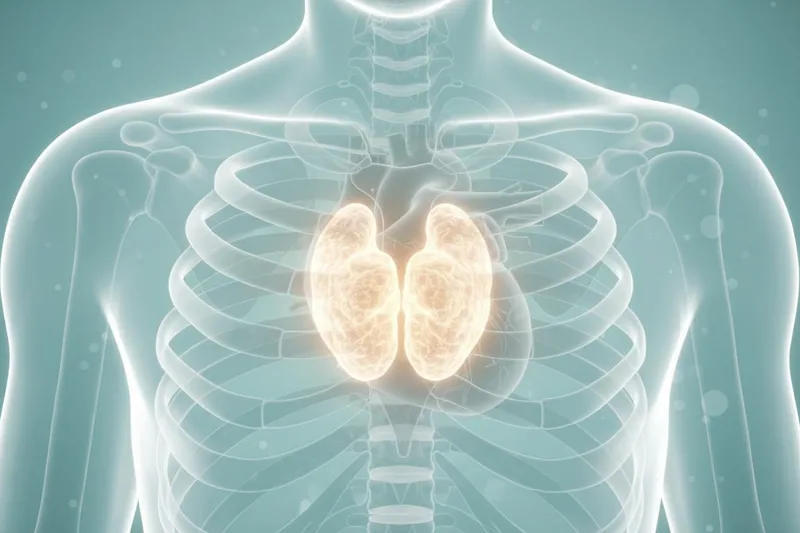
Have you ever heard of the 'Thymus Gland'? Probably not. It is a small gland in our chest, specifically in front of the heart. It is actually very important for our immune system when we are young. But sometimes this small gland can cause major health problems. That is when doctors recommend a surgery called 'Thymectomy'. So today we will talk about this, that is, the surgery to remove the thymus gland, in simple terms.
Simply put, what is a thymectomy?
Thymectomy is a surgical procedure to remove your thymus gland and any tumors that may have formed around it. It's not a very common surgery. A study in the United States found that about 7,000 of these surgeries were performed over a 13-year period. That's about 1,000 surgeries per year. So you can imagine that this is a somewhat specialized surgery.
What conditions is thymectomy performed for?
This surgery is mainly performed as a treatment for several problems related to the thymus gland. Let's take a look at what they are.
| Medical condition | A simple explanation |
|---|---|
| Myasthenia Gravis | This is an autoimmune disease. Simply put, the body's own immune system attacks the connections between the nerves and muscles in the body. This causes symptoms such as muscle weakness, drooping eyelids, and difficulty speaking and swallowing. Removing the thymus gland can largely control this condition. |
| Thymoma | This is a type of cancerous tumor that develops in the thymus gland. These are often the type of cancer that grows in the thymus. The main treatment is to remove the gland along with the tumor through surgery. |
| Neuroendocrine tumors | This is another type of tumor that can form in the thymus gland. |
| Benign tumors | Sometimes, non-cancerous, or benign, tumors can develop in the thymus gland. These are also removed during this surgery. |
How do you prepare before surgery?
Before a thymectomy, your doctor will take your complete medical history and examine you carefully. In addition, they may perform the following tests:
- Pulmonary function test: This checks how well your lungs are working.
- Electrocardiogram (EKG): This tests the electrical activity of your heart.
- Cardiac stress test: A test that measures the function of the heart during exercise.
- CT scan (Computed Tomography - CT scan): This can produce detailed 3D images of the inside of the body. This can help to accurately determine the size and location of the thymus gland.
- MRI Scan (Magnetic Resonance Imaging - MRI): This is another method that takes detailed images of the tissues inside the body.
- PET scan (Positron Emission Tomography - PET scan): This test is important to see the activity of cells in the body, especially if there are cancer cells.
Most importantly: You should tell your doctor about all the medications, vitamins, and supplements you are taking before surgery. Do not stop taking any medications without your doctor's advice. Often, you will be asked to stop eating and drinking from midnight the night before surgery.
To prevent breathing difficulties after surgery, especially if you have myasthenia gravis, you may be given intravenous immunoglobulin or plasma exchange therapy before surgery.
Let's learn about how the surgery is performed.
Thymectomy surgery can be performed in two main ways. One is the traditional method, which involves opening the chest, and the other is the method, which involves using a camera and robotics through just a few small incisions. Your surgeon will decide which method is best for you.
1. Transsternal approach
This is like open heart surgery.
- Step 1: The chest is opened by cutting all or part of the bone in the middle of the chest (sternum). This is called a sternotomy in medical terms.
- Step 2: The thymus gland and all affected tissue around it are removed from the opening.
- Step 3: After surgery, one or two chest tubes are placed in the chest to drain any fluid and blood that may have accumulated inside.
- Step 4: Finally, the chest bone is reattached using wires and the skin is sewn up.
2. Robotic-assisted or VATS (small incision method)
This is a minimally invasive procedure. VATS stands for Video-Assisted Thoracic Surgery.
- Step 1: About three small holes are made on one side of the chest. A camera is inserted through one of them.
- Step 2: Using a robotic arm or long instruments, and guided by camera images, the thymus gland (and any tumor, if present) is carefully separated from the surrounding tissue.
- Step 3: If necessary, a similar incision is made on the other side of the chest to complete the complete removal of the gland.
- Step 4: All the removed tissue is placed in a special bag inside the chest and taken out through a small hole that was made.
- Step 5: One or two tubes are inserted to drain the fluid.
- Step 6: To reduce pain after surgery, you will be given medication to block the nerves in the chest wall.
- Step 7: Finally, the instruments are removed and the small holes are sewn up.
This surgery can usually take between two and four hours, depending on the complexity of the surgery and the method used.
What happens after the surgery?
After the operation, you will be kept in a recovery room until you regain consciousness. The breathing tube that was placed in the operating room will be removed. Initially, you will need oxygen, intravenous fluids, and painkillers. You will usually be transferred to a regular ward on the same day as the operation.
What are the benefits and success rates of this surgery?
The results of this surgery are really good, especially for people with myasthenia gravis and those who have to undergo surgery through small incisions.
| Advantage category | Benefits received |
|---|---|
| Benefits for Myasthenia Gravis patients | |
| Hospitalizations | Decrease in the number of hospitalizations due to illness. |
| Drug use | Reducing the need to use medications like prednisone. |
| Symptoms | Decreased muscle weakness. |
| Complete recovery | Some people may even experience remission, where their symptoms disappear completely and they can live without medication. |
| Advantages of Minimally Invasive Surgery | |
| Time spent in the hospital | Shorter hospital stay. |
| Pain and complications | Reduced risk of pain, bleeding, and other complications. |
| Quick recovery | Being able to quickly return to normal activities. |
The majority of people who undergo this surgery for myasthenia gravis see good results within a year . About 70% experience a reduction in symptoms and the need for medication. Between 30% and 40% may experience complete resolution of symptoms.
Surgery for thymoma cancer can often completely cure this cancer.
What are the possible risks of surgery?
As with any surgery, thymectomy can carry some risks and complications, but these are very rare.
- Damage to the heart, a nerve, or a nearby blood vessel.
- Heavy bleeding.
- Pneumothorax: Collapse of a lung.
- Pneumonia: A lung infection.
- Hemothorax: Collection of blood between the chest wall and the lung.
- Chylothorax: Collection of fluid between the chest wall and the lung.
- Very rarely, the stress of surgery can cause a worsening of myasthenia gravis symptoms ( myasthenic crisis ).
Recovery and what to expect going forward
Recovery time depends on whether you had open surgery or minimally invasive surgery. Most people will need to stay in the hospital for at least one night. The pain from the surgery usually goes away after about two weeks. You should take the painkillers your doctor gives you.
After surgery, your neurologist will continue to monitor you. Depending on your symptoms, he or she will decide how long you should take your myasthenia gravis medication and how to reduce the dosage.
For thymoma cancer, the outlook depends on the stage of the cancer.
- Stage I: There is a greater than 95% chance of complete recovery.
- Stage II: There is a 75% to 80% chance of cure. Radiation therapy may be required.
- Stage III: There is a 25% to 40% chance of cure. Both radiation and chemotherapy may be required.
When should I see the doctor again?
After you go home after surgery, if you experience any of the following symptoms, you should notify your doctor immediately .
- Difficulty breathing.
- Severe pain on one side of the chest.
- Rapid breathing.
- Rapid heartbeat.
- Fever.
- Cough.
- Bleeding from the surgical wound.
- Recurrence of myasthenia gravis symptoms.
It's normal for anyone to feel a little scared when they hear about surgery. But remember, surgeons do these things all the time. Their goal is to give you the best possible outcome. So, feel free to ask your doctor any questions you have about your surgery or the procedure. It will put your mind at ease.
Take-Home Message
- Thymectomy is the surgical removal of the thymus gland in the chest.
- This surgery is mainly performed as a treatment for conditions such as Myasthenia Gravis and Thymoma .
- The surgery can be done open or minimally invasive . The minimally invasive method results in faster recovery and less pain and complications.
- Recovery time and results may vary from person to person and depending on the surgical procedure.
- If you experience any unusual symptoms after surgery, notify your doctor immediately.
- Discuss any questions or concerns you have about your surgery with your doctor.


💬 Comments (0)
No comments yet. Be the first to share your thoughts here.
Add Your Comment