

When you have a small scratch or wound on your body, or your eyes are red or your ear is infected, we often think of applying some cream from the pharmacy and healing it quickly, right? But we need to be very careful when using these types of medicines, especially antibiotics. Because a small mistake due to ignorance can cause a big problem. So, today we will talk about antibiotics that are applied externally to the body, or Topical Antibiotics.
What are these Topical Antibiotics?
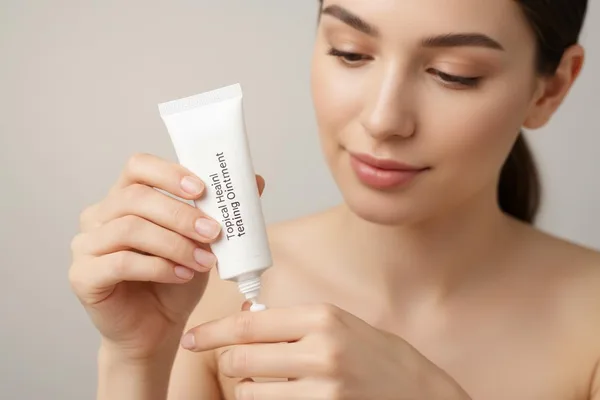
Simply put, topical antibiotics are antibiotics that are rubbed, applied, or smeared directly on the outside of our bodies, such as the skin, eyes, or ears, where there is a bacterial infection. While these can sometimes be purchased over-the-counter (OTC) at pharmacies, most types are only available with a prescription from a doctor.
Antibiotics either kill bacteria or stop them from multiplying. However, the end result is that the bacteria die and the infection is cured. The important thing is that these medications only work against bacterial infections . They are not useful for diseases caused by other germs, such as viruses.
Instead of going throughout the body like a pill we take, these topical antibiotics work only at the site of the infection. That's why they work a little differently. Let's divide them into three main types.
| Type of medicine | Location and description of use |
|---|---|
| Dermal | These are the ones we see most often. They come in the form of creams, ointments, and gels. Sometimes they are also available as patches. Some bandages also contain these medications. These are used for things like skin infections, wounds, and scrapes. |
| Ophthalmic | These usually come in the form of eye drops. Sometimes there are also eye ointments. These medications are absorbed very quickly by the eyes. They are given for bacterial infections such as red eyes and discharge from the eyes. |
| Ear drops (Otic) | These usually come in the form of ear drops. They are used to treat conditions such as bacterial infections of the outer ear (otitis externa). |
What are the advantages of taking medicine this way?
There are several advantages to using topical antibiotics.
- Treating the infection directly: The biggest advantage is that it can be treated directly at the site of the infection. This means that the medicine does not travel throughout the body, but goes to the site of the problem and works. Then the effect of the medicine is more effective.
- Some side effects are less: You probably know that some of the antibiotics we take cause stomach upset and diarrhea. But with these medications, such side effects are much less. Because the medicine does not go inside the body.
- Quickly controlling infections: This method helps control a small wound or infection before it becomes a bigger problem, meaning before bacteria can spread and cause a bigger problem.
Isn't there any disadvantage then?
There are advantages as well as some disadvantages. It's important to be aware of this as well.
- Limited effectiveness of some medications: There are some topical antibiotic creams (OTC) that we can buy from the pharmacy without a prescription. However, these are not very effective against some common types of bacteria. However, the medications that a doctor recommends (prescription) are usually much stronger and more effective.
- Risk of side effects: Sometimes itching, redness, irritation, or allergic reactions may occur where this medicine is applied.
In fact, some doctors recommend using petroleum jelly instead of over-the-counter antibiotic creams (such as those containing Neomycin or Bacitracin) for minor abrasions because it helps keep the wound moist and heals, and it also has a lower risk of causing allergic reactions than those creams.
Things to be careful about when using the medicine prescribed by the doctor
This is the most important part. If a doctor prescribes a topical antibiotic for you, you should use it exactly as directed.
Use the medicine for the prescribed period: This is the number one rule. Whatever number of days your doctor tells you to use the medicine, you should use it for exactly that number of days. Even if the wound seems to be healing, don't stop taking the medicine just because it's a little less painful. If you stop, the bacteria that weren't completely killed can resurface and cause the infection to come back.
What's even more dangerous is that the bacteria can become accustomed to the drug and later become resistant to it, which means they can become antibiotic resistant. That's a big threat not only to you, but to society as a whole.
Can you put eye medicine in your ear?
Absolutely not. This is a mistake that many people make. Eye drops are for the eyes only, ear drops are for the ears only, and skin drops are for the skin only.
These medications are designed to be sterile and suitable for each site. Using medication from one site for another can worsen the infection and cause other complications.
When do you need to see a doctor?
You should definitely see your doctor in the following cases:
- If treatment does not improve the condition and/or the infection worsens.
- If you are experiencing unbearable side effects from your medication.
- If the infection recurs after using the medicine for the prescribed period.
Very important: If you have signs of sepsis , a condition where the infection has spread throughout your body, it is an emergency. For example, if you experience high fever, difficulty breathing, rapid heartbeat, extreme fatigue, or confusion, go to the Emergency Department (ETU) of your nearest hospital immediately. This is a medical emergency, just like a heart attack, and requires immediate medical attention.
Sometimes, you may feel reluctant to go to a doctor for a minor injury or red eye. But don't think so. No matter how big or small your problem is, it is the doctor's responsibility to help you. So, go and get advice without any fear or doubt.
Take-Home Message
- Do not use topical antibiotics at your own discretion from the pharmacy. Always seek medical advice.
- Use the medicine prescribed by your doctor, exactly as directed, for the full number of days prescribed. Avoid stopping the medicine just because your symptoms subside.
- Do not use eye medication in the ear, ear medication in the eyes, or skin medication on other areas.
- Petroleum jelly can sometimes be safer and more beneficial than an antibiotic cream for minor scrapes.
- If symptoms worsen or show signs of a serious infection such as sepsis, see a doctor immediately or go to the hospital's Emergency Department (ETU).




💬 Comments (0)
No comments yet. Be the first to share your thoughts here.
Add Your Comment