A new method of replacing a heart valve! (Transcatheter Pulmonary Valve Replacement - TPVR)

A new method of replacing a heart valve! (Transcatheter Pulmonary Valve Replacement - TPVR)

Can you imagine replacing a heart valve without opening the chest completely? Yes, it's now a reality. Today we're talking about this technology that has brought new hope to many people with pulmonary valve problems due to congenital heart disease. Let's start this with a very simple, friendly conversation.

Simply put, what is TPVR?

TPVR, which stands for Transcatheter Pulmonary Valve Replacement , is a surgery that replaces the malfunctioning pulmonary valve in your heart with a new valve through a very small incision. Usually, when we think of heart surgery, we think of a surgery that involves making a large incision in the middle of the chest and opening the chest. However, in this procedure, such a large incision is not made.

Instead, doctors make a tiny hole in the skin of your groin and do the work through it. This pulmonary valve, which acts as a gate that sends blood from your heart to your lungs, is very important. People who are born with congenital heart disease may develop problems with this valve as they get older after having surgery as children. So, replacing that valve with this method can greatly improve your lifespan and quality of life, and avoid having to undergo major surgeries again and again.

What actually happens in the TPVR system?

In traditional open-heart surgery, the chest bone is cut, the patient is connected to a heart-lung bypass machine, the old valve is removed, and a new one is inserted. This takes a long time, takes longer to heal, and for some people, this surgery is risky.

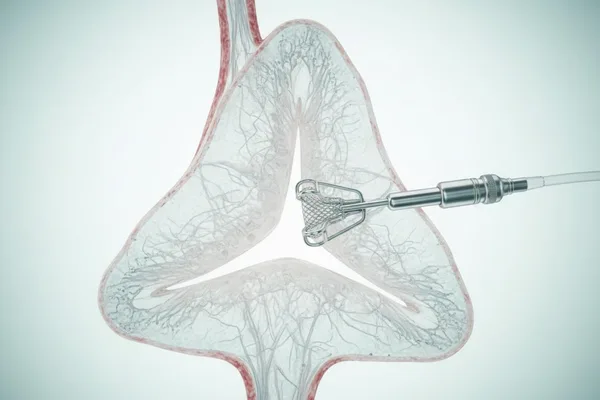
But that's not the case with TPVR. An interventional cardiologist inserts a small tube (catheter) through a vein in your groin and guides the new valve through the tube into your heart. This is all done under the guidance of technology such as X-rays. Once it's in the right place, the new valve is inflated with a balloon and fixed in place.

This is like fitting a new door frame into an old door frame without removing it.

After this is done, blood flow from the heart to the lungs is restored properly. The workload on the heart is reduced, and the body receives better oxygen. In most cases, a person who has had this surgery can go home the same day .

What happens if my pulmonary valve doesn't work properly?

There are two main problems that are seen in the pulmonary valve. Let's take a brief look at these.

Medical condition Simply put...
Pulmonary Stenosis The valve becomes narrow and does not open properly, which hinders the flow of blood from the heart to the lungs. This puts a lot of strain on the right side of the heart. Over time, the right atrium of the heart can even fail.
Pulmonary regurgitation (blood leakage from the pulmonary valve) Because the valve does not close properly, some of the blood pumped to the lungs leaks back into the heart. This also reduces the amount of blood going to the heart, increasing the strain on the right side of the heart and can lead to heart failure.

In both of these conditions, you may experience symptoms like:

  • Difficulty breathing (dyspnea)
  • Swelling of the abdomen and legs (edema)
  • Chest pain
  • Feeling like your heart is beating fast (palpitations)

These symptoms are caused by heart failure or irregular heartbeats (arrhythmias). These symptoms usually improve after TPVR surgery.

Who is this TPVR surgery most suitable for?

If you are born with a condition that affects the pulmonary valve of your heart, you may benefit from this surgery. In particular,

  • People who have had pulmonary valve surgery as a child.
  • Adults and young people who have had that valve become blocked or leaky over time.
  • Often, doctors consider the TPVR procedure for people who received a homograft (a valve transplant) from a donor at a young age, when that valve weakens over time.

Some of the main conditions treated with this surgery are:

  • Pulmonary Atresia: A condition in which the pulmonary valve is not formed at birth.
  • Regurgitant Pulmonary Valve: A condition in which blood leaks backward through the valve.
  • Tetralogy of Fallot: A condition in which good and bad blood mixes due to a combination of four heart defects.
  • Truncus Arteriosus: A condition in which the two main blood vessels coming out of the heart are joined together.
  • Transposition of the Great Arteries: A condition in which the two main blood vessels of the heart are switched and connected.

TPVR surgery has produced very successful results as a treatment for such conditions.

What happens before, during and after the surgery?

Preparation before surgery

To decide if this surgery is right for you, your doctor will first examine you carefully. He or she may perform several tests, such as:

  • Angiogram
  • Cardiac CT scan
  • Heart MRI
  • Echocardiogram
  • Electrocardiogram (ECG)

Based on the results of these tests, your doctor will either recommend TPVR surgery or decide to monitor your condition for a while. He will also advise you on what foods to eat and what medications to stop taking (especially blood thinners) before surgery. Don't forget to tell your doctor about any allergies you may have.

During surgery

Before the surgery begins, you will be given anesthesia so that you don't feel any pain. Only then will the specialist begin work.

1. First, a small incision is made in your groin (femoral vein) or possibly your neck (jugular vein) and a tube (catheter) is inserted through it.

2. Then, using technologies such as X-rays, the new valve is guided through the tube and along a wire to the correct location in the heart. This valve is folded over a balloon.

3. When it reaches the correct position, the balloon is inflated. The new valve expands and fits tightly inside the old valve. From that moment on, the new valve begins to work.

4. Finally, check that the valve is working properly and remove all the inserted tubes.

This entire process usually takes about two or three hours .

After the surgery

After the surgery, you will be kept in the hospital overnight for observation. If everything goes well, you will be able to go home the next morning . Your doctor will give you a set of instructions to follow when you go home. In most cases , you will be able to resume your normal activities within about seven days .

What are the advantages and risks of the TPVR method?

As with any medical procedure, there are benefits and minor risks. Let's be aware of both.

Advantages Risks/Complications
The recovery time is short. Pain, bruising, or swelling where the tube was inserted.
The risk of infection is low. Blood clot.
The hospital stay is shorter. Damage to blood vessels.
There are no big scars, just small cuts. Infections (especially infections of the inner lining of the heart - Endocarditis).
There is less risk than open heart surgery. Heartbeat irregularities (Arrhythmia).

Very rarely, serious complications such as heart attack, stroke, or death can occur. But these are very rare. Your doctor will talk to you about all of these in detail.

Some more questions you may have

How long will this new valve last?

It depends on many things, such as your overall health and heart function. Some people may need to have this type of surgery again after a while.

Do I need to do anything special before dental treatment?

Yes, this is very important. During dental treatment, bacteria from your mouth can enter the bloodstream and cause an infection of the new heart valve (endocarditis). Therefore, when you go to see a dentist, you should tell them in advance that you have had a heart valve replacement. You may also need to take antibiotics before a tooth is extracted.

Can I go through security checks at the airport?

Yes, no problem. X-rays and airport security scanners will not harm your valve. However, you should definitely talk to your doctor before having an MRI scan.

Take-Home Message

  • TPVR is a modern surgical procedure that replaces the heart's pulmonary valve through a small incision in the groin, without opening the chest.
  • This is especially suitable for people who have pulmonary valve problems due to congenital heart disease.
  • It has a shorter recovery time, fewer risks, and a shorter hospital stay than open heart surgery.
  • You can return to normal life within a few days after this surgery.
  • If you have a similar condition, talk to your cardiologist about this treatment method to see if it's right for you.

Heart valve, TPVR, Transcatheter Pulmonary Valve Replacement, heart surgery, pulmonary valve, congenital heart disease, pulmonary stenosis, pulmonary regurgitation

Frequently Asked Questions (FAQ)

What actually happens in the TPVR system?

In traditional open-heart surgery, the chest bone is cut, the patient is connected to a heart-lung bypass machine, the old valve is removed, and a new one is inserted. This takes a long time, takes longer to heal, and for some people, this surgery is risky.

How long will this new valve last?

It depends on many things, such as your overall health and heart function. Some people may need to have this type of surgery again after a while.

Can I go through security checks at the airport?

Yes, no problem. X-rays and airport security scanners will not harm your valve. However, you should definitely talk to your doctor before having an MRI scan.

⚠️ Important: The medical articles and information on Nirogi Lanka are for general awareness only, and are by no means a substitute for professional medical advice, diagnosis, or treatment. For any medical problem you have, consult a qualified physician immediately.

💬 Comments (0)

No comments yet. Be the first to share your thoughts here.

Add Your Comment

Please calculate: 2 + 9 =
A new method of replacing a heart valve! (Transcatheter Pulmonary Valve Replacement - TPVR)
SurgeriesJuly 7, 2026

A new method of replacing a heart valve! (Transcatheter Pulmonary Valve Replacement - TPVR)

Can you imagine replacing a heart valve without opening the chest completely? Yes, it's now a reality. Today we're talking about this technology that has brought new hope to many people with pulmonary valve problems due to congenital heart disease. Let's start this with a very simple, friendly conversation.

Simply put, what is TPVR?

TPVR, which stands for Transcatheter Pulmonary Valve Replacement , is a surgery that replaces the malfunctioning pulmonary valve in your heart with a new valve through a very small incision. Usually, when we think of heart surgery, we think of a surgery that involves making a large incision in the middle of the chest and opening the chest. However, in this procedure, such a large incision is not made.

Instead, doctors make a tiny hole in the skin of your groin and do the work through it. This pulmonary valve, which acts as a gate that sends blood from your heart to your lungs, is very important. People who are born with congenital heart disease may develop problems with this valve as they get older after having surgery as children. So, replacing that valve with this method can greatly improve your lifespan and quality of life, and avoid having to undergo major surgeries again and again.

What actually happens in the TPVR system?

In traditional open-heart surgery, the chest bone is cut, the patient is connected to a heart-lung bypass machine, the old valve is removed, and a new one is inserted. This takes a long time, takes longer to heal, and for some people, this surgery is risky.

But that's not the case with TPVR. An interventional cardiologist inserts a small tube (catheter) through a vein in your groin and guides the new valve through the tube into your heart. This is all done under the guidance of technology such as X-rays. Once it's in the right place, the new valve is inflated with a balloon and fixed in place.

This is like fitting a new door frame into an old door frame without removing it.

After this is done, blood flow from the heart to the lungs is restored properly. The workload on the heart is reduced, and the body receives better oxygen. In most cases, a person who has had this surgery can go home the same day .

What happens if my pulmonary valve doesn't work properly?

There are two main problems that are seen in the pulmonary valve. Let's take a brief look at these.

Medical condition Simply put...
Pulmonary Stenosis The valve becomes narrow and does not open properly, which hinders the flow of blood from the heart to the lungs. This puts a lot of strain on the right side of the heart. Over time, the right atrium of the heart can even fail.
Pulmonary regurgitation (blood leakage from the pulmonary valve) Because the valve does not close properly, some of the blood pumped to the lungs leaks back into the heart. This also reduces the amount of blood going to the heart, increasing the strain on the right side of the heart and can lead to heart failure.

In both of these conditions, you may experience symptoms like:

  • Difficulty breathing (dyspnea)
  • Swelling of the abdomen and legs (edema)
  • Chest pain
  • Feeling like your heart is beating fast (palpitations)

These symptoms are caused by heart failure or irregular heartbeats (arrhythmias). These symptoms usually improve after TPVR surgery.

Who is this TPVR surgery most suitable for?

If you are born with a condition that affects the pulmonary valve of your heart, you may benefit from this surgery. In particular,

  • People who have had pulmonary valve surgery as a child.
  • Adults and young people who have had that valve become blocked or leaky over time.
  • Often, doctors consider the TPVR procedure for people who received a homograft (a valve transplant) from a donor at a young age, when that valve weakens over time.

Some of the main conditions treated with this surgery are:

  • Pulmonary Atresia: A condition in which the pulmonary valve is not formed at birth.
  • Regurgitant Pulmonary Valve: A condition in which blood leaks backward through the valve.
  • Tetralogy of Fallot: A condition in which good and bad blood mixes due to a combination of four heart defects.
  • Truncus Arteriosus: A condition in which the two main blood vessels coming out of the heart are joined together.
  • Transposition of the Great Arteries: A condition in which the two main blood vessels of the heart are switched and connected.

TPVR surgery has produced very successful results as a treatment for such conditions.

What happens before, during and after the surgery?

Preparation before surgery

To decide if this surgery is right for you, your doctor will first examine you carefully. He or she may perform several tests, such as:

  • Angiogram
  • Cardiac CT scan
  • Heart MRI
  • Echocardiogram
  • Electrocardiogram (ECG)

Based on the results of these tests, your doctor will either recommend TPVR surgery or decide to monitor your condition for a while. He will also advise you on what foods to eat and what medications to stop taking (especially blood thinners) before surgery. Don't forget to tell your doctor about any allergies you may have.

During surgery

Before the surgery begins, you will be given anesthesia so that you don't feel any pain. Only then will the specialist begin work.

1. First, a small incision is made in your groin (femoral vein) or possibly your neck (jugular vein) and a tube (catheter) is inserted through it.

2. Then, using technologies such as X-rays, the new valve is guided through the tube and along a wire to the correct location in the heart. This valve is folded over a balloon.

3. When it reaches the correct position, the balloon is inflated. The new valve expands and fits tightly inside the old valve. From that moment on, the new valve begins to work.

4. Finally, check that the valve is working properly and remove all the inserted tubes.

This entire process usually takes about two or three hours .

After the surgery

After the surgery, you will be kept in the hospital overnight for observation. If everything goes well, you will be able to go home the next morning . Your doctor will give you a set of instructions to follow when you go home. In most cases , you will be able to resume your normal activities within about seven days .

What are the advantages and risks of the TPVR method?

As with any medical procedure, there are benefits and minor risks. Let's be aware of both.

Advantages Risks/Complications
The recovery time is short. Pain, bruising, or swelling where the tube was inserted.
The risk of infection is low. Blood clot.
The hospital stay is shorter. Damage to blood vessels.
There are no big scars, just small cuts. Infections (especially infections of the inner lining of the heart - Endocarditis).
There is less risk than open heart surgery. Heartbeat irregularities (Arrhythmia).

Very rarely, serious complications such as heart attack, stroke, or death can occur. But these are very rare. Your doctor will talk to you about all of these in detail.

Some more questions you may have

How long will this new valve last?

It depends on many things, such as your overall health and heart function. Some people may need to have this type of surgery again after a while.

Do I need to do anything special before dental treatment?

Yes, this is very important. During dental treatment, bacteria from your mouth can enter the bloodstream and cause an infection of the new heart valve (endocarditis). Therefore, when you go to see a dentist, you should tell them in advance that you have had a heart valve replacement. You may also need to take antibiotics before a tooth is extracted.

Can I go through security checks at the airport?

Yes, no problem. X-rays and airport security scanners will not harm your valve. However, you should definitely talk to your doctor before having an MRI scan.

Take-Home Message

  • TPVR is a modern surgical procedure that replaces the heart's pulmonary valve through a small incision in the groin, without opening the chest.
  • This is especially suitable for people who have pulmonary valve problems due to congenital heart disease.
  • It has a shorter recovery time, fewer risks, and a shorter hospital stay than open heart surgery.
  • You can return to normal life within a few days after this surgery.
  • If you have a similar condition, talk to your cardiologist about this treatment method to see if it's right for you.

Heart valve, TPVR, Transcatheter Pulmonary Valve Replacement, heart surgery, pulmonary valve, congenital heart disease, pulmonary stenosis, pulmonary regurgitation

Frequently Asked Questions (FAQ)

What actually happens in the TPVR system?

In traditional open-heart surgery, the chest bone is cut, the patient is connected to a heart-lung bypass machine, the old valve is removed, and a new one is inserted. This takes a long time, takes longer to heal, and for some people, this surgery is risky.

How long will this new valve last?

It depends on many things, such as your overall health and heart function. Some people may need to have this type of surgery again after a while.

Can I go through security checks at the airport?

Yes, no problem. X-rays and airport security scanners will not harm your valve. However, you should definitely talk to your doctor before having an MRI scan.

⚠️ Important: The medical articles and information on Nirogi Lanka are for general awareness only, and are by no means a substitute for professional medical advice, diagnosis, or treatment. For any medical problem you have, consult a qualified physician immediately.

💬 Comments (0)

No comments yet. Be the first to share your thoughts here.

Add Your Comment

Please calculate: 2 + 9 =