
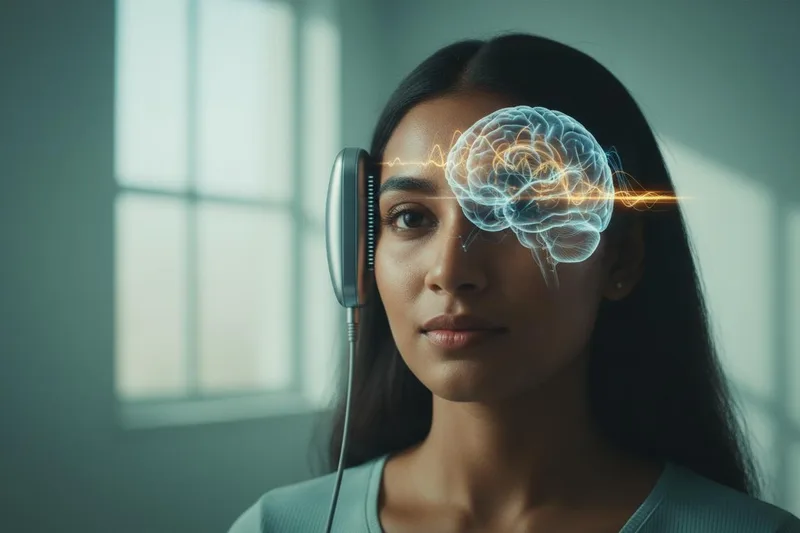
Do you sometimes feel that you are already taking medication for depression and that there is another way? Have you heard of a treatment that does not require surgery or anesthesia, but helps restore brain function? Today we are going to talk about a surprising treatment that has brought new hope to many people. This is called 'Transcranial Magnetic Stimulation' or TMS.
What exactly is TMS? How does a magnet affect the brain?
The name may sound a bit complicated, but let's break it down. TMS is a non-invasive treatment that uses a special device to send magnetic pulses to specific parts of the brain.
Now you might be wondering, "How does a magnet affect the brain?" It's very simple. We all know that there is a big connection between electricity and magnetism. Our brain is a very active place with millions of tiny electrical signals traveling back and forth. The nerve cells in our brain, called neurons, communicate, talk to each other, through these tiny electrical messages.
TMS therapy works by applying a strong magnetic field to a specific part of the brain, which stimulates the natural electrical activity of those nerve cells. Specifically, in conditions like depression, some parts of the brain may have lost activity. TMS works by 'rejuvenating' that lost activity. It's like restarting a dead car battery. It can affect the parts of the brain that control our emotions, decision-making, and happiness.
The most important thing is that this treatment is done on the surface of the head. This means that there is no need to cut the head in any way or insert anything inside.
Are there different types of TMS therapy?
Yes, there are several different ways to perform TMS therapy. It depends on the strength of the magnet used, the frequency and pattern of the magnetic waves sent. Let's take a look at the main types.
| TMS type/feature | Simply put... |
|---|---|
| Magnet Strength | This is measured in units called Tesla (Tesla - T). Typically, a strong magnet of 1.5T to 2T is used. This is similar to the strength of the magnet in an MRI scanner. However, in TMS, this magnetic field is focused on a very small, specific target. |
| Pulse Frequency | The number of times the magnet is switched on and off per second. This is measured in Hertz (Hz). Sometimes the waves are sent at a low rate (1 Hz), other times at a higher rate (5-10 Hz). This continuous delivery of waves is also called repetitive TMS (rTMS). |
| Pulse Patterns | Some treatments use a specific pattern of waves. An example is `(Theta-Burst Stimulation - TBS)`. This method can significantly reduce the time spent on treatment. |
| Deep TMS (Deep TMS - dTMS) | This uses a special device, like an H-shaped helmet. This can stimulate parts of the brain that are a little deeper than the surface. For example, this method has been found to be more effective for conditions like `(Obsessive-Compulsive Disorder - OCD)`. |
What conditions is TMS therapy used for?
TMS is not usually a first-line treatment. Doctors often recommend it when other treatments, especially medications, have failed. It is also used as a good alternative for people who cannot undergo treatments such as Electroconvulsive Therapy (ECT).
There are several conditions that have been officially approved for TMS treatment by agencies such as the US Food and Drug Administration (FDA).
- Major Depressive Disorder (MDD): Especially treatment-resistant depression.
- Obsessive-Compulsive Disorder (OCD): A condition characterized by persistent unwanted thoughts and an inability to control the actions they take.
- Migraines: Some types of migraine headaches.
- Smoking Cessation: As an aid to quitting smoking.
In addition to these approved conditions, research is underway around the world to see if TMS therapy can be beneficial for a number of other conditions. Some of these include:
- Various addictions
- Alzheimer's disease
- Bipolar disorder
- Chronic pain
- Parkinson's disease
- Post-Traumatic Stress Disorder (PTSD)
- Complications due to stroke
- Ringing in the ears (Tinnitus)
What happens before and during TMS treatment?
Before you undergo TMS treatment, your doctor will refer you to a specialist who has been specially trained in this field. This specialist will talk to you, review your medical history, and decide if this treatment is right for you and safe.
When TMS treatment should not be performed
There are some cases where TMS therapy can be dangerous .
- If you have metal or electronic devices implanted in your body: For example, if you have cochlear implants, metal plates in your skull, or aneurysm clips in your brain, you cannot have TMS. This is because the strong magnet in TMS can attract these metal parts. If this happens, pain or serious injury may occur.
- If you have epilepsy or a history of seizures: TMS treatment can very rarely cause seizures. Therefore, if you have a seizure disorder or are taking medications that increase your risk of seizures, your doctor may consider a different treatment.
Once your doctor has decided that this treatment is safe for you, they will explain the treatment schedule to you. TMS is not a one-time treatment. You will usually have to attend treatment sessions three to five days a week over a period of several weeks. For example, a standard treatment for depression is 6 weeks of treatment, 5 days a week.
What happens during a therapy session?
Imagine you went to therapy. All you have to do is do something very simple.
1. First, you will be seated in a very comfortable chair.
2. If your glasses have metal frames or you are wearing metal jewelry, they will ask you to remove them. This is a safety measure.
3. Next, you will be given two earplugs to put in your ears to reduce noise. This is because the TMS machine makes a slight 'ticking' sound when it is turned on. This is to prevent the sound from damaging your ears.
4. Then, the doctor or technician adjusts the magnetic coil of the TMS device to the correct position on your head.
5. Before the treatment begins, they will find the right spot on your head and gradually increase the strength of the magnet, sending out single pulses. At this point, you will feel a slight tap on your head.
6. As you increase the strength of the magnet, you may notice your hand, especially your thumb, twitching spontaneously. This is completely normal. Doctors expect this because it is how they know they have reached the right strength for the treatment.
7. Once the right location and strength are found, the magnetic waves will begin to be directed in the desired pattern. All you have to do is sit comfortably in the chair.
A treatment session can usually last from a few minutes to half an hour . It varies depending on the type of treatment you receive. After the treatment is over, you can go back to your normal activities without any discomfort.
What are the benefits and risks of TMS therapy?
Like any treatment method, TMS has benefits and some risks.
| Advantages | Risks & Side Effects |
|---|---|
| No surgery required (Noninvasive): There is no anesthesia, incision, or anything to be done. You can go home straight after the treatment. | Seizure: This is the most serious risk, but it is very, very rare . The risk is less than 0.01% (that's about one in 10,000 treatment sessions). |
| Safe: Side effects are usually not serious and are often temporary. | Headache: Some people may experience a slight headache after treatment. |
| Effective: Research has clearly proven that this treatment is effective for the relevant conditions. | Pain/discomfort in the scalp or neck: You may feel a little pain or discomfort where the magnet was placed. |
| Can save lives: For those with severe depression and suicidal thoughts, this treatment can reduce symptoms and give new hope for life. | Feeling dizzy. |
| Can be done with other treatments: This treatment can be done while taking medication or going to counseling. | A feeling of numbness in the muscles of the face or head. |
Important: Most of these side effects are very mild and go away within a few minutes of the treatment session.
When should you see a doctor?
If you have been prescribed TMS therapy, it is very important to attend your treatment sessions on time, as your doctor recommends . Missing sessions may reduce the effectiveness of the treatment.
Also, if the side effects you are experiencing seem severe, or if you are still experiencing discomfort hours after the treatment, be sure to let your doctor know.
What to do in an emergency?
People with conditions like depression or OCD can sometimes have thoughts of harming themselves or committing suicide. If you or someone you know is having these thoughts, please don't suffer alone. Seek help immediately.
- National Mental Health Helpline: Call 1926 .
- Sumithrayo: Call 011 2696666 and you can talk about your feelings with a friendly, confidential person.
- If you feel that you may be in immediate danger, go to the nearest hospital Emergency Department (ETU) immediately.
TMS is not a miracle cure for all illnesses, but it has been able to give many people who have not been able to recover from other treatments a new lease on life. So, if you or someone you know is suffering from a mental illness, talk to your doctor about these modern treatments.
Take-Home Message
- TMS is a safe, non-surgical treatment that uses magnetic waves to restore the function of nerve cells in the brain.
- This treatment is most commonly used for mental health conditions such as depression and OCD that do not respond to medication.
- Before treatment, it is imperative to tell the doctor if you have metal implants in your body or a history of seizures.
- Side effects are usually mild and resolve within a short time after treatment (such as headache, dizziness). Serious risks are very rare.
- Only your doctor can decide if TMS therapy is right for you, so talk to your doctor about this for more information.




💬 Comments (0)
No comments yet. Be the first to share your thoughts here.
Add Your Comment