

Have you ever fallen and seriously injured an arm or leg? Or have you broken a bone while playing cricket, being hit by a ball, or in a car accident? Perhaps a doctor has told you about a " transverse fracture ." What exactly does this mean? Okay, let's talk about this in a little more detail , as if you were telling a friend.
What exactly is a 'transverse fracture'?
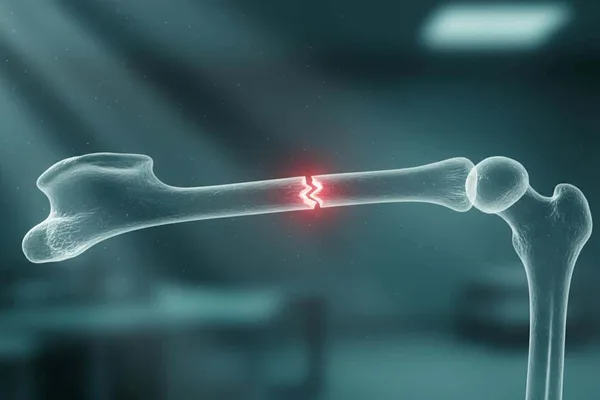
Simply put, a transverse fracture is a break in one of your bones. Think of your bone as a long stick. The break occurs perpendicular to the length of the stick, or across it. It's like someone snapping a stick in two. This is also called a complete fracture , because the broken line goes all the way through the bone.
These types of fractures are most commonly seen in the long bones of our body. Here are a few examples:
- Femur (the upper part of your leg)
- Tibia (the thick bone at the front of your leg)
- Fibula - thin bone on the outside of the shin bone
- Upper arm bone (`Humerus` - the bone from your shoulder to your elbow)
- Forearm bones (`Radius` and `Ulna` - the two bones from the elbow to the wrist)
- Clavicle (collar bone)
What are the main causes of this type of fracture?
These breaks, called 'transverse fractures', often occur as a result of an accident or trauma . Think of something like a sudden fall, a car accident, or a hard hit while playing.
Sometimes surgery is required to fix a fracture like this. But for some people, a splint or cast can help keep the bone in place. The time it takes to fully heal depends on what kind of bone is broken and how the injury occurred. Most people take several months to fully recover from this condition.
Are 'transverse fracture' and 'transverse process fracture' the same thing?
This is where it can get a little confusing. Although the names 'transverse fracture' and 'transverse process fracture' sound similar, these are two different types of bone fractures .
The 'transverse fracture' we just talked about is a break in the length of a bone. Although this can happen to any bone, it usually happens to long bones, such as in a sudden accident like a fall.
However, a 'transverse process fracture' is a type of spinal fracture. Our spine is made up of small bones called vertebrae. These vertebrae have small bony protrusions on either side, called the 'transverse process'. A fracture of these bones is called a 'transverse process fracture'. This can also happen due to an accident. Sometimes, due to 'osteoporosis' (a disease in which bones become weak and brittle), we can break these bones without even realizing it. Although these fractures can occur anywhere in the spine, they are most common in the lower back (lumbar spine).
What is the difference between a 'transverse fracture' and an 'oblique fracture'?
Both of these are types of fractures that go straight through the bone. But there is a slight difference.
- In a 'transverse fracture', the break is across the bone, that is, perpendicular to the length of the bone.
- In an 'Oblique Fracture ', the break goes across the bone, that is, at an angle.
However, no matter what you call your fracture, the most important thing is to see a doctor as soon as possible and get it checked out .
How common is this 'transverse fracture'? Who is more likely to get it?
'Transverse fractures' are the most common type of bone fracture , especially in long bones. They can happen to anyone. They are mainly caused by accidents and injuries.
If you are prone to falls, you are more likely to have this type of fracture. Also, people with osteoporosis (weakened bones) are at higher risk of any fracture, including transverse fractures.
What are the characteristics of a 'transverse fracture'?
With this type of fracture, you may experience symptoms such as:
- Severe pain: It hurts exactly where the fracture occurred.
- Swelling: The injured area swells.
- Tenderness: The pain increases when you touch or press on the fractured area.
- Inability to move normally: If a part of a limb, such as an arm or leg, is broken, it becomes difficult to move or use it normally.
- Bruising or discoloration: You may notice bruising or blue discoloration at the site of the injury.
- A distortion or knot: Sometimes the broken part may appear unusually bent, pulled, or raised like a knot.
What are 'Open' and 'Closed' breaks?
Your doctor will classify the fracture as 'open' or 'closed'.
- An 'open fracture' is when a piece of broken bone breaks through your skin and sticks out. This is a bit more dangerous because it increases the risk of infection and takes longer to heal.
- A 'closed fracture' is when the bone is broken but the skin is not damaged and the bone is not visible. This is also serious, but the risk of infection is low.
What are 'displaced' and 'non-displaced' fractures?
These are two other words that doctors use.
- A 'displaced fracture' is when the broken pieces of a bone are pushed apart, causing a gap between them. To be precise, the pieces of bone are pulled together . These types of fractures often require surgery to straighten.
- A 'non-displaced fracture' is also a fracture in which the bone is broken, but the broken pieces have not moved around much and are not pulled apart. They are still aligned.
How do doctors diagnose a transverse fracture? (Diagnosis)
A doctor will primarily perform a physical examination to diagnose this type of fracture. In addition, they may perform imaging tests such as:
- X-ray: This is the only way to see exactly if there is a fracture and how much damage has been done.
- MRI (Magnetic Resonance Imaging): Sometimes the doctor needs to get a complete picture of the tissue surrounding the bone, such as muscles, connective tissue, and other organs, to see if there is any damage. In such cases, an MRI may be performed.
- CT scan: If you need surgery, the surgeon will need a clearer, more detailed picture of the damage to the bones. A CT scan may be done if the X-ray is not clear and to plan the surgery.
How is a transverse fracture treated?
The treatment for your transverse fracture depends on how severe it is. The main goal is to get the broken bone pieces back together properly and heal. To do this, doctors use treatments such as:
Reducing movement (Immobilization)
If your fracture is not too serious, meaning the bone fragments are not too far apart (`non-displaced`), you may need to wear a splint or a cast to keep the area immobile. A splint will usually last for three to five weeks. A cast will last a little longer, about six to eight weeks. However, you will need to have X-rays every so often to make sure the bone is healing properly.
'Closed Reduction'
For more serious fractures, where the bone fragments are pulled together, a 'closed reduction' may be needed to bring them back into place. This is not surgery. The doctor will hold, press, and pull the broken bone fragments together from the outside of your body. To make sure you don't feel any pain while doing this, they will do one of the following:
- A local anesthetic is given to numb only the fracture site.
- Sedatives are given to relax the entire body.
- Or, you will be given general anesthesia, which will put you completely asleep so you won't feel anything.
After the bones are prepared in this way, a splint or plaster is applied.
Transverse Fracture Surgery - Internal Fixation
For very serious fractures , surgery is required. The surgeon will put the broken pieces back in their correct positions and use metal rods to hold them together until they heal. This is called 'internal fixation' . While the metal rods are in place, you should not use that part of your body much until the bone heals.
There are several methods of 'internal fixation':
- Rods: A metal rod is inserted through the bone, from top to bottom.
- Plates and screws: Metal plates are inserted to hold the bone pieces together and are secured to the bone with screws.
- Pins and wires: When there are pieces of bone that are too small to fit other fixation devices, pins and wires are used to hold them together. These are usually used in conjunction with rods or plates.
Some people have these metal fragments inside their bodies for the rest of their lives. For others, they will have to have surgery to remove them later.
These 'transverse fracture' surgeries are often done as outpatient procedures , meaning you can go home the same day. However, if you are having surgery on a large bone like the femur, you will need to stay in the hospital for a few days.
After surgery, the part of the body with the broken bone will need to be immobilized. A brace , splint, or cast may be placed on it. Only then can you begin to put weight on the part and use it as before.
What medications are used in treatment? Should I be concerned about NSAIDs?
NSAIDs (such as aspirin and ibuprofen), which are commonly used as pain relievers, can cause bleeding and other complications after surgery. Therefore, your surgeon will tell you what medications you can take to reduce pain after surgery.
NSAID side effects:
- Bleeding
- Stomach ulcers (`Ulcers`)
- Stomach ache
- Intestinal complications
What are the possible complications of transverse fracture treatment?
The following complications may occur after surgery:
- Acute Compartment Syndrome (ACS): Increased pressure inside the muscle, impaired blood supply, and permanent muscle and nerve damage can occur.
- ``Malunion``: A condition in which a broken bone does not heal properly, but rather stretches and pulls together.
- Nonunion: The bones do not heal together properly, or do not heal at all.
- Bone infection (Osteomyelitis): If the bone breaks through the skin, as in an 'open fracture', there is a higher risk of bacterial infection.
- Other internal injuries: A broken bone can also cause damage to surrounding muscles, nerves, blood vessels, tendons, and ligaments.
How soon will I feel better after treatment?
It may take a few weeks for your symptoms to subside. Depending on what surgery you had and what bone was broken, you may be able to start moving again in a few weeks.
However, if you have unbearable pain that does not subside, see a doctor immediately.
How to reduce the risk of transverse fracture?
Follow these simple steps to reduce the risk of this type of accident:
- Always wear your seat belt when riding in a vehicle.
- Wear the necessary protective equipment when playing sports or doing other work.
- Keep your home and workplace clean by removing things that could cause you to slip and fall, and things that could cause you to trip.
- When picking up something from above, use a suitable tool instead of climbing on chairs, tables, or counters.
- Follow a diet and exercise plan that helps maintain good bone health .
- If you are over 50, or if someone in your family has osteoporosis , talk to your doctor about getting a bone density test .
- If you have difficulty walking or are more likely to fall, use a crutch (a `cane` or `walker`) .
Can a transverse fracture be prevented?
These types of fractures are often caused by things that are difficult to prevent, such as falls and accidents. However, if you have difficulty walking, using crutches can help prevent falls.
Women are at higher risk of developing osteoporosis after the age of 50. Therefore, it is a good idea to talk to your doctor about a bone density test, which can detect osteoporosis before a fracture occurs.
What can you expect if you have a transverse fracture?
If you have a transverse fracture, you can expect to make a full recovery . However, you will need physical therapy to help you regain strength and range of motion in the injured part of your body. Most people do not have long-term effects after a fracture like this.
How long does it take for a transverse fracture to heal?
The time it takes to heal depends on the severity of your fracture and the treatment you received. Most people take several months to fully recover.
There are many factors that affect how long it takes for your body to heal, so talk to your doctor or surgeon about a time frame that works best for your injury.
Will I be unable to go to work/school?
How long you will be unable to go to work, school, or other activities will depend on which bone was broken and whether you have other injuries.
While you are recovering, talk to your surgeon or doctor before resuming any physical activity.
When do you need to go to the Emergency Room?
If you think you have a transverse fracture – or any other bone fracture – you should see a doctor as soon as possible . Go to the emergency room immediately if you have any of these symptoms:
- Very severe pain.
- If you can't move a part of your body that you can normally move.
- If a part of your body looks unusual or seems to have changed from where it was.
- If you can see the bone through your skin.
- Swelling.
- If new bruises appear along with these other symptoms.
Especially if you have suffered a trauma, go to the emergency room immediately.
What are the important questions to ask the doctor?
When you see the doctor, don't forget to ask these questions:
- Which bone is broken?
- Do I have a 'transverse fracture' or another type of fracture?
- Do I need surgery?
- How long will it take to recover?
- When can I resume normal physical activity?
Finally, things to remember (Take-Home Message)
You can make a full recovery from a transverse fracture, even if you have surgery. The most important thing is to take it easy during your recovery and follow your doctor's instructions exactly . If you are stressed and don't rest your body before going to work, complications can occur and further damage the broken bone.
Ask your doctor how you can keep your bones strong and healthy. If you are over 50 or have a family history of osteoporosis, it is also important to have regular bone density tests.
` Fracture, transverse fracture, transverse fracture, fracture treatment, bone surgery, bone health, accidents




💬 Comments (0)
No comments yet. Be the first to share your thoughts here.
Add Your Comment