

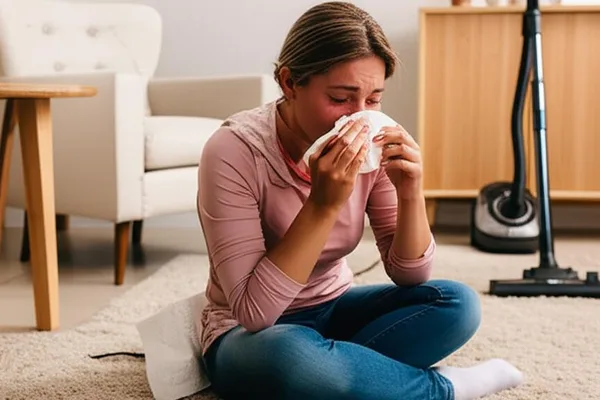
We all like to keep our homes nice and clean, don't we? Dust is our biggest enemy, especially if we have someone with allergies or asthma. So many of us think that vacuuming our house will get rid of all the dust. But have you ever thought that the very vacuum cleaner you use could be making your allergies worse? That's actually the secret that sometimes happens.
Why does a vacuum cleaner increase allergies?
This is very simple to understand. Imagine that you are filling a mesh bag with sand. The big rocks, the big grains of sand, stay inside the bag. But what happens to the tiny grains of sand? They come out through the holes in the mesh. That's what happens in some vacuum cleaners.
This problem is especially common in older, cheaper, and less advanced models . While they can suck up large particles of dust and debris from the floor, they don't have a filter system that is good enough to trap even the smallest particles of dust, pollen, and dust mite droppings that are invisible to the naked eye. So what happens is that these tiny particles end up back in the air on the other side of the vacuum. Instead of removing the dust, the allergens from the floor mix with the air and easily enter your nose and lungs, making your allergies worse.
In fact, some studies have even found that some vacuum cleaners release fine dust and germs into the air, which can exacerbate allergies and even spread infections.
So how do you choose a good vacuum cleaner?
Now you might be thinking, "Oh, so vacuuming isn't a good idea?" Don't be afraid. There are real benefits to having a good vacuum cleaner. The problem is choosing the right one. If your vacuum cleaner is very old, the filter is clogged, and it's dirty, it's a good time to consider a new one.
There are a few things to consider when choosing a vacuum cleaner that is suitable for someone with allergies.
| Feature | Why is it important for people with allergies? |
|---|---|
| HEPA filter | HEPA stands for `(High-Efficiency Particulate Air).` Simply put, it is a very fine, dense mesh-like filter. It can trap 99.97% of the smallest dust particles, pollen, mold spores, and allergens that are invisible to the naked eye. So only clean air is released back into the air. |
| Well-sealed system | Just having a HEPA filter is not enough. It doesn't matter if dust leaks through other parts of the vacuum cleaner. Therefore, it is important to choose a model that is well sealed and designed so that dust cannot escape. |
| Central Vacuum Systems | This is a slightly more expensive solution. It involves installing the vacuum's motor and dust collection tank in a garage or other location outside the house. Only the hose is inside the house. This means that after the dust is sucked in, there is no air coming back into the house. This is the best solution for people with allergies, but the installation cost is high. |
Keep this in mind when using a vacuum cleaner.
- Change the filters: If your vacuum has filters, replace or clean them regularly, as recommended by the manufacturer. A clogged filter will not work.
- Dust bag: Don't wait until the dust bag is full, replace it when it is about two-thirds full.
- Let someone without allergies vacuum: If possible, if there is someone with severe allergies, it is best to have someone else in the house vacuum.
Other ways to reduce dust in the home
Besides vacuuming, there are many other things you can do to reduce allergens in your home. These will make your life much easier.
- Take care of your rugs: Rugs, especially thick ones, are perfect hiding places for dust mites and other allergens. If possible, wash them in hot water at least once a week . Hot water kills dust mites.
- Use the right cloth to dust: Simply wiping with a cloth or feather duster will only move dust from one place to another. Instead, use a microfiber cloth . These attract and hold dust particles like a magnet.
- Replace carpet with something else: This may be difficult for everyone, but if your allergies are severe, it's a good idea to remove the carpet and replace it with something like tile, titanium, or wood. Carpet is a place where dust, pollen, and pet dander all accumulate.
- Bed sheets and pillowcases: Wash these once a week in hot water. Dust mites live mostly in the bed we sleep in.
If you have severe allergies, frequent sneezing, difficulty breathing, or asthma symptoms, in addition to making these changes at home, be sure to see your doctor for proper advice and treatment. Do not self-medicate.
Take-Home Message
- Your old vacuum cleaner may be releasing allergens into the air, making you sick, instead of removing dust.
- If you're buying a new vacuum cleaner, choose one that has a HEPA filter and is well-sealed.
- Wash items like rugs and bedding in hot water once a week to kill dust mites.
- Use a microfiber cloth instead of a regular cloth to wipe away dust.
- If your allergies are difficult to control, be sure to seek medical advice when making changes to your home.




💬 Comments (0)
No comments yet. Be the first to share your thoughts here.
Add Your Comment