

Do you feel a dull, heavy pain in your legs when you walk for a short distance? Or do you feel a strange ache in the veins of your legs when you just stand? Many people think that this is normal fatigue, something that happens with age, but perhaps this is a pain caused by a problem in your vascular system, that is, blood circulation. Let's talk about this today.
What is vascular pain?
Simply put, this is pain that occurs due to a problem in our body's circulatory system, that is, in the blood vessels (arteries and veins). Imagine that we have a network of water pipes running throughout our body. These pipes carry blood, oxygen, and nutrients to all parts of the body. Now, what happens if these pipes get blocked, narrowed, or damaged somewhere? The flow of water is disrupted, right? In the same way, when our blood vessels are damaged, the flow of blood is disrupted. It is because of this obstruction that we start to feel this condition as pain.
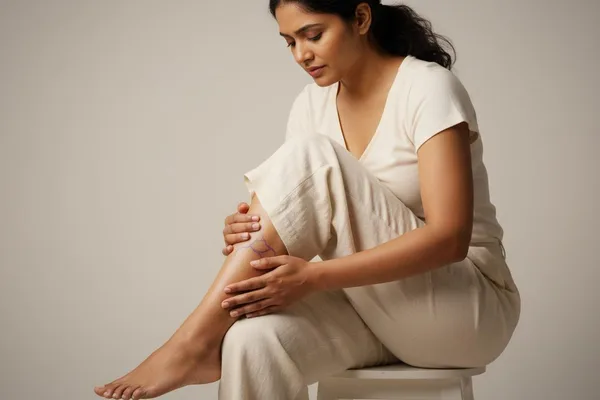
This pain most often affects the lower legs and ankles. However, it can also occasionally affect the arms. Another medical term for this type of leg pain is vascular claudication . About one in ten people with this condition may also experience pain in the arms.
How does this pain feel?
This is not like a normal joint ache. Many people experience this:
- An uncomfortable heaviness: It feels like two iron balls are hanging from your legs.
- Throbbing: A pain that feels like something is pulsing inside the veins.
- Aching: A persistent, severe pain.
- Pain increases when walking or exercising: The pain increases when walking for a short distance and decreases when standing for a short time. This is a key symptom of this disease.
Who can feel this pain the most?
People with blood vessel disease are at the highest risk of developing this pain. In general, people over the age of 50 and those in the following groups are at higher risk. Let's take a look at who they are.
| Risk Group | Description |
|---|---|
| People who smoke | Smoking is the biggest enemy of blood vessels. The chemicals in cigarettes damage the walls of blood vessels, causing them to thin and harden. |
| People with diabetes or hypertension | Both of these diseases cause damage to the blood vessels. Uncontrolled diabetes and high blood pressure cause the vessels to lose their elasticity. |
| People with obesity | As body weight increases, the blood vessel system has to bear more weight. Also, with obesity, things like cholesterol can increase and clog the vessels. |
| People with any of these diseases in their family | If your parents or siblings have had vascular or heart disease, you may also be genetically at risk. |
| People with a sedentary lifestyle, with little physical activity | If you work sitting in a chair all day and don't exercise, you are more likely to have poor blood circulation. |
| Pregnant mothers | These conditions can temporarily occur due to hormonal changes in the body during pregnancy and the pressure on the blood vessels caused by the growing baby. |
Why does this kind of pain occur? The main causes
This pain is not something that just happens. There may be an underlying medical condition. Mainly, this pain is caused by a blood vessel being compressed, inflamed (a condition similar to an inflammation), narrowed, or completely blocked.
Here are some of the main reasons:
- Atherosclerosis: This is the most common cause. Cholesterol and other fats in the food we eat build up inside the blood vessels, like rust in a water pipe, narrowing the vessel from the inside. This hinders blood flow.
- Chronic venous insufficiency: The veins in our legs (the blue veins) have small valves that keep blood from flowing back up toward the heart. When these valves become weak, blood can pool in the legs, causing the veins to swell and become painful.
- Deep vein thrombosis (DVT): A blood clot that forms in a large vein deep inside the body. This is a dangerous condition because the clot can break loose and lodge in the lungs.
- Peripheral artery disease (PAD): This is caused by the narrowing of the arteries that carry blood to the arms and legs (atherosclerosis). This can cause pain when walking. This is because the muscles need more blood during exercise, but the narrowed arteries are unable to supply it.
- Raynaud's phenomenon: This is when the small blood vessels that carry blood to the fingers and toes suddenly constrict when exposed to cold or stress. This causes the fingers to turn pale, blue, and then red, causing pain and numbness.
- Varicose veins: Swollen, twisted, and bulging veins in the legs, which are clearly visible through the skin. This is also a result of the condition `Chronic venous insufficiency`.
What other symptoms are there besides pain?
If you have a blood vessel disease, you may experience other symptoms like these along with pain. It's important to pay attention to these as well.
Remember, if you have one or more of these symptoms, don't ignore them. See your doctor as soon as possible for advice.
| Symptom | What does this mean? |
|---|---|
| Cold hands or feet | It's that there isn't enough warm blood flowing to those areas. |
| Color changes in the fingers (white, blue, red) | Especially in conditions like `Raynaud's phenomenon`, when blood supply is suddenly reduced and then restored, such color changes can be seen. |
| Numbness or tingling sensation | These sensations occur when nerves are deprived of the oxygen and nutrients they need due to reduced blood flow. |
| Swelling `(Edema)` | When the veins are unable to carry blood back to the heart, fluid leaks from the veins into the surrounding tissues, causing the legs and ankles to swell. |
| Weakness | When muscles do not receive the necessary amount of blood, their function weakens. |
| Non-healing wounds (especially on the feet) | A good blood supply is essential for a wound to heal. When blood flow is reduced, even a small cut can become a large, serious wound. This risk is particularly high in people with diabetes. |
How does a doctor find this?
When you tell your doctor about these symptoms, the first thing he or she will do is ask you a detailed question. Things like when the pain starts, how long it has been going on, and what makes it go away. Then, they will do a physical examination.
In this test,
- Check for skin discoloration, wounds, or ulcers on the legs or arms.
- We check to see if the pulse is weak or not in places like the ankles and wrists.
- Check for swelling.
After these initial tests, several more tests may be done to confirm the disease and find the exact cause.
- Arteriogram: A special dye is injected into the blood vessels, and a series of X-ray images are taken. This allows the X-ray to clearly show the flow of blood through the vessels and whether there is any blockage.
- Doppler ultrasound: This is a painless scan. It uses sound waves to measure the speed and direction of blood flow inside blood vessels. It can easily detect blockages.
- Magnetic Resonance Angiogram (MRA): This is part of an MRI scan. It uses magnets and radio waves to create detailed images of the blood vessels. A dye may also be used for this.
What are the treatments for this?
Treatment depends on the cause of your symptoms. Your doctor will choose the treatment that is best for you.
Here are some of the main treatment methods:
1. Medications: Medications such as blood pressure lowering medications, cholesterol lowering medications, and blood thinners can help control the underlying cause of the disease and reduce pain.
2. Angioplasty: This is a less invasive procedure than surgery. A very thin tube (catheter) is inserted into a blocked artery through the leg or arm, and a small balloon at the end is inflated to widen the blockage. A stent , a small mesh tube, is then placed in the area to keep the artery from getting blocked again.
3. Bypass surgery: This is done if the artery is severely blocked. Just like a blocked road, a surgeon takes a piece of healthy blood vessel from another part of your body (usually from your leg or chest) and creates a new path for blood to flow around the blocked area.
How to manage and prevent pain at home?
Along with medical treatment, changes in your lifestyle are also very important in managing this pain.
- Exercise regularly: Do at least 150 minutes of aerobic exercise, such as walking or cycling, a week. This will improve blood circulation.
- Don't sit still: If you have a job that requires you to sit for long periods of time, get up at least once an hour, walk around a bit, and stretch your body.
- Wear compression stockings: If you're standing for long periods of time or traveling long distances, wearing these special stockings will put gentle pressure on the veins in your legs and prevent blood from pooling. Ask your doctor for advice on this.
- Eat a healthy diet: Eat foods rich in fruits, vegetables, legumes, and whole grains. Reduce oil, salt, and sugar.
- Quit smoking completely: This is the best thing you can do.
- Control other diseases: If you have conditions like diabetes, high blood pressure, or cholesterol, follow your doctor's instructions and control them well.
Let's learn a little about Vasculitis.
Vasculitis is an inflammation of the blood vessels, which is a condition that causes inflammation. This is also one of the possible causes of vascular pain. Some types of Vasculitis can also cause neck and chest pain. Along with this,
- Discoloration of the limbs
- Dizziness
- Increased blood pressure
- Laboriousness
- Headache
- Symptoms such as visual impairment may also occur.
This disease is also a condition that must be properly diagnosed and treated by a doctor.
Take-Home Message
- Don't dismiss the pain, heaviness, and tingling in your legs, especially when walking, as just normal fatigue.
- This could be a sign of a problem with your circulatory system.
- Smoking, diabetes, high cholesterol, and high blood pressure are the main risk factors for this condition.
- If you have symptoms like leg swelling, discoloration, numbness, or non-healing wounds, be especially careful.
- If you have these symptoms, do not self-medicate, but definitely see your doctor for a proper diagnosis and treatment plan. With proper treatment and lifestyle changes, you can manage this condition well and stay healthy.




💬 Comments (0)
No comments yet. Be the first to share your thoughts here.
Add Your Comment