
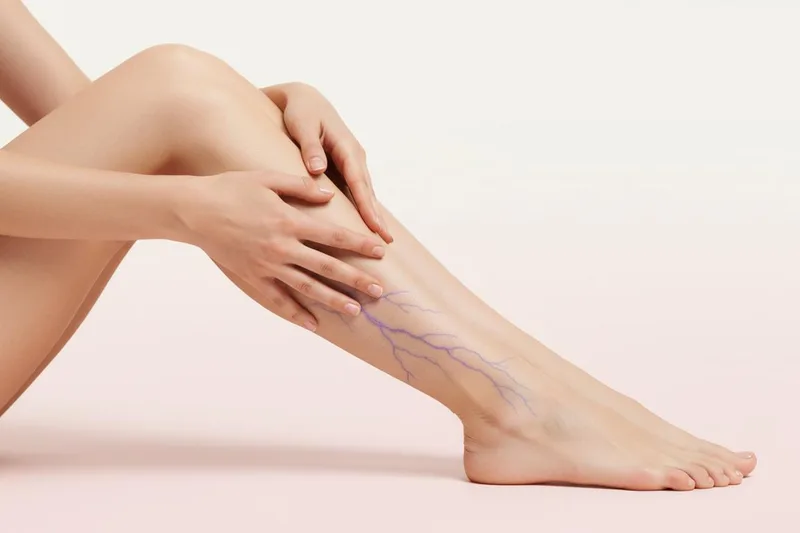
Do you also have blue or purple veins appearing on your legs? Or do your legs always swell and feel heavy? Although these are common problems for many people, sometimes these can be symptoms of a disease related to the blood vessels in our body, especially the veins. So today we will talk about what this venous disease, or `(Venous Disease)` is, and what are the treatments for it. Don't be afraid, it is very important to be aware of this.
Simply put, what is venous disease?
Imagine, there is a network of blood vessels throughout our body. We call these vessels blood vessels. Of these, the vessels that carry blood from the body back to the heart are the veins. Inside a healthy vein there are small door-like parts, called valves. These open only in one direction. So the blood flows continuously towards the heart and does not come back.
However, in a condition like `Venous Insufficiency`, these valves do not work properly. What happens is that the blood does not move forward, but stagnates in one place, or flows backward. This is what we commonly call venous disease. Treating this restores blood flow and reduces the risk of complications.
Common types of venous diseases
- Blood Clots: The formation of blood clots inside the veins.
- Chronic Venous Insufficiency (CVI): Blood stagnation due to long-term weakening of the valves in the veins.
- Deep Vein Thrombosis (DVT): A blood clot in the veins deep in the body (usually in the legs). This is a slightly more dangerous condition.
- Pulmonary Embolism: A blood clot that breaks off from a DVT and travels to the lungs. This is a very serious and dangerous condition.
- Superficial thrombophlebitis: Blood clots form in the veins under the skin, causing the vein to swell, become red, and become painful.
- Varicose veins and spider veins: Swollen, twisted veins that are visible above the skin. Many people also call these "spider veins."
What are the treatments without surgery?
Most often, the doctor will first try to control the condition without surgery. This treatment can be used alone or in combination with other treatments.
| Treatment method | What happens with this? |
|---|---|
| Blood thinners (Anticoagulation) | These medications prevent blood clots. These are very important for conditions like DVT and to stop blood clots from forming. |
| Special types of socks (Compression Stockings) | These socks apply gentle pressure to the legs, reducing blood pooling in the veins. They help control varicose veins and DVT. |
| Lifestyle changes | Symptoms can be controlled by things like exercising, walking, keeping your legs slightly elevated, and losing weight. |
| Sclerotherapy | This is a special treatment for varicose veins. The doctor injects a special liquid directly into the varicose vein. This causes the vein to shrink and disappear over time. |
Modern treatments using catheters
In these methods, the doctor makes a small incision in the skin and inserts a catheter , a very thin tube, into the vein. Since these do not require large incisions, the healing time is shorter and complications are fewer.
- Angioplasty: A catheter is inserted into a blocked artery and a small balloon at the end is inflated to widen the artery from the inside. This allows blood to flow more easily. Sometimes, a stent , a small mesh tube, is placed inside the artery to prevent it from narrowing again.
- Catheter-directed thrombolytic therapy: A catheter is inserted into the area where a blood clot is located and thrombolytics are injected directly into it. This dissolves the clot within a few hours or days.
- Endovenous thermal ablation: This is also called laser therapy. A catheter is used to send laser light or heat energy into a vein that is not working properly, "sealing" the vein from the inside. The vein then shrinks and blood begins to flow through healthy veins.
- Vena cava filter: This is a small filter shaped like an umbrella. It is placed inside the main vein in our abdomen (vena cava). It is used to prevent blood clots that form in the legs from traveling to the brain or lungs.
In what cases is surgery necessary?
Surgery is usually recommended only if other simple treatments have failed, or if the condition is severe.
If this condition significantly interferes with your daily activities, or if you are at risk for a more serious condition such as DVT or Pulmonary Embolism, your doctor may consider surgery.
There are several main types of surgery:
- Ligation and stripping: This involves tying off the problematic varicose vein and removing it. Sometimes this surgery is performed through small incisions using an instrument such as an endoscope.
- SEPS (subfascial endoscopic perforator surgery): This surgery is performed on people who have damaged veins in the lower legs and have non-healing wounds (venous ulcers).
- Surgical bypass: Similar to building a bypass to bypass a congested road, this involves creating a new path around a blocked blood vessel. This can be done using a piece of your own vein or an artificial tube (graft).
What are the benefits and risks of these treatments?
As with any treatment, there are risks as well as benefits. For example, blood thinners can sometimes cause bleeding. There is a small risk of infection during surgery.
However, in most cases, the benefits of these treatments far outweigh the risks. These treatments can help prevent life-threatening complications like pulmonary embolism. They can also provide relief from symptoms such as leg swelling, pain, itching, and varicose veins. Your doctor will explain to you the best treatment for your condition.
When to seek immediate medical advice
If you have any of the following symptoms after undergoing treatment for a venous disease (catheter or surgery), see your doctor immediately or go to the Emergency Department (ETU) of the nearest hospital.
- Chest pain
- Continuous bleeding or other fluid from cuts
- Fever
- Headache
- Nausea or vomiting
- Severe pain or swelling around the incision
- Numbness in the limbs
- Redness or warmth around the incision
Take-Home Message
- Venous disease is a condition that interferes with the flow of blood through the veins of our body. These are very common.
- If you have symptoms like leg swelling, pain, or visible veins, don't ignore them. See a doctor to find out the cause.
- There are various treatment options available today, including medications, lifestyle changes, modern catheter-based treatments, and surgery.
- Not everyone needs surgery. Your doctor will decide what treatment is best for you.
- With proper treatment, many people can avoid dangerous complications and live normal, active lives.


💬 Comments (0)
No comments yet. Be the first to share your thoughts here.
Add Your Comment