
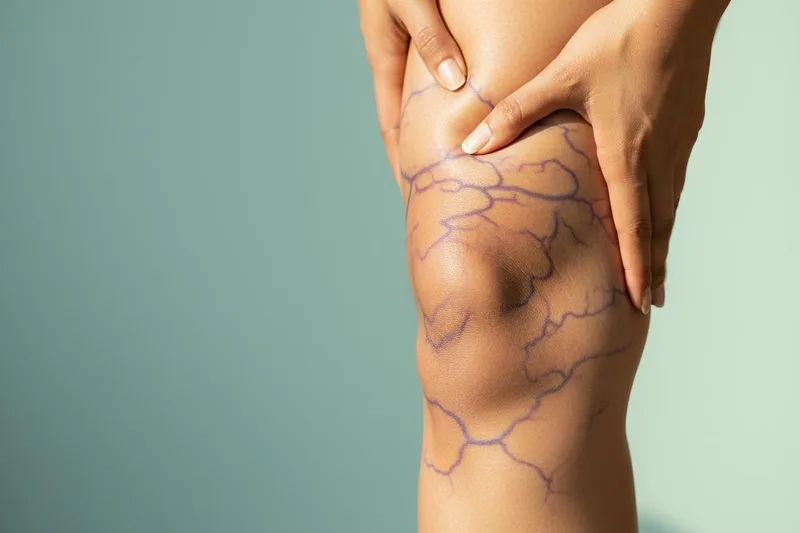
A problem that many people have is the appearance of blue or purple veins on their legs. For some, this can be a hindrance to dressing well, while for others, it can cause pain and heaviness in the legs. We call this condition 'varicose veins' or Varicose Veins. So today we are talking about a very successful surgery for these Varicose Veins, `Varicose Vein Stripping and Ligation`.
What is Varicose Vein Stripping and Ligation?
Simply put, this is a surgery to remove varicose veins in your legs.
Think about it, there are small valves inside the veins of our body. They are like doors that open only one way. Their job is to stop blood from flowing in the wrong direction and direct it towards the heart. But if these valves become weak or damaged, blood starts to flow backwards and collects inside the veins. That's when the veins become swollen, twisted, and visible on the surface of the skin.
Two main things happen during this surgery:
- Ligation: This involves "tying off" the problematic vein and stopping blood flow to it.
- Stripping: The tied vein is then "removed" from the body.
When the damaged vein is removed in this way, the other healthy veins in our body take over the job and maintain normal blood circulation.
Why do we need this surgery?
Some people have these veins removed for cosmetic reasons. However, more often than not, this surgery is performed for health reasons. Varicose veins can cause you these kinds of discomforts.
| Symptom | Description |
|---|---|
| Heaviness in the legs | My legs just feel heavy. |
| Itching | Itchy skin around the area where the veins are tied. |
| Pain and hurt | Pain, swelling, and muscle spasms in the legs. |
| Skin changes | Skin discoloration and non-healing ulcers. |
| Swelling | Swelling of the legs and ankles. |
| Visible veins | Blue or purple, twisted, rope-like veins appear. |
In addition, this surgery is also used to treat conditions like `Chronic Venous Insufficiency (CVI).` In this condition, the valves in the veins of the legs are damaged and blood accumulates. The main cause of this can be `Deep Vein Thrombosis (DVT),` which is a blood clot in the deep veins of the legs.
Who performs this surgery?
This surgery is performed by a vascular surgeon , who has expertise in diseases of the blood vessels and circulatory system.
What should you do before surgery?
Your doctor will give you clear instructions on how to prepare for surgery. For example:
- You may be asked to stop eating and drinking a few hours before the surgery.
- You may also be asked to temporarily stop taking some medications.
- Therefore, it is very important to inform your doctor about all medications you are taking.
What happens during the surgery?
This is usually an outpatient procedure, meaning you can go home the same day. However, it is essential that someone is available to drive you home after the procedure.
You will be given anesthesia to prevent you from feeling any pain during the surgery. This will:
- Regional Anesthesia: Along with a medicine that numbs only the area where the surgery will be performed, you may be given a medicine (`sedative`) to help you sleep.
- General Anesthesia: This puts you completely to sleep, meaning you can be given complete anesthesia.
After administering anesthesia, the doctor makes several very small incisions in your groin and lower leg. Then, using ultrasound imaging, they locate the exact vein in question. The vein is then ligated and carefully removed from your body.
In some cases, a new technique called `Endovenous Thermal Ablation` is also used. This involves using laser beams or heat to seal off the vein from the inside. The entire procedure usually takes between one and three hours.
What should I do after the surgery?
After surgery, you will be kept in a recovery area until the effects of the anesthesia wear off. You will then be given instructions to follow when you go home.
The most important thing is to follow the doctor's instructions exactly. That will help you recover quickly.
| What to do | Description |
|---|---|
| Keeping cuts clean | Keep the incisions clean and dry. Care for them as directed by your doctor. |
| Keeping the leg up | Keep the operated leg elevated, like a pillow, whenever possible. This will help reduce swelling. |
| Wearing special socks | Wear compression stockings recommended by your doctor. This helps with blood circulation. |
What are the advantages of this surgery?
- This is a very effective treatment for Varicose Veins and CVI.
- This surgery is successful even for very large, severely twisted veins.
- Since the vein that caused the problem is removed from the body, there is no risk of that vein recurring .
- You can go home the same day as an outpatient surgery.
Are there any side effects or risks?
The risk of side effects is very low when this surgery is performed under the supervision of an experienced, skilled physician. However, as with any surgery, there may be a small risk.
- Allergic reaction to anesthetics.
- Blood clot in the leg.
- Infections in cuts.
- Minor damage to a nerve near the removed vein, causing tingling or pain.
- Scarring at the incision sites.
How long does it take to heal?
It usually takes about two to four weeks to fully recover. During this time:
- You can eat normally.
- You should avoid strenuous exercise until you are fully recovered.
- It is very good to walk frequently and move around slowly to prevent blood clots.
If you have these symptoms, see a doctor immediately!
If you experience any of these symptoms after surgery, seek medical advice immediately .
| Risk symptoms - pay attention immediately | |
|---|---|
| 🌡️ | Fever. |
| 🩸 | Bleeding from cuts. |
| 😖 | If the pain increases instead of decreasing. |
| 🔥 | If the skin around the surgical area feels warm to the touch. |
| 🦵 | If the swelling in the leg increases. |
So, this surgery is a very effective way to get rid of the pain, swelling, and other symptoms caused by Varicose Veins, as well as to improve the appearance of your legs. If you have this problem, talk to your doctor about it. Then you can choose the best treatment that suits your health condition and lifestyle.
Take-Home Message
- Varicose veins are caused by the weakening of the valves inside the veins.
- Vein Stripping and Ligation is a successful method of surgically removing the problematic vein.
- This is usually done in the outpatient department, and you can go home the same day.
- After surgery, keeping the leg elevated and wearing special compression stockings recommended by the doctor are essential for speedy recovery.
- If you develop any dangerous symptoms such as fever, severe pain, or excessive swelling, see your doctor immediately.


💬 Comments (0)
No comments yet. Be the first to share your thoughts here.
Add Your Comment