
A new breakthrough in cancer treatment: What you need to know about VMAT technology (Volumetric Modulated Arc Therapy - VMAT)

A new breakthrough in cancer treatment: What you need to know about VMAT technology (Volumetric Modulated Arc Therapy - VMAT)

The word "radiation therapy" may sound a little scary to you. But it is a very important and powerful treatment when fighting cancer. Today we are going to talk about one of the newest, most advanced and safest radiation treatments. That is VMAT. Let's see what it is, how it works, and what are the benefits of it.

Simply put, what is this VMAT?

VMAT stands for Volumetric Modulated Arc Therapy . This is a treatment that uses radiation from outside the body to kill cancer cells. In medicine, we call this External Beam Radiation Therapy (EBRT).

Imagine, you want to destroy a cancerous tumor inside your body, but without causing any harm to the healthy, good organs around it. That's when VMAT technology becomes very important.

This is what happens in this treatment:

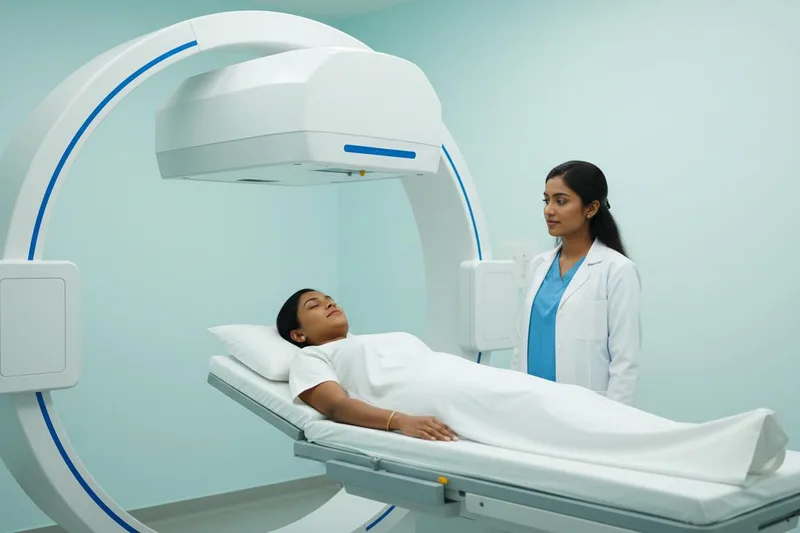
While you lie on a treatment bed, a large machine that emits radiation rotates around you in one or more circles. This machine does not hit you. But as it rotates, it aims precisely at the cancer and emits the necessary amount of radiation.

The most important thing is that no radioactive material is put into your body during this treatment. So there is no need to worry about your body becoming radioactive during or after the treatment.

VMAT is an advanced version of the already-used IMRT (Intensity-Modulated Radiation Therapy) treatment. Instead of using one large beam of radiation, IMRT uses many smaller beams to deliver radiation to the tumor. In VMAT, this process is performed while the machine is continuously rotating (as an arc), so the treatment time is very short.

What types of cancers is VMAT treatment used for?

Because of the precision of VMAT technology, it is an ideal solution for treating tumors with unusual shapes, or tumors that are located close to sensitive organs such as the brain, heart, or spinal cord. Imagine a tumor that has grown around a vital organ. In such a case, VMAT can treat only the cancer without harming the healthy organ.

Below are some of the most common types of cancer for which this treatment method is commonly used.

Cancer type Commonly treated body parts
Head and neck cancer Behind the nose (Nasopharyngeal), throat (Oropharyngeal)
Breast cancer Lung cancer, breast cancer, esophageal cancer
Abdominal and pelvic cancers Prostate cancer, cervical cancer, rectal cancer, colon cancer
Central nervous system Brain cancer

How does this VMAT machine work?

The primary goal of this method is to deliver a destructive dose of radiation to the cancerous tumor while minimizing damage to healthy tissue.

As the machine ``Medical Linear Accelerator - LINAC`` rotates around you, it continuously changes the shape and strength of the radiation beam it emits. This happens exactly to match the three-dimensional (3D) shape of the cancer tumor. This high-intensity dose of radiation damages the DNA of the cancer cells, killing them. At the same time, this machine takes care to keep the amount of radiation received by the surrounding healthy cells at a very low level.

What happens before treatment begins? (Planning phase)

The most important part of the success of VMAT treatment is this planning phase . It's like drawing a map before going into battle and marking exactly where the enemy is.

Your oncologist and the medical team will spend several days on this.

1. 3D Imaging: First, a CT scan, MRI, or PET scan is performed to obtain very clear 3D images of the area of ​​your body where the cancer is located. These images show the exact size, shape, and location of the tumor. They also identify any healthy organs that need to be protected from radiation.

2. Simulation Session: Next, you will be taken to a special session called "Simulation." Here, you will be made to lie down on the treatment bed and the correct position to be in during the treatment will be determined.

3. Marking and support: Because you need to stay in the same position during each treatment session, sometimes temporary marks are made on your skin, such as with a pen. Sometimes a very small, permanent mark, such as a tattoo, may be applied. Also, because you will not be able to move during the treatment, a support, such as a mold made specifically for your body or a mask that is worn on your face, may be used.

4. Radiation beam planning: The medical team then plans the radiation beams to be directed at the tumor with the help of computer software.

Imagine, this technology can control radiation beams to an area as small as the tip of a pencil, that is, 2.5 x 5 millimeters. It is that precise.

What happens during treatment?

When you arrive on the day of your treatment, the radiation therapist will position you on the bed as planned. He or she will then operate the machine from a separate room. However, you will be able to speak to him or her through a microphone.

The machine slowly rotates around you. As it rotates, radiation beams of different shapes and strengths are aimed at the tumor. You won't feel these radiation beams. The radiation therapist watches the entire process live on a computer screen. So they can make sure that the exact dose is delivered to the right place.

How long does a treatment session take?

The entire treatment session can take about 20 minutes . But most of this time is spent positioning you correctly. The actual process of the machine rotating and delivering the radiation takes a very short time, about two minutes.

Depending on the type and stage of your cancer, you may need to come to these treatment sessions every day for several weeks. Your doctor will explain the schedule to you. You can go home normally after treatment.

What are the benefits of VMAT treatment?

The two main advantages of VMAT technology are accuracy and speed .

Advantage Description
Precision By targeting only the cancer tumor, radiation is maximally prevented from reaching the surrounding healthy tissues and organs. This greatly reduces the risk of side effects.
Speed A single treatment session is completed very quickly, lasting about two minutes. The faster the treatment, the less time you have to stay in one position. Also, it takes up less time from your day.

Are there any side effects?

Because VMAT technology causes very little damage to healthy cells, the risk of side effects is relatively low. However, some level of cell damage may not be preventable.

Side effects that occur largely depend on the area of ​​the body treated. These are usually temporary.

Side effect Description
Fatigue This is the most commonly seen side effect.
Skin changes Redness, dryness, itching, swelling, or peeling of the skin in the treated area.
Hair loss Temporary hair loss may occur only in the treated area.
Digestive system problems When treating the abdominal area, nausea, vomiting, and diarrhea may occur.
Headache It can occur when treating areas related to the brain.

Recovery and medical advice after treatment

Everyone's recovery process and time frame is different. Some people may feel better immediately after treatment, while others may take several months to fully recover.

The most important thing is to make sure you attend your follow-up appointments with your doctor. These appointments are to check how well your treatment is working. Also, be open with your doctor about any symptoms or side effects you are experiencing. This is a great time to ask any questions you may have.

What is the difference between VMAT and IMRT?

As mentioned earlier, VMAT is an advanced version of IMRT. Both aim to destroy cancer cells while sparing healthy cells.

The main difference is that in IMRT, the machine stops at different angles and emits the radiation beams. In VMAT, the machine continuously rotates around you, delivering the treatment. This makes VMAT treatment much faster than IMRT.

Take-Home Message

  • VMAT is a highly advanced, precise, and rapid radiation therapy method used for cancer treatment.
  • The main advantage of this is that it targets only the cancerous tumor and minimizes damage to surrounding healthy organs.
  • A treatment session takes a very short time (about 2 minutes), so you won't feel much discomfort.
  • Compared to other radiation treatments, the risk of side effects is low. The side effects that do occur are often temporary.
  • Feel free to talk to your doctor about your treatment plan, possible side effects, and any concerns you may have.

VMAT, Volumetric Modulated Arc Therapy, cancer treatment, radiation therapy, cancer treatment, IMRT, LINAC

Frequently Asked Questions (FAQ)

What is the difference between VMAT and IMRT?

As mentioned earlier, VMAT is an advanced version of IMRT. Both aim to destroy cancer cells while sparing healthy cells.

⚠️ Important: The medical articles and information on Nirogi Lanka are for general awareness only, and are by no means a substitute for professional medical advice, diagnosis, or treatment. For any medical problem you have, consult a qualified physician immediately.

💬 Comments (0)

No comments yet. Be the first to share your thoughts here.

Add Your Comment

Please calculate: 7 + 6 =
A new breakthrough in cancer treatment: What you need to know about VMAT technology (Volumetric Modulated Arc Therapy - VMAT)

A new breakthrough in cancer treatment: What you need to know about VMAT technology (Volumetric Modulated Arc Therapy - VMAT)

The word "radiation therapy" may sound a little scary to you. But it is a very important and powerful treatment when fighting cancer. Today we are going to talk about one of the newest, most advanced and safest radiation treatments. That is VMAT. Let's see what it is, how it works, and what are the benefits of it.

Simply put, what is this VMAT?

VMAT stands for Volumetric Modulated Arc Therapy . This is a treatment that uses radiation from outside the body to kill cancer cells. In medicine, we call this External Beam Radiation Therapy (EBRT).

Imagine, you want to destroy a cancerous tumor inside your body, but without causing any harm to the healthy, good organs around it. That's when VMAT technology becomes very important.

This is what happens in this treatment:

While you lie on a treatment bed, a large machine that emits radiation rotates around you in one or more circles. This machine does not hit you. But as it rotates, it aims precisely at the cancer and emits the necessary amount of radiation.

The most important thing is that no radioactive material is put into your body during this treatment. So there is no need to worry about your body becoming radioactive during or after the treatment.

VMAT is an advanced version of the already-used IMRT (Intensity-Modulated Radiation Therapy) treatment. Instead of using one large beam of radiation, IMRT uses many smaller beams to deliver radiation to the tumor. In VMAT, this process is performed while the machine is continuously rotating (as an arc), so the treatment time is very short.

What types of cancers is VMAT treatment used for?

Because of the precision of VMAT technology, it is an ideal solution for treating tumors with unusual shapes, or tumors that are located close to sensitive organs such as the brain, heart, or spinal cord. Imagine a tumor that has grown around a vital organ. In such a case, VMAT can treat only the cancer without harming the healthy organ.

Below are some of the most common types of cancer for which this treatment method is commonly used.

Cancer type Commonly treated body parts
Head and neck cancer Behind the nose (Nasopharyngeal), throat (Oropharyngeal)
Breast cancer Lung cancer, breast cancer, esophageal cancer
Abdominal and pelvic cancers Prostate cancer, cervical cancer, rectal cancer, colon cancer
Central nervous system Brain cancer

How does this VMAT machine work?

The primary goal of this method is to deliver a destructive dose of radiation to the cancerous tumor while minimizing damage to healthy tissue.

As the machine ``Medical Linear Accelerator - LINAC`` rotates around you, it continuously changes the shape and strength of the radiation beam it emits. This happens exactly to match the three-dimensional (3D) shape of the cancer tumor. This high-intensity dose of radiation damages the DNA of the cancer cells, killing them. At the same time, this machine takes care to keep the amount of radiation received by the surrounding healthy cells at a very low level.

What happens before treatment begins? (Planning phase)

The most important part of the success of VMAT treatment is this planning phase . It's like drawing a map before going into battle and marking exactly where the enemy is.

Your oncologist and the medical team will spend several days on this.

1. 3D Imaging: First, a CT scan, MRI, or PET scan is performed to obtain very clear 3D images of the area of ​​your body where the cancer is located. These images show the exact size, shape, and location of the tumor. They also identify any healthy organs that need to be protected from radiation.

2. Simulation Session: Next, you will be taken to a special session called "Simulation." Here, you will be made to lie down on the treatment bed and the correct position to be in during the treatment will be determined.

3. Marking and support: Because you need to stay in the same position during each treatment session, sometimes temporary marks are made on your skin, such as with a pen. Sometimes a very small, permanent mark, such as a tattoo, may be applied. Also, because you will not be able to move during the treatment, a support, such as a mold made specifically for your body or a mask that is worn on your face, may be used.

4. Radiation beam planning: The medical team then plans the radiation beams to be directed at the tumor with the help of computer software.

Imagine, this technology can control radiation beams to an area as small as the tip of a pencil, that is, 2.5 x 5 millimeters. It is that precise.

What happens during treatment?

When you arrive on the day of your treatment, the radiation therapist will position you on the bed as planned. He or she will then operate the machine from a separate room. However, you will be able to speak to him or her through a microphone.

The machine slowly rotates around you. As it rotates, radiation beams of different shapes and strengths are aimed at the tumor. You won't feel these radiation beams. The radiation therapist watches the entire process live on a computer screen. So they can make sure that the exact dose is delivered to the right place.

How long does a treatment session take?

The entire treatment session can take about 20 minutes . But most of this time is spent positioning you correctly. The actual process of the machine rotating and delivering the radiation takes a very short time, about two minutes.

Depending on the type and stage of your cancer, you may need to come to these treatment sessions every day for several weeks. Your doctor will explain the schedule to you. You can go home normally after treatment.

What are the benefits of VMAT treatment?

The two main advantages of VMAT technology are accuracy and speed .

Advantage Description
Precision By targeting only the cancer tumor, radiation is maximally prevented from reaching the surrounding healthy tissues and organs. This greatly reduces the risk of side effects.
Speed A single treatment session is completed very quickly, lasting about two minutes. The faster the treatment, the less time you have to stay in one position. Also, it takes up less time from your day.

Are there any side effects?

Because VMAT technology causes very little damage to healthy cells, the risk of side effects is relatively low. However, some level of cell damage may not be preventable.

Side effects that occur largely depend on the area of ​​the body treated. These are usually temporary.

Side effect Description
Fatigue This is the most commonly seen side effect.
Skin changes Redness, dryness, itching, swelling, or peeling of the skin in the treated area.
Hair loss Temporary hair loss may occur only in the treated area.
Digestive system problems When treating the abdominal area, nausea, vomiting, and diarrhea may occur.
Headache It can occur when treating areas related to the brain.

Recovery and medical advice after treatment

Everyone's recovery process and time frame is different. Some people may feel better immediately after treatment, while others may take several months to fully recover.

The most important thing is to make sure you attend your follow-up appointments with your doctor. These appointments are to check how well your treatment is working. Also, be open with your doctor about any symptoms or side effects you are experiencing. This is a great time to ask any questions you may have.

What is the difference between VMAT and IMRT?

As mentioned earlier, VMAT is an advanced version of IMRT. Both aim to destroy cancer cells while sparing healthy cells.

The main difference is that in IMRT, the machine stops at different angles and emits the radiation beams. In VMAT, the machine continuously rotates around you, delivering the treatment. This makes VMAT treatment much faster than IMRT.

Take-Home Message

  • VMAT is a highly advanced, precise, and rapid radiation therapy method used for cancer treatment.
  • The main advantage of this is that it targets only the cancerous tumor and minimizes damage to surrounding healthy organs.
  • A treatment session takes a very short time (about 2 minutes), so you won't feel much discomfort.
  • Compared to other radiation treatments, the risk of side effects is low. The side effects that do occur are often temporary.
  • Feel free to talk to your doctor about your treatment plan, possible side effects, and any concerns you may have.

VMAT, Volumetric Modulated Arc Therapy, cancer treatment, radiation therapy, cancer treatment, IMRT, LINAC

Frequently Asked Questions (FAQ)

What is the difference between VMAT and IMRT?

As mentioned earlier, VMAT is an advanced version of IMRT. Both aim to destroy cancer cells while sparing healthy cells.

⚠️ Important: The medical articles and information on Nirogi Lanka are for general awareness only, and are by no means a substitute for professional medical advice, diagnosis, or treatment. For any medical problem you have, consult a qualified physician immediately.

💬 Comments (0)

No comments yet. Be the first to share your thoughts here.

Add Your Comment

Please calculate: 7 + 6 =