

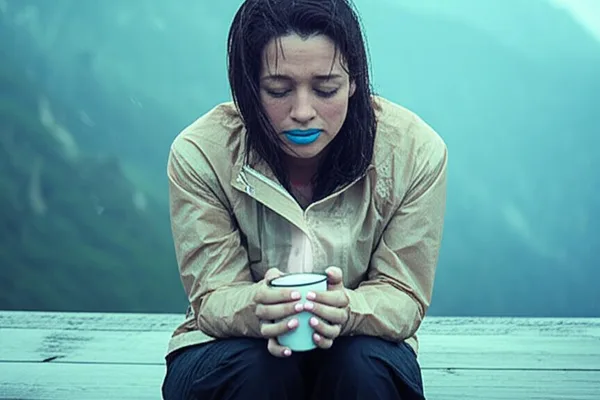
Have you ever been to a cold place like Nuwara Eliya and been shivering in the cold? Or remember a time when you got soaked on a rainy day and your teeth were chattering by the time you got home? It is normal to feel a little cold at times like these. However, when this coldness becomes uncontrollable and dangerous, we call it hypothermia. Knowing this properly will be of great help to us as well as our loved ones.
What exactly is hypothermia?
Simply put, hypothermia is a dangerous drop in body temperature when heat is lost from the body faster than it is produced. The average body temperature of a healthy person is around 98.6 degrees Fahrenheit (37 degrees Celsius). In hypothermia, this temperature drops below 95 degrees Fahrenheit (35 degrees Celsius). In severe cases, it can drop below 82 degrees Fahrenheit (28 degrees Celsius).
There is another side to this, which we call hyperthermia. It means that the body temperature increases too much. This condition often occurs when you are exposed to extreme heat, such as the sun.
How does body heat escape?
There are several main ways that our bodies lose heat when we are in a cold environment. The hypothalamus, a part of our brain, acts as the 'control center' that regulates our body temperature. When our bodies get cold, signals come from this center and our bodies start to shiver. This shivering causes our muscles to contract and produce heat. It also reduces the loss of heat through the skin by constricting blood vessels (vasoconstriction).
But if we stay in the cold, the main heat-producing organs in the body, such as the heart and liver, also slow down. It's like the body 'shuts down' to protect the brain. As a result, everything from breathing to heart rate starts to slow down.
| Heat dissipation method | Simply explained |
|---|---|
| Radiation | Heat is released directly from the skin into the surrounding air. This is the most effective way to release heat. |
| Conduction | When something cold touches your body, it feels warm. For example, when you wash your face with cold water. |
| Convection | The wind carries away body heat. This is why we feel colder when there is a strong wind. |
| Evaporation | When sweat evaporates, it takes away body heat. |
What are the symptoms of hypothermia?
The symptoms of this condition appear gradually, so it is very important to be aware of this.
Symptoms in young babies
If this happens to a small baby, it is a little different than for an older one.
- Feeling unusually cold to the touch.
- The skin turns bright red .
- To be lifeless and sleepy .
Symptoms in adults according to the cases
Symptoms in adults can be divided into three stages depending on the severity of the condition.
| Opportunity | Body temperature (Fahrenheit) | Main symptoms |
|---|---|---|
| Initial stage (Mild Hypothermia) | 90°F - 95°F | Tremors, teeth chattering, fatigue, slow movements, drowsiness, pale skin, difficulty concentrating. |
| Moderate Hypothermia | 82°F - 90°F | The tremors gradually stop, slurring of words when speaking, difficulty thinking, muscle stiffness, blue skin, and a feeling of fainting. |
| Severe Hypothermia | Below 82°F | Complete cessation of body tremors, greatly reduced breathing and heart rate, drop in blood pressure, loss of consciousness, and even cardiac arrest. |
Importantly , shivering may stop when the condition worsens. This is not a good sign. It means that the body's temperature control systems are malfunctioning.
Who is at higher risk for hypothermia?
Some people are more likely to develop this condition.
- Elderly people and young children: Because their body temperature control mechanism is not as strong.
- People with mental illness: They may have difficulty recognizing that they are cold and finding a remedy for it.
- People who use alcohol or drugs: Alcohol causes blood vessels to dilate, causing heat to escape from the body more quickly.
- People with diabetes and thyroid diseases.
- People who are homeless or don't have enough warm clothes or food.
What do we do if something like this happens to someone? (First aid)
Hypothermia is a medical emergency that requires immediate medical attention . So if someone has these symptoms, they should be taken to the hospital immediately. In the meantime, there are a few things you can do until help arrives.
1. Move the person carefully: Slowly and carefully remove the patient from the cold and move them to a warm, draft-free area. Do not shake them violently. Sudden movements can damage the heart's function.
2. Remove wet clothes: Take off all wet clothes, shoes, and socks.
3. Warm up: Cover the patient well with dry blankets and clothing. You can also warm the patient using your own body heat.
4. Give warm things to drink: If the patient is conscious, give them something to drink, such as soup or hot chocolate. Do not give them coffee or alcohol. They will make the body colder faster. Do not force anything to drink to an unconscious person.
5. Seek immediate medical attention: If the victim is unconscious, not breathing, or has no pulse, immediately take them to a hospital Emergency Department (ETU). If you are trained, begin CPR (cardiopulmonary resuscitation).
In the hospital, special methods (e.g., blood warming, warm saline) are used to restore the body's internal temperature.
How are we saved from this?
It's really not that difficult to escape this dangerous situation.
- Wear several layers of clothing: If you're going out on a cold day, it's better to wear several thin layers of clothing than one thick layer.
- Cover your head, hands, and ears: Use a hat, gloves, and a muffler. These are the parts of your body that lose the most heat.
- Don't get wet: If you get wet in the rain, change into dry clothes as soon as possible.
- Take special care of the elderly and young children: make sure they have enough warm clothes and that the room they are in is not cold.
- If you fall into cold water: If you fall into water, such as while boating, get out of the water as quickly as possible. If you have to stay in the water, keep your knees close to your chest. This is called the 'heat escape lessening posture' (HELP). This will help keep your body warm.
Take-Home Message
- Hypothermia is a condition in which the body temperature drops below 95°F (35°C). This is a medical emergency.
- The main symptoms are tremors, drowsiness, slurred speech, and inability to concentrate. When the condition is severe , the tremors may stop.
- If someone has these symptoms, immediately remove them from the cold, remove wet clothing, and wrap them in dry blankets to keep them warm.
- Give warm drinks only if the person is conscious. Do not give alcohol or coffee.
- Take the patient to a hospital's Emergency Treatment Unit (ETU) as soon as possible. If in doubt, always talk to your doctor.




💬 Comments (0)
No comments yet. Be the first to share your thoughts here.
Add Your Comment