
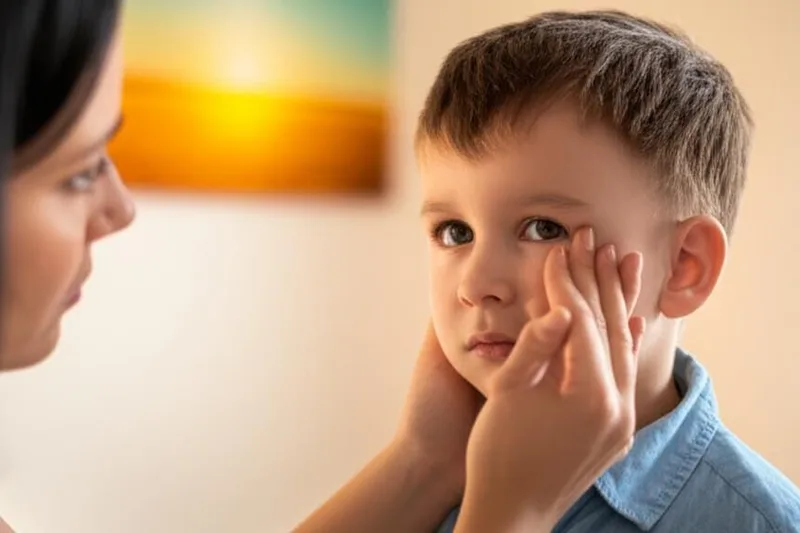
Sometimes we notice small changes in our children's eyes. Maybe one eye seems to be slightly forward of the other, or the child often says that it looks a little blurry. Although we think these are normal things, sometimes there may be a reason behind this that we need to pay attention to. One such reason could be a condition called Optic Glioma. This is a tumor that develops in the brain. So let's talk about everything in simple terms today.
What is Optic Glioma?
Simply put, Optic Glioma is a very fast-growing brain tumor . They are most commonly seen in children under the age of 10. In fact, they account for only 5% of all childhood brain tumors.
This tumor develops around the optic nerve, the nerve that connects our eyes to our brain. There is a type of cell in our brain that helps and nourishes nerve cells, called glial cells. These cells are where this tumor starts.
As this tumor grows, it begins to press on the eye and optic nerve. This can cause blurred vision and, if not treated properly, even blindness . However, because it can grow so large, changes in vision may not be immediately noticeable. It may affect one or both eyes.
But the best news here is that, although this is a serious condition, it can often be completely cured.
The main reason these tumors are dangerous is because of their location in the brain. Our optic nerve connects to the brain through the hormone center of our body. So as the tumor grows, it can affect that as well. That means it can cause hormonal imbalances, problems regulating the amount of salt and water in the body, and affect things like appetite and sleep .
Normally, our brain has a 'blood-brain barrier' to protect it. This is what prevents infections from reaching the brain. Because of this barrier, tumors like this often do not spread outside the brain to other parts of the body. However, very rarely, that is, less than 5%, it is possible for this tumor to spread beyond the brain and spinal cord.
What are the symptoms of this?
The symptoms of a brain tumor vary depending on where in the brain it affects. In the case of an optic glioma, vision problems are the main ones. But we can also think of these as symptoms of another disease. Let's look at what the main symptoms are.
| Symptom | Simple Explanation |
|---|---|
| Protrusion of the eyeball (Proptosis) | One or both eyes appear to protrude more than normal. We say 'eyes protruding like a tumor'. |
| Vision problems | Blurred vision, difficulty recognizing colors, gradual loss of vision in one or both eyes. Young children try to go near the television and watch it. |
| Hormone-related problems | Unexplained weight gain or loss, abnormal growth (failure to grow taller), and early puberty. |
| Endocrine system problems | Things like frequent urination and excessive drinking. |
There is one more thing that is special. If your child has been diagnosed with a genetic condition called Neurofibromatosis 1 (NF1) , he or she is at a higher risk of developing Optic Glioma. About 15% of children with NF1 develop these tumors. But the important thing here is that many tumors that develop this way will shrink or stop growing on their own over time, without any treatment. So not all children with NF1 will need treatment for this.
How is this disease diagnosed?
If your doctor suspects you have this disease, they will do several tests to confirm it. Once the disease is diagnosed, the tumor is given a 'grade', or classification, based on its severity. This grade is given by taking a small piece of tissue from the tumor and examining it under a microscope. Grades 1 and 2 are low-grade tumors. Two-thirds of all childhood optic gliomas are of this type. Grades 3 and 4 are high-grade tumors.
The following are the main tests used for diagnosis.
| Test | What is done with this? (What is done?) |
|---|---|
| A complete physical examination | Get an understanding of the child's overall health. Check things like height, weight, and growth. |
| Vision tests | An ophthalmologist accurately measures things like eye vision and color vision. |
| CT scan test | This can take detailed pictures of the brain and nerves connected to the eye. It can also help determine if there is a tumor and where it is. |
| MRI scan test | This is similar to a CT scan, but it uses magnets and radio waves to produce clearer images. It provides the best details about the nature of the tumor. |
These tests may involve a variety of specialists. For example, a pediatrician, a neurologist, and an eye surgeon. They will all come together, review the test results, come to a final conclusion, and explain it to you. If the diagnosis is confirmed, the next step is to choose the best treatment option based on your child’s health and the severity of the tumor.
What are the treatments for this?
Doctors consider several factors when choosing the best treatment method.
- The child's age, overall health, and medical history
- The type, location, and size of the tumor
- The extent of the disease
- The child's body's response to medications, treatments, and surgeries (this is very important for young children)
- The speed at which the disease can progress
Chemotherapy
These tumors are often treated with chemotherapy, which involves administering drugs to the body that kill cancer cells, shrink the tumor, and restore vision.
Modern treatment (Targeted Therapy)
Newer treatments called 'molecularly targeted therapies' are also very successful. These specifically target and attack cancer cells.
Hormone Therapy
If the tumor has affected the part of the brain that controls hormones, hormone replacement therapy may be necessary to control the resulting symptoms (e.g., growth retardation).
Surgery
Surgery is rarely necessary for these tumors. Surgery is only considered if the tumor is severely affecting vision or if the child is in severe pain. If your doctor recommends surgery, he or she will refer you to a neurosurgeon.
Radiation therapy
If the tumor does not respond to chemotherapy, the next option is radiation therapy. This involves using a special machine to deliver high-energy rays to the tumor, destroying cancer cells and causing it to shrink.
Take-Home Message
- Optic glioma is a brain tumor that develops in children, but is usually curable.
- If your child has any symptoms like changes in their vision, one eye protruding forward, or hormonal changes, keep an eye out for them. If you notice anything like that, see a doctor immediately.
- Tests like MRI and CT scans are used to diagnose this disease. Don't be afraid, these are done safely under the supervision of doctors.
- Chemotherapy is the most commonly used treatment. Surgery is very rare.
- If you have any questions or doubts about this, it's best to discuss everything openly with your doctor.


💬 Comments (0)
No comments yet. Be the first to share your thoughts here.
Add Your Comment