
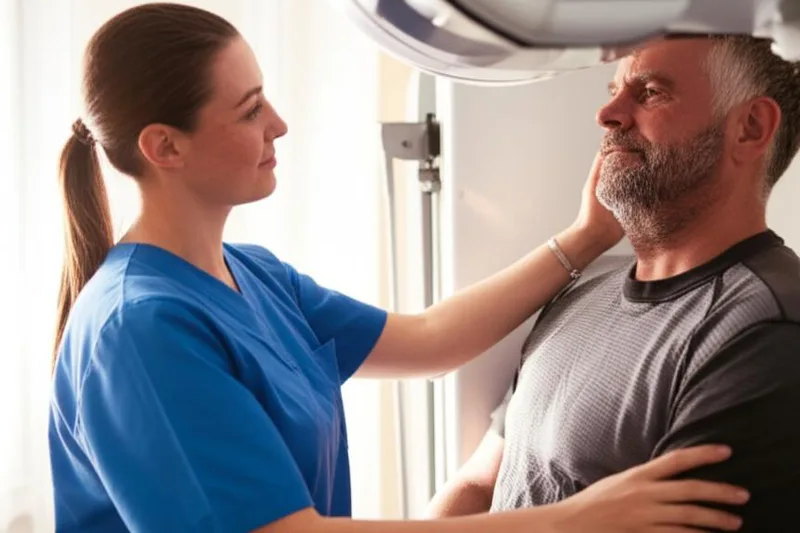
Have you ever gone to the hospital to get an X-ray after breaking an arm or leg, or when the doctor told you to do a CT scan? Do you remember the person there who prepares you for the machine, tells you to stand in the right position, and helps you press a button to take a picture? That's the radiographer we're talking about. They're also called radiologic technologists. They play a quiet but extremely important role in our healthcare system.
What exactly does a Radiographer do?
Simply put, a radiologist is a healthcare professional who is trained to operate special scanning machines that take images of the inside of our bodies for medical purposes. They are the people behind the X-rays and CT scans you get.
One thing that many people confuse is that a radiographer and a radiologist are two different people. Think of it this way, a radiographer takes your X-ray. But it is a radiologist , or a doctor who specializes in radiology, who looks at that X-ray image, analyzes what's in it, and makes a diagnostic report like "There's a broken bone here" or "There's an infection in the lungs." In other words, while a radiographer takes care of the technical side, a radiologist makes the diagnosis from the medical side.
These radiologists work not only in the hospital's radiology department, but also in operating rooms, emergency treatment units (ETUs), cardiac units, intensive care units, and even in wards where patients are bedridden.
| Functions and equipment used by radiologists | |
|---|---|
| Main equipment and methods used | |
| CT scanners | Computerized tests that show cross-sections of the body in three dimensions (3D). |
| X-ray machines | It is commonly used to diagnose things like bone fractures and lung diseases. |
| MRI scanners | Magnetic fields are used to examine things like soft tissue, the brain, and joints. |
| Ultrasound scans | Pregnant mothers use sound waves to examine the abdominal organs. |
| Radiotherapy | Oncologists assist in administering radiation to destroy cancer cells. |
| Main Responsibilities and Duties | |
| Preparing patients | Explain the test and position the patient in the correct position. |
| Equipment maintenance | Checking whether the expensive and sensitive machines used are working properly. |
| Ensuring safety | Follow safe procedures to minimize the effects of radiation on the patient and themselves. |
| Assisting surgeons | During complex surgeries, special X-ray equipment is used to see inside the body. |
What kind of education and training is required for this profession?
Becoming a radiologist is not an easy task. To do this, you need to complete a recognized diploma or degree in Radiography. These courses usually last for 2 to 4 years. During this time, they learn not only how to operate the machines, but also how to use them.
They are given in-depth knowledge of a number of subjects such as Anatomy and Physiology , Radiographic Safety , how to communicate with patients , and Medical Ethics .
In addition, they can also receive specialized training in various fields. For example:
- Angiography: Taking pictures of the heart and blood vessels.
- Mammography: A special test used to detect breast cancer.
- Mobile Radiography: Taking X-rays on patients who are unable to get out of hospital beds.
- Trauma Radiography: Rapid examinations in the ETU for accident victims.
When would you need to see a radiologist?
You usually don't go directly to a radiologist. Your treating doctor, whether it's your family doctor or another specialist (such as an orthopedic surgeon), will refer you for this type of test based on your symptoms.
Here are some situations where you might need this type of test:
- When a broken bone is suspected.
- When you think a blood vessel is blocked.
- If a Fremdkörper (foreign object), that is, an object from outside, has entered the body.
- When there is a suspicion of a tumor or cancer.
- To check the baby's development during pregnancy (ultrasound scan).
- When a muscle is torn.
The most important thing is that many of these tests are essential for the doctor to accurately diagnose a disease and provide the right treatment.
What should you expect when going for a test?
Once your doctor has prescribed an X-ray or scan, you will be referred to the hospital's radiology department. There, the radiologist who will take you in will explain to you what the test will be and how long it will take.
Some tests can be completed in a few minutes. However, more complex tests, such as MRI scans, can take two hours or more. Before some tests, you may be advised to avoid certain foods, drinks, and medications. It is important to follow these instructions carefully to ensure the accuracy of the test.
Special information for pregnant mothers
If you are pregnant or suspect you are pregnant, be sure to inform the radiology department. Because X-rays and CT scans use very low doses of radiation, doctors and radiologists take extra precautions for pregnant women.
But remember this too, sometimes the risk to you or your baby from not having a necessary test can be much greater than the very small risk of radiation. Therefore, do not hide anything about this, talk openly with your doctor and make the best and safest decision.
Take-Home Message
- A radiographer is a healthcare professional who is specially trained to perform medical examinations such as X-rays, CT scans, and MRIs.
- They are different from the radiologist, who looks at those images and makes a diagnosis. They both work as a team.
- Follow the instructions given to you before going for a test exactly. Be sure to tell them about any medications you take, any medical conditions you have, and especially if you are pregnant.
- Radiologists are an indispensable and vital part of the diagnostic process in modern medicine. The next time you go for an X-ray, don't forget to appreciate their service.


💬 Comments (0)
No comments yet. Be the first to share your thoughts here.
Add Your Comment