
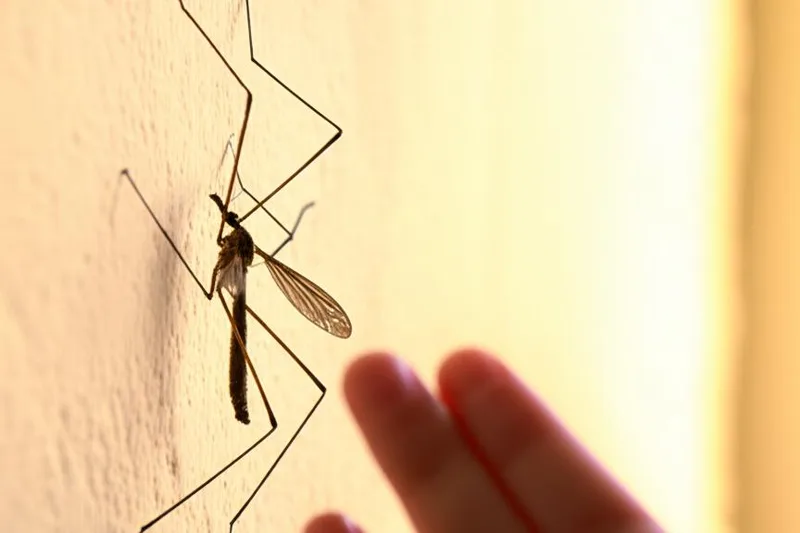
Have you ever seen a large, long-legged mosquito-like creature hovering over a window when the lights are on in the evening, or on a rainy day? When you see it, you think, 'Oh my, what a giant mosquito this is, it looks like it ate twenty of them,' right? Many people are afraid of this creature. But should we really be afraid of this creature? Today, let's talk about this Crane Fly, which scares many people, but is actually an innocent creature.
Who is this Crane Fly really?
Simply put, Crane Fly is an insect that belongs to a family of insects. Scientifically, they are called ``Tipulidae``. There are more than 15,000 species of them worldwide. Many people are afraid of them because they look like large mosquitoes. In some countries, they are also called "Mosquito Hawk", but that name is a bit of a misnomer, because they do not eat mosquitoes.
Just think, these animals have been on Earth since the time of the dinosaurs. That means they are as old as us.
Crane flies are usually brown, black, or light yellow in color. Their most distinctive feature is their long, slender legs. These legs are very fragile. Their body length is usually 13-20 millimeters (about half an inch), although some giant species can grow up to 35 millimeters (1.4 inches). Their wings are very thin, like a membrane.
Don't be afraid! Crane Flies are not like mosquitoes.
Here's the most important thing. You need to remember this very well. Crane Flies never bite people. They don't sting you. In fact, many species of Crane Fly don't even have mouths! So how do they bite us? Even some species that do have mouths only drink nectar. They never come to drink blood.
So the next time you see a large mosquito-like creature on the wall of your house, don't panic. It's most likely an innocent Crane Fly that won't harm you.
Even though they may seem a bit annoying when they come home and circle around the lights, they are not a danger to you or your family. So don't panic and run to swatt them away like you would if you saw a mosquito.
Where do they live? What do they eat?
Crane Flies are found almost everywhere in the world. But they prefer moist environments. In our country, they can be seen around lakes, streams, and ponds. They are also abundant in damp areas of homes, near drains, and in areas where there is decaying leaf litter.
Although adult animals live on land, the early stages of their lives are spent in or very close to water.
Their food and drink
As we mentioned before, adult Crane Fly animals don't eat much of the time. They only live for a few days. During that short period of time, they don't need to eat. The minority that do eat only eat nectar.
They eat a lot during their larval stage. During this stage, they mainly eat decaying plant matter, such as leaves and debris. This means they are a group of cleaners. Although some species have been reported to eat the roots of grasses, this is very rare.
The life cycle of a Crane Fly is quite amazing!
Like other insects, a Crane Fly has four main stages in its life. This is similar to a butterfly.
| Stage | Description |
|---|---|
| 1. Egg | The female lays her eggs in moist soil, near water, or in well-watered grassy areas. The eggs hatch into larvae within 6-14 days. |
| 2. Larva | These larvae are like worms. They are also called "leatherjackets" because their skin is a bit rough. They shed their skin about four or five times as they grow. This is when they eat a lot and gain strength. |
| 3. Pupa | After the last molt, the larva enters the pupal stage. This lasts about 5-12 days. It is at this time that the body undergoes a complete transformation (metamorphosis) and becomes a winged adult. |
| 4. Suhumbula (Adult) | The adult Crane Fly hatches and breaks through the cocoon. The amazing thing is that as an adult, they only live for a very short time, about one to three days. During that time, their only purpose is to reproduce. That's why they don't even have mouths. |
Overall, the entire lifespan from egg to death can be as short as six weeks.
What do you do when you get home?
Once the adult Crane Flies emerge, there's not much you can do to control them. You just have to live with them for a few days.
The most important thing is, don't try to kill them with insecticides. They are not a pest that bothers us. Besides, insecticides are not good for your health either.
The best thing is to keep the windows and doors closed when you turn on the lights at night. That way, they will be less likely to come into the house. If they do come into the house by accident, don't be afraid. They are very innocent. You can use a glass and a leaf, or just hold them by the hand, and you can get them out.
Don't forget, these animals are very important to our ecosystem. Crane flies are a good food for animals like birds, bats, lizards, spiders, and even the ants in our homes. Therefore, they help maintain the balance of the environment.
Take-Home Message
- Crane flies are not giant mosquitoes. They are completely harmless to humans.
- These animals do not bite or sting humans. Many do not even have mouths, so they cannot drink blood.
- If you come home, don't be afraid, just catch them and put them outside. There's no need to kill them or use pesticides.
- Crane flies are very important to the ecosystem. They are a good food for animals like birds, lizards, and snakes.
- If you're ever bitten by an insect and you're not sure what it is or if you're allergic, see your doctor . But don't be afraid of a Crane Fly.


💬 Comments (0)
No comments yet. Be the first to share your thoughts here.
Add Your Comment