
Let's learn everything about the ovaries in a simple way.

Let's learn everything about the ovaries in a simple way.
Have you ever thought about how much work even the smallest part of your body does? The same is true of the ovaries in our female body. Although small in name, the function performed by these is very amazing. So today, let's talk about these ovaries in a simple way, in a way that you can understand.

What are the ovaries? What do they actually do?

Okay, let's first look at what the ovaries are, where they are located, and what their main function is. Simply put, the ovaries are two small, egg-shaped glands located on either side of your uterus. They're like two almonds. They're where your eggs (or ovum, as doctors call them) are produced and stored. Not only that, but these tiny ovaries also produce estrogen and progesterone, two of the most important hormones that control your menstrual cycle and are needed for pregnancy. Imagine how much work these two tiny organs do! Every month, around the middle of your menstrual cycle, which is usually around day 14 of a 28-day cycle, one ovary releases an egg. This is what we call ovulation . If this released egg joins with a sperm from a man (in medical terms, ``fertilize''), you can get pregnant. The ovaries release an egg in this way every month until you reach menopause. With menopause, the ovaries stop releasing eggs. Sometimes more than one egg can be released from an ovary. That's when things like twins (multiple pregnancies) happen. The amazing thing is that when you are born, your ovaries have all the eggs you will need for the rest of your life . This means that no new eggs are produced, and you only need to take care of the ones you have.

What other important functions do the ovaries perform?

The ovaries are not just a place where you produce eggs. They play a crucial role in both menstruation and conception. Each of your ovaries contains thousands of small sacs called ovarian follicles . These follicles contain immature eggs. Every month, between days six and fourteen of your menstrual cycle, a hormone called Follicle-Stimulating Hormone (FSH) causes several follicles in one of your ovaries to begin to mature. Then, around day 14 of your menstrual cycle, another hormone called Luteinizing Hormone (LH) suddenly surges, causing the mature follicle to release an egg. That's what we've been talking about before, ovulation. Then this egg, the fallopian tubeIt travels down a thin tube called the fallopian tube to the uterus. As the egg travels down this path, the hormone progesterone rises. This prepares the lining of the uterus for an egg to implant. Imagine, if you don't get pregnant during that cycle, that egg will gradually dissolve and be reabsorbed by your body. Then menstruation occurs, which is when the lining of the uterus is shed.

Let's learn a little more about the hormones produced by the ovaries.

As we mentioned earlier, the ovaries mainly produce two hormones, estrogen and progesterone. These two hormones are very important for the development of your reproductive system and a healthy menstrual cycle.
  • Estrogen : This hormone is produced most in the first half of the menstrual cycle, before ovulation. It helps with things like egg maturation.
  • Progesterone : This hormone increases in the second half of the menstrual cycle. It prepares the uterus to receive a fertilized egg.
The balance of these hormones is very important. If there is a change in it, various problems can occur.

Where are the ovaries located? How do they look?

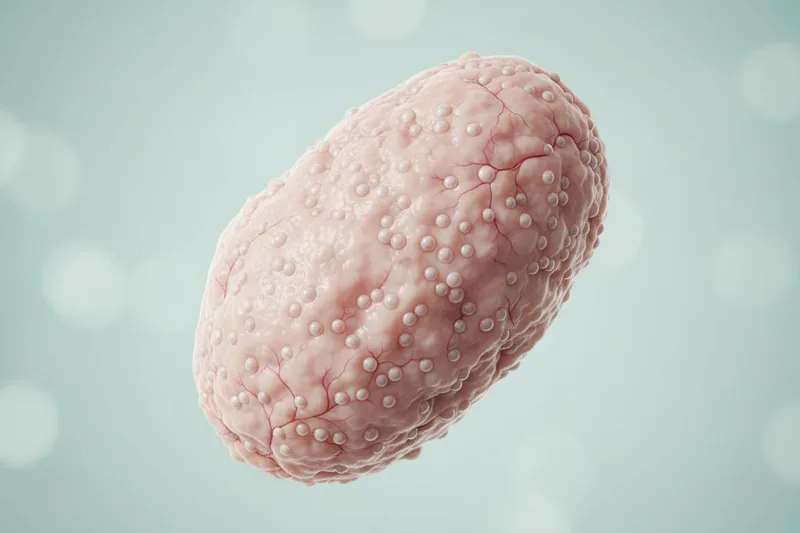
The ovaries are located in your lower abdomen, on the right and left sides of your uterus. They don't just hang there. They're held in place by several muscles and ligaments in your pelvis. The ovaries are attached to the uterus by a ligament called the ovarian ligament, but the uterus and ovaries don't touch each other. In terms of appearance, the ovaries are oval-shaped , slightly firm to the touch, and have a slightly bumpy texture . Their color can range from light gray to white.

How are the ovaries sized?

The size of your ovaries is related to your age.
  • Before menopause, that is, during youth, an ovary can be as large as a kiwi fruit (about 6 centimeters) .
  • These gradually shrink as we age. After menopause, they can sometimes shrink to as small as 2 centimeters (about the size of a bean) .
  • The average size of an ovary is about 4 centimeters. Studies have shown that the size of the ovaries decreases with each decade after the age of 30 .

What are the ovaries made of?

There are three main layers in an ovary. 1. Outermost layer: Like the shell (capsule) of a medicine capsule. 2. Middle layer:This is called the ovarian cortex. It is made up of connective tissue. The ovarian follicles we talked about earlier are also located in this layer. 3. The innermost layer (medulla): This is where the blood vessels and lymphatic vessels are located.

Can we get ovarian cysts? How do we feel ovarian pain?

Most of the time, only your doctor can feel your ovaries during a pelvic exam . Sometimes, if your ovaries are swollen or enlarged, you may feel pain. But you can't feel your ovaries from outside your body. Some women feel some pain during ovulation. This is normal. It can feel like a tingling sensation or a slight ache on one side of your lower abdomen . This is also called ``mittelschmerz''. Some women may experience a little bleeding when they ovulate, or a change in their vaginal discharge, or abdominal discomfort. But others don't even feel that they are ovulating, and there is no pain at all.
Important: If you have persistent or severe pain in your ovaries, it could be a sign of something serious. So see a doctor right away . Some ovarian conditions require immediate treatment .

If there is a problem with the ovaries, what are the symptoms?

If there is a problem with the ovaries, it can cause various symptoms depending on the condition. Be careful if you experience any of the following:
  • Pelvic pain (lower abdomen) or bloating .
  • A feeling of pressure in the stomach or a feeling of pain when touched.
  • Nausea or diarrhea .
  • Irregular vaginal bleeding.
  • Abnormal vaginal discharge.
  • Pain during menstruation (doctors call this ``dysmenorrhea'').
  • Irregular menstrual cycles (periods not coming regularly).
  • Anovulation (failure to release an egg from the ovaries in the middle of the menstrual cycle - this is called ``anovulation'').
If one or more of these symptoms persist, it is best to definitely seek medical advice.

What are the diseases that can affect the ovaries?

Various diseases and conditions can occur in the ovaries. Some of the most common are:
  • Ovarian cysts: These are small sacs filled with fluid. Most of the time they are harmless and go away on their own. However, some can be painful or cause other problems.
  • Polycystic Ovary Syndrome (PCOS): This is a condition caused by a hormonal imbalance. Many small cysts develop in the ovaries, menstrual cycles become irregular, and it can cause difficulty conceiving.
  • Ovarian cancer: This is a serious condition. If detected early, it can be treated.
  • Primary ovarian insufficiency: This is when the ovaries stop functioning before the age of 40.
  • Pelvic inflammatory disease (PID): This is an infection of the upper reproductive system. It can also affect the ovaries.
  • Ovarian tumors (benign): These are not cancerous, but they can sometimes grow and cause problems.
  • Endometriosis: This is when tissue that lines the inside of the uterus (endometrium) grows outside the uterus, sometimes on the ovaries. This is also a painful condition.

What tests do doctors do to detect ovarian problems?

Your doctor will use a variety of tests to determine if there is a problem with your ovaries. Some of these include:
  • Pelvic exam: In this, the doctor manually examines the ovaries or uterus to see if there is anything abnormal.
  • Ultrasound scan: This can take a clear picture of the ovaries. It can check for cysts and their size.
  • MRI Scan (Magnetic Resonance Imaging - MRI): This is another test that can produce more detailed images.
  • Blood tests: These can check things like hormone levels and cancer markers.
  • Urine tests: Help detect things like infections.
  • CT scan: This is another method of obtaining images.
The doctor will decide which test to perform based on your symptoms and condition.

What are the treatments for ovarian diseases?

This also depends on the condition you have. Here are some of the most commonly used treatments:
  • Pain relievers: Over-the-counter pain relievers such as acetaminophen and ibuprofen.
  • Hormonal birth control pills or hormone therapy: These are given to regulate the menstrual cycle in conditions like PCOS.
  • Antibiotics: For infectious conditions.
  • Surgery: For example, laparoscopy (surgery done through a small incision) or oophorectomy.
  • Radiation or chemotherapy:These are treatments for ovarian cancer.

What happens if an ovary "dies"?

Yes, it can happen. This is called an adnexal torsion or ovarian torsion . This is when the ovary twists around the ligaments that hold it in place, cutting off the blood supply to the ovary. This is a very painful condition. If not treated immediately, the ovary can die. A dead or dying ovary must be surgically removed. Otherwise, the area around it can become swollen and infected. The surgery to remove the ovaries is called an oophorectomy.

What happens to the ovaries during menopause?

Menopause is a natural change in a woman's life. During this time:
  • The ovaries stop producing the hormone estrogen.
  • Ovulation stops completely.
  • Therefore, the ability to have children is lost.
  • The ovaries also atrophy, meaning they shrink and become smaller.
The average age at which menopause occurs is around 51 years old, but for some it can occur earlier or later.

Can pregnancy occur inside the ovaries?

Yes, it can happen, but it's very rare. This is called an ectopic pregnancy . This means the pregnancy occurs outside the uterus. Most often, it happens in the fallopian tube, but sometimes it can also happen in the ovary. This is a medical emergency.

How many ovaries do we have?

A woman has two ovaries. One on the right side, the other on the left.

Is it possible to know whether the egg was released from the right or left side this month?

It's really hard to know for sure. The only way to know for sure is to listen to your body when you ovulate. Some people experience a mild cramping or cramping sensation called mittelschmerz on one side of their lower abdomen when an egg is released. Depending on which side you feel the pain (right or left), you can probably guess which ovary released the egg that month. But not everyone feels this.

Summary and Take-Home Message

So, now you understand how important the ovaries are to our female body.
These are the hormones that produce our menstrual cycle and pregnancy. They also release an egg each month for fertilization.
Sometimes, various conditions related to the ovaries can occur. They require medical treatment. Be aware of symptoms such as lower abdominal pain, irregular bleeding, and menstrual irregularities . If you feel unusual pain or discomfort during ovulation or menstruation, don't be ashamed or afraid to talk to your doctor about it. Then they can check the health of your ovaries. Remember, healthy ovaries are essential for a healthy female life!
Ovaries, Women's Health, Hormones, Menstruation, Pregnancy, Ovulation, PCOS, Ovaries, Menopause
⚠️ Important: The medical articles and information on Nirogi Lanka are for general awareness only, and are by no means a substitute for professional medical advice, diagnosis, or treatment. For any medical problem you have, consult a qualified physician immediately.

💬 Comments (0)

No comments have been posted yet. Add your comment here for the first time.

Add your comment

Please calculate: 6 + 7 =
Let's learn everything about the ovaries in a simple way.
Reproductive HealthFebruary 21, 2026

Let's learn everything about the ovaries in a simple way.

Have you ever thought about how much work even the smallest part of your body does? The same is true of the ovaries in our female body. Although small in name, the function performed by these is very amazing. So today, let's talk about these ovaries in a simple way, in a way that you can understand.

What are the ovaries? What do they actually do?

Okay, let's first look at what the ovaries are, where they are located, and what their main function is. Simply put, the ovaries are two small, egg-shaped glands located on either side of your uterus. They're like two almonds. They're where your eggs (or ovum, as doctors call them) are produced and stored. Not only that, but these tiny ovaries also produce estrogen and progesterone, two of the most important hormones that control your menstrual cycle and are needed for pregnancy. Imagine how much work these two tiny organs do! Every month, around the middle of your menstrual cycle, which is usually around day 14 of a 28-day cycle, one ovary releases an egg. This is what we call ovulation . If this released egg joins with a sperm from a man (in medical terms, ``fertilize''), you can get pregnant. The ovaries release an egg in this way every month until you reach menopause. With menopause, the ovaries stop releasing eggs. Sometimes more than one egg can be released from an ovary. That's when things like twins (multiple pregnancies) happen. The amazing thing is that when you are born, your ovaries have all the eggs you will need for the rest of your life . This means that no new eggs are produced, and you only need to take care of the ones you have.

What other important functions do the ovaries perform?

The ovaries are not just a place where you produce eggs. They play a crucial role in both menstruation and conception. Each of your ovaries contains thousands of small sacs called ovarian follicles . These follicles contain immature eggs. Every month, between days six and fourteen of your menstrual cycle, a hormone called Follicle-Stimulating Hormone (FSH) causes several follicles in one of your ovaries to begin to mature. Then, around day 14 of your menstrual cycle, another hormone called Luteinizing Hormone (LH) suddenly surges, causing the mature follicle to release an egg. That's what we've been talking about before, ovulation. Then this egg, the fallopian tubeIt travels down a thin tube called the fallopian tube to the uterus. As the egg travels down this path, the hormone progesterone rises. This prepares the lining of the uterus for an egg to implant. Imagine, if you don't get pregnant during that cycle, that egg will gradually dissolve and be reabsorbed by your body. Then menstruation occurs, which is when the lining of the uterus is shed.

Let's learn a little more about the hormones produced by the ovaries.

As we mentioned earlier, the ovaries mainly produce two hormones, estrogen and progesterone. These two hormones are very important for the development of your reproductive system and a healthy menstrual cycle.
  • Estrogen : This hormone is produced most in the first half of the menstrual cycle, before ovulation. It helps with things like egg maturation.
  • Progesterone : This hormone increases in the second half of the menstrual cycle. It prepares the uterus to receive a fertilized egg.
The balance of these hormones is very important. If there is a change in it, various problems can occur.

Where are the ovaries located? How do they look?

The ovaries are located in your lower abdomen, on the right and left sides of your uterus. They don't just hang there. They're held in place by several muscles and ligaments in your pelvis. The ovaries are attached to the uterus by a ligament called the ovarian ligament, but the uterus and ovaries don't touch each other. In terms of appearance, the ovaries are oval-shaped , slightly firm to the touch, and have a slightly bumpy texture . Their color can range from light gray to white.

How are the ovaries sized?

The size of your ovaries is related to your age.
  • Before menopause, that is, during youth, an ovary can be as large as a kiwi fruit (about 6 centimeters) .
  • These gradually shrink as we age. After menopause, they can sometimes shrink to as small as 2 centimeters (about the size of a bean) .
  • The average size of an ovary is about 4 centimeters. Studies have shown that the size of the ovaries decreases with each decade after the age of 30 .

What are the ovaries made of?

There are three main layers in an ovary. 1. Outermost layer: Like the shell (capsule) of a medicine capsule. 2. Middle layer:This is called the ovarian cortex. It is made up of connective tissue. The ovarian follicles we talked about earlier are also located in this layer. 3. The innermost layer (medulla): This is where the blood vessels and lymphatic vessels are located.

Can we get ovarian cysts? How do we feel ovarian pain?

Most of the time, only your doctor can feel your ovaries during a pelvic exam . Sometimes, if your ovaries are swollen or enlarged, you may feel pain. But you can't feel your ovaries from outside your body. Some women feel some pain during ovulation. This is normal. It can feel like a tingling sensation or a slight ache on one side of your lower abdomen . This is also called ``mittelschmerz''. Some women may experience a little bleeding when they ovulate, or a change in their vaginal discharge, or abdominal discomfort. But others don't even feel that they are ovulating, and there is no pain at all.
Important: If you have persistent or severe pain in your ovaries, it could be a sign of something serious. So see a doctor right away . Some ovarian conditions require immediate treatment .

If there is a problem with the ovaries, what are the symptoms?

If there is a problem with the ovaries, it can cause various symptoms depending on the condition. Be careful if you experience any of the following:
  • Pelvic pain (lower abdomen) or bloating .
  • A feeling of pressure in the stomach or a feeling of pain when touched.
  • Nausea or diarrhea .
  • Irregular vaginal bleeding.
  • Abnormal vaginal discharge.
  • Pain during menstruation (doctors call this ``dysmenorrhea'').
  • Irregular menstrual cycles (periods not coming regularly).
  • Anovulation (failure to release an egg from the ovaries in the middle of the menstrual cycle - this is called ``anovulation'').
If one or more of these symptoms persist, it is best to definitely seek medical advice.

What are the diseases that can affect the ovaries?

Various diseases and conditions can occur in the ovaries. Some of the most common are:
  • Ovarian cysts: These are small sacs filled with fluid. Most of the time they are harmless and go away on their own. However, some can be painful or cause other problems.
  • Polycystic Ovary Syndrome (PCOS): This is a condition caused by a hormonal imbalance. Many small cysts develop in the ovaries, menstrual cycles become irregular, and it can cause difficulty conceiving.
  • Ovarian cancer: This is a serious condition. If detected early, it can be treated.
  • Primary ovarian insufficiency: This is when the ovaries stop functioning before the age of 40.
  • Pelvic inflammatory disease (PID): This is an infection of the upper reproductive system. It can also affect the ovaries.
  • Ovarian tumors (benign): These are not cancerous, but they can sometimes grow and cause problems.
  • Endometriosis: This is when tissue that lines the inside of the uterus (endometrium) grows outside the uterus, sometimes on the ovaries. This is also a painful condition.

What tests do doctors do to detect ovarian problems?

Your doctor will use a variety of tests to determine if there is a problem with your ovaries. Some of these include:
  • Pelvic exam: In this, the doctor manually examines the ovaries or uterus to see if there is anything abnormal.
  • Ultrasound scan: This can take a clear picture of the ovaries. It can check for cysts and their size.
  • MRI Scan (Magnetic Resonance Imaging - MRI): This is another test that can produce more detailed images.
  • Blood tests: These can check things like hormone levels and cancer markers.
  • Urine tests: Help detect things like infections.
  • CT scan: This is another method of obtaining images.
The doctor will decide which test to perform based on your symptoms and condition.

What are the treatments for ovarian diseases?

This also depends on the condition you have. Here are some of the most commonly used treatments:
  • Pain relievers: Over-the-counter pain relievers such as acetaminophen and ibuprofen.
  • Hormonal birth control pills or hormone therapy: These are given to regulate the menstrual cycle in conditions like PCOS.
  • Antibiotics: For infectious conditions.
  • Surgery: For example, laparoscopy (surgery done through a small incision) or oophorectomy.
  • Radiation or chemotherapy:These are treatments for ovarian cancer.

What happens if an ovary "dies"?

Yes, it can happen. This is called an adnexal torsion or ovarian torsion . This is when the ovary twists around the ligaments that hold it in place, cutting off the blood supply to the ovary. This is a very painful condition. If not treated immediately, the ovary can die. A dead or dying ovary must be surgically removed. Otherwise, the area around it can become swollen and infected. The surgery to remove the ovaries is called an oophorectomy.

What happens to the ovaries during menopause?

Menopause is a natural change in a woman's life. During this time:
  • The ovaries stop producing the hormone estrogen.
  • Ovulation stops completely.
  • Therefore, the ability to have children is lost.
  • The ovaries also atrophy, meaning they shrink and become smaller.
The average age at which menopause occurs is around 51 years old, but for some it can occur earlier or later.

Can pregnancy occur inside the ovaries?

Yes, it can happen, but it's very rare. This is called an ectopic pregnancy . This means the pregnancy occurs outside the uterus. Most often, it happens in the fallopian tube, but sometimes it can also happen in the ovary. This is a medical emergency.

How many ovaries do we have?

A woman has two ovaries. One on the right side, the other on the left.

Is it possible to know whether the egg was released from the right or left side this month?

It's really hard to know for sure. The only way to know for sure is to listen to your body when you ovulate. Some people experience a mild cramping or cramping sensation called mittelschmerz on one side of their lower abdomen when an egg is released. Depending on which side you feel the pain (right or left), you can probably guess which ovary released the egg that month. But not everyone feels this.

Summary and Take-Home Message

So, now you understand how important the ovaries are to our female body.
These are the hormones that produce our menstrual cycle and pregnancy. They also release an egg each month for fertilization.
Sometimes, various conditions related to the ovaries can occur. They require medical treatment. Be aware of symptoms such as lower abdominal pain, irregular bleeding, and menstrual irregularities . If you feel unusual pain or discomfort during ovulation or menstruation, don't be ashamed or afraid to talk to your doctor about it. Then they can check the health of your ovaries. Remember, healthy ovaries are essential for a healthy female life!
Ovaries, Women's Health, Hormones, Menstruation, Pregnancy, Ovulation, PCOS, Ovaries, Menopause
⚠️ Important: The medical articles and information on Nirogi Lanka are for general awareness only, and are by no means a substitute for professional medical advice, diagnosis, or treatment. For any medical problem you have, consult a qualified physician immediately.

💬 Comments (0)

No comments have been posted yet. Add your comment here for the first time.

Add your comment

Please calculate: 6 + 7 =