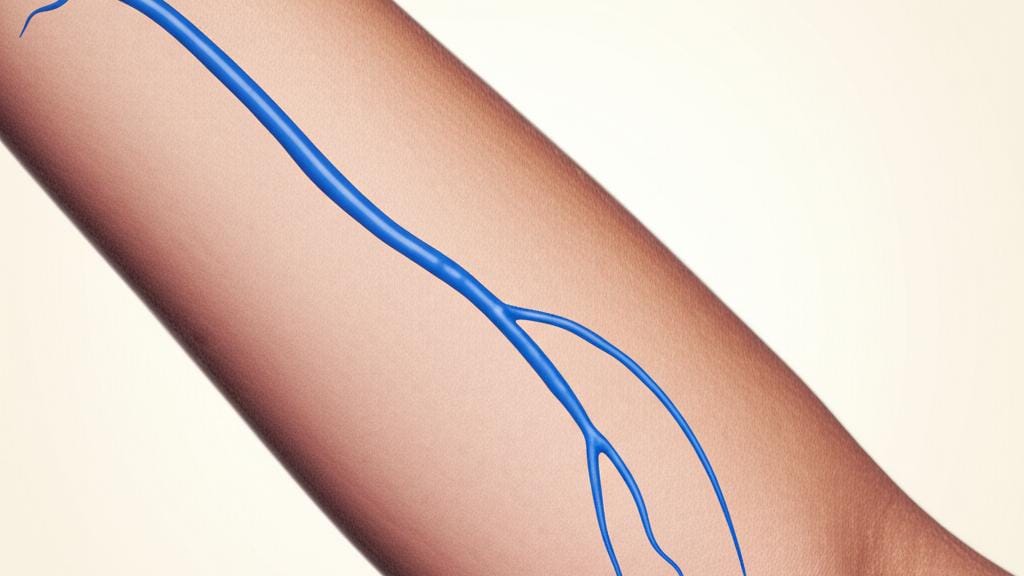
Have you ever wondered what that network of blue lines beneath your skin actually is and what it does? You’ve likely noticed them when looking at your hands or legs. Those are veins, and they are a vital component of your circulatory system. In fact, roughly 75% of your body's total blood volume resides within your veins at any given time. Isn't that incredible?
So, what exactly are veins?
Simply put, veins are a complex network of blood vessels spread throughout your entire body. Their primary mission is to collect oxygen-poor (deoxygenated) blood from your body's tissues and return it to the heart. Think of it this way: your cells use oxygen to function, leaving behind "exhaust" or deoxygenated blood that must be sent back to the heart and lungs for cleaning and re-oxygenation. Veins work in tandem with other blood vessels and your heart to keep your blood circulating continuously.
How does vein blood differ from artery blood?
There is a major difference. Arteries primarily carry oxygen-rich, fresh blood away from the heart to the rest of the body. In contrast, veins—with one notable exception—transport oxygen-depleted blood back toward the heart.
The exception is the pulmonary veins. These connect your heart and lungs. These four veins transport oxygenated, fresh blood from the lungs back into the heart so that it can be pumped out to the entire body. It’s a beautifully coordinated cycle!
What are Venules?
Venules are the tiny, delicate vessels that act like smaller side streets connecting to major highways. They collect blood from the microscopic capillaries, where oxygen exchange happens, and channel it into the larger veins. While venules are slightly wider than capillaries, they are significantly smaller—about 16 times thinner—than a standard vein.
What is the primary function of veins?
Veins serve two main purposes:
1. Collecting deoxygenated blood from the body and returning it to the heart.
2. Transporting freshly oxygenated blood from the lungs back to the heart (a role unique to the pulmonary veins).
The specific role of a vein depends on its location in your body. Together, they form what we call the venous system.
Understanding the Venous System
Your venous system is the entire network of veins connected to your organs and other vessels. It is divided into two primary circuits:
1. Systemic circuit
2. Pulmonary circuit
Think of these as a race track. A race car needs to complete a full circuit, but it also needs to stop for fuel and maintenance to keep going. Your blood follows the same logic—it needs to be re-oxygenated (refueled) and cleared of waste products like carbon dioxide.
Let’s look at how this happens:
First, the Systemic circuit, which covers the long journey through your arms, legs, and torso:
1. Oxygen-rich blood leaves the heart via arteries.
2. Arteries branch into smaller vessels (arterioles) and finally into capillaries.
3. In the capillaries, blood delivers oxygen to your tissues and picks up waste products and carbon dioxide.
4. Now the blood is oxygen-depleted and needs to "refuel."
5. This blood enters venules, which empty into the veins.
6. The veins transport this deoxygenated blood back to the heart through two massive vessels: the Superior vena cava and the Inferior vena cava.
Once the blood reaches the heart, the systemic circuit is complete. Now, it enters the Pulmonary circuit:
1. Deoxygenated blood is sent from the heart to the lungs.
2. In the lungs, the blood is replenished with oxygen (the "refueling" process).
3. The fresh, oxygenated blood travels back to the heart through the pulmonary veins.
4. The heart then pumps this fresh blood back into the systemic circuit to start the cycle again.
This is a non-stop, miraculous mechanism happening inside you every single second.
Why do veins appear blue under our skin?
Your veins form a network similar to tree branches or electrical wiring. While many believe veins are blue because of how they look through the skin, that is an optical illusion.
In reality, the blood inside your veins is dark red. It is a deeper shade of red than arterial blood because it has lower oxygen content. The blue appearance is simply the result of how light interacts with your skin layers. Blood is always red, regardless of whether it is in an artery or a vein.
What are veins made of?
Each vein is composed of three primary tissue layers:
- Tunica adventitia: The outermost layer, providing structural support to the vein.
- Tunica media: The middle layer, containing smooth muscle cells that allow the vein to expand or constrict.
- Tunica intima: The smooth innermost lining. It contains specialized endothelial cells that ensure smooth blood flow.
Veins differ from arteries in two key ways:
- One-way valves: Many veins, especially in your legs, contain valves that ensure blood moves only toward the heart, preventing backflow. If these valves fail, blood can pool, leading to conditions like varicose veins.
- Wall thickness: Vein walls are thinner and contain less muscle than artery walls because the blood pressure inside them is significantly lower.
What are the main types of veins?
To keep your circulatory system running efficiently, there are three types of veins:
1. Deep veins:
These are located deep within your muscles and run alongside bones. They are the heavy lifters, responsible for returning the vast majority of deoxygenated blood to the heart. For instance, roughly 90% of the blood returning from your legs travels through deep veins equipped with one-way valves.
2. Superficial veins:
These veins are generally smaller than the deep veins. Like deep veins, they also contain valves, but they are not surrounded by muscles. Instead, they sit just beneath the skin, making them easily visible. These are the blue-colored veins you see running under the skin of your arms and legs.
The role of these superficial veins is to collect blood from the tissues near your skin and channel it into the deep veins (through special connecting veins). However, this blood flows a bit more slowly because it lacks the direct pumping action of surrounding muscles.
The longest vein in your body is actually a superficial vein, known as the Great Saphenous Vein. It runs along each leg, from your ankle all the way up to your thigh.
3. Perforating veins:
Sometimes called 'communicating veins,' these are very short. They act as bridges, carrying blood from the superficial veins into the deep veins. These also contain valves. When your calf muscles contract, these valves close to prevent blood from flowing backward from the deep veins into the superficial ones.
How does blood flow inside veins? Is the heart's pumping enough?
While the heart pumps blood out through your arteries, it needs help from external forces to return blood through the veins back to the heart.
- Your breathing pattern: As you breathe, your lungs expand and your diaphragm moves up and down. This creates a suction-like effect that helps push oxygen-depleted blood in the veins back toward your heart.
- Muscle movement: Especially in your legs! Did you know your leg muscles help pump blood against gravity? This is why your calf muscles are often called the “second heart.”
What is this “second heart”?
You may not realize it, but the muscles in your lower leg, specifically your calf muscles, act like a powerful pump. They compress the deep veins in your lower leg. This “peripheral heart” goes to work every time you take a step.
- When you place your foot on the ground, your body weight compresses the deep veins in the soles of your feet, pushing blood upward toward your calves.
- Then, as you lift your heel, your calf muscles contract and squeeze the deep veins there, pushing the blood further up toward your thighs.
This incredible system is what allows blood in your lower legs and feet to travel against gravity and return to your heart.
Unlike the heart in your chest, this second heart only pumps when you move your legs. The speed of the pump changes based on your activity; when you run, your calf muscles compress the veins much faster than when you are walking.
Ultimately, this second heart is essential for circulating blood throughout your body, ensuring your organs and tissues receive a constant supply of oxygen and nutrients to function properly.
What are the common vein-related conditions?
When veins fail to function properly, several conditions can arise, including:
- Superficial Thrombophlebitis: This is inflammation of a superficial vein, often accompanied by a blood clot. While these clots usually don't reach the lungs, they can potentially spread into the deep vein system.
- Deep Vein Thrombosis (DVT): This is a serious medical condition where blood clots (thrombi) form within the deep veins, most commonly in the legs or pelvis. If a clot breaks loose and travels to the lungs, it can cause a life-threatening Pulmonary Embolism.
- Varicose Veins: These are enlarged, twisted, and bulging veins. While they may not always cause immediate harm, they can lead to complications such as blood clots.
- Chronic Venous Insufficiency: This occurs when the one-way valves in your leg veins are damaged, preventing them from effectively pumping blood back to the heart. It is often a long-term consequence of a previous DVT.
What are the warning signs of a vein issue?
Symptoms vary depending on the condition, but common indicators include:
- Swelling (edema) in the legs, ankles, or feet, especially after standing for long periods.
- Aching, pain, or tenderness in the legs.
- Feelings of fatigue, cramping, or a tingling sensation in the legs.
- Changes in skin texture, such as it becoming leathery.
- Dry, itchy, or flaky skin on the legs or feet.
If you experience any of these symptoms, or notice new purple, swollen, or bulging veins, please see a doctor immediately. Many vein conditions are highly treatable when detected early. If you suspect a condition like DVT, early diagnosis is vital to prevent a Pulmonary Embolism.
How are vein health problems diagnosed?
Your doctor will review your medical history and perform a physical exam. They may order a Doppler ultrasoundor blood tests to check for conditions like DVT.
What are the treatments for vein problems?
Treatment goals typically focus on reducing the risk of blood clots, managing existing clots, and alleviating symptoms.
- Anticoagulant Therapies (Blood Thinners): These are commonly used to treat DVT and prevent Pulmonary Embolism. Examples include Warfarin, Rivaroxaban, and Apixaban. Your doctor will monitor your blood regularly and adjust dosages to balance effectiveness with the risk of bleeding.
- Clot-dissolving drugs: These are not used routinely and are most effective if administered within 48 hours of clot formation.
- Surgical procedures: These are rare, but for patients who cannot take blood thinners, inserting a Vena Cava filter may be a necessary protective option.
There are also effective home-based management strategies. Your doctor might recommend compression socks to improve circulation. These come in various pressure levels, and your doctor will help you choose the right fit. Compression therapy has been used for over 2,000 years!
How can I keep my veins healthy?
There is much you can do to support vein health. If you already have vein issues or are at high risk, following these steps is crucial:
- Avoid sitting or standing in the same position for too long. If you spend most of your day sitting, make it a habit to get up and walk around for two to three minutes every hour. While seated, elevate your lower legs and flex your ankles back and forth. As you move your lower legs, your muscles compress the veins, helping to pump blood back toward your heart.
- Maintain excellent foot hygiene to prevent infections. Keep your feet clean and dry. You may use a moisturizer to prevent skin cracks and bleeding.
- Consult your doctor to determine if blood-thinning medications are appropriate for you. Always inform your healthcare provider if you notice any changes in your symptoms.
Even if you don't have existing vein concerns, you can incorporate these simple habits into your daily routine to keep your veins healthy:
- Stay active and move your body throughout the day to promote healthy circulation.
- Go for a walk (aim for at least 30 minutes, five days a week).
- Eat a heart-healthy diet to help maintain a healthy weight.
- During long car or plane journeys, remember to stand up, walk around, and stretch your limbs regularly.
- If you notice any symptoms of a vein-related issue, no matter how minor they may seem, see a doctor immediately. Early detection is key to preventing more serious complications.
Take-Home Message
We often don't realize how hard our heart and blood vessels work even when we are resting. For you to remain active, your circulatory system must be functioning optimally. That is why caring for your body is so vital—it helps ensure your blood flows smoothly and efficiently through your system.
Your veins are a critical, irreplaceable part of your circulatory system. Along with your heart, arteries, and capillaries, your veins work tirelessly every day to circulate blood throughout your body.
When traveling long distances, do not forget to stand up and move around as often as you can. Simply elevating your lower legs and flexing your ankles helps your leg veins push blood back toward your heart. If you suspect you have a vein-related problem, contact your healthcare provider right away to discuss your symptoms. Many venous conditions can be effectively managed or treated if identified early!