
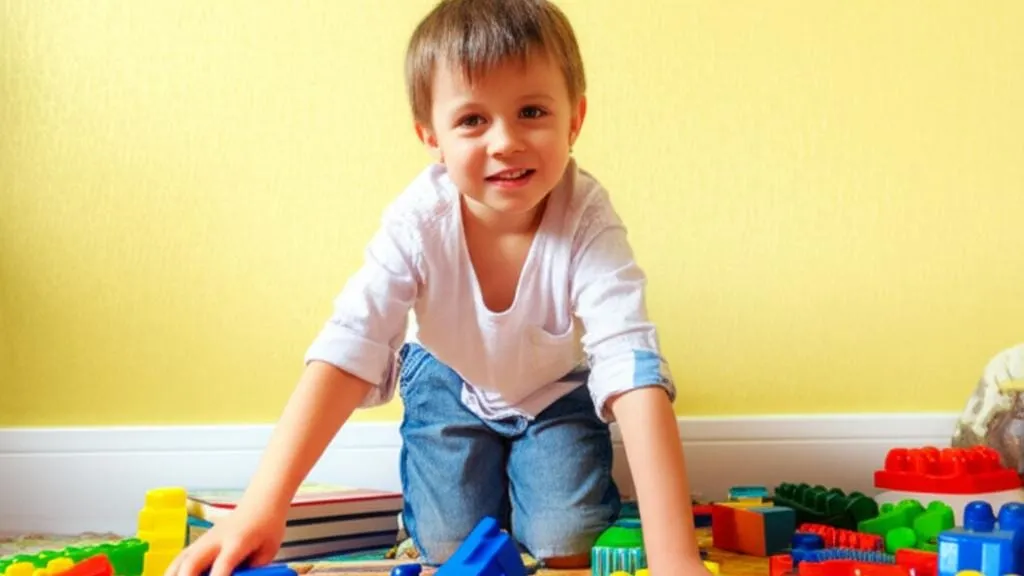
Do you often get complaints about your child at school? Do you often hear things like, "He never stays in one place in class," "He bothers other kids," and "He doesn't listen to what you say?" Is it the same at home? He doesn't finish a task he starts? Does he leave things behind and then lose them? If these things sound familiar to you, then we might be talking about something more than just mischief. That's ADHD, or attention deficit hyperactivity disorder.
Escala de Autoinforme de TDAH Adulto de la OMS (ASRS-v1.1 Parte A) ukan 6 jiskt’äwin validada ukan uñakipirip apsuñamawa, ukhamat jilïr jaqinakan jan yäqawipa, disfunción ejecutiva ukat hiperactividad ukanakat uñakipañataki.
Simply put, what is ADHD?
ADHD (Attention Deficit Hyperactivity Disorder) is more of a disease than a disorder, it is a subtle change in brain development and function. This can make it difficult for a child to pay attention and control their behavior. This is a very common condition among children. In fact, it is one of the most common brain disorders seen in children. Although this condition is often diagnosed in childhood, it can persist into adulthood.
What are the main symptoms of ADHD?
ADHD can vary from child to child, but in general, we can identify it under three main categories of symptoms.
1. Inattention : Difficulty paying attention to something.
2. Impulsivity: Acting impulsively without thinking.
3. Hyperactivity: Being too fidgety to stay in one place.
Let's look at this table to further explain these characteristics.
| Characteristic type | What you will see |
|---|---|
| Hyperactivity & Impulsivity |
|
| Inattention |
|
Characteristics of Toddlers
Doctors don't usually diagnose ADHD in children under 4 years old because the typical behaviors of children this age are very similar to ADHD symptoms. However, if your little one is constantly having problems at preschool or daycare and their behavior is very different from other children their age , it's worth paying attention to.
What are the causes of ADHD? What are the misconceptions?
Many parents think, "Is this my fault? Didn't I raise my child right?" No, ADHD is never the fault of the parents.
Doctors still can't find a definitive cause for ADHD, but research has found the following:
- It's hereditary: ADHD can be hereditary. 1 in 4 children with ADHD have a parent or sibling with the condition.
- Brain changes: Children with ADHD have been found to have certain changes in the parts of the brain that control attention, movement, and social skills. They may also have changes in the functioning of chemicals (neurotransmitters) that help brain cells communicate.
Don't believe these false memories!
ADHD is not caused by eating too much sugar, watching too much TV or video games, getting vaccines, or being a bad parent. These are completely false beliefs.
ADHD diagnosis and treatment
There is no single test (such as a blood test or scan) to diagnose ADHD. The diagnosis is made by the child's doctor or a specialist, who examines the child, takes information from parents and teachers, and observes the child's behavior over a long period of time.
Typically, the following criteria must be met to diagnose a child with ADHD:
- Having at least six ADHD symptoms.
- Those symptoms persist for more than 6 months.
- These characteristics can cause problems in more than one area of the child's life (e.g., at home and at school).
- Symptoms began before the age of 12.
What are the treatments?
The good news is that ADHD is a manageable condition. For best results, a combination of two treatments is usually used.
1. Behavioral Therapy: This involves teaching the child skills such as how to control their behavior, how to organize their routines, and how to manage their time. Parents are also given advice on how to deal with their child's behavior, how to provide encouragement, and how to instill discipline.
2. Medication: For children over 6 years of age, a doctor may prescribe medication if necessary. These medications (called Psychostimulants and Non-stimulants) help balance the chemicals in the child's brain that control attention, helping them stay focused and control their thoughts.
- Sometimes side effects like headaches and loss of appetite can occur. But most of the time these are minor and go away after a few days. Talk openly with your doctor about anything. It may take some time to find the medicine and dosage that works best for your child.
How to discipline an ADHD child?
Because children with ADHD have difficulty controlling themselves, consistent, clear rules and routines are very important for them.
- Encourage positively: Instead of constantly scolding your child, praise the good things they do. Even something as small as "It's great that you put your toys away" can be a big boost for them.
- Make the rules clear: Post the house rules in a visible place, like a to-do list.
- Give consequences immediately: If you give a punishment, don't do it in anger or frustration. Be calm, relevant to the incident, and implement it immediately.
- "Time-out" method: This is very useful. When your child makes a mistake, tell them to stay in a quiet place for an age-appropriate amount of time (about one minute per year of age). Introduce this as an opportunity to calm down, rather than a punishment.
There are good things about having ADHD! Some children have amazing creativity and energy.And they have the ability to focus incredibly on something they love (Hyperfocus). It is also very important to identify these strengths and help them develop them.
If left untreated, ADHD can affect a child's education, social relationships, and future. Therefore, if you have any concerns about your child, it is best to consult a pediatrician or psychiatrist for advice.
💡 Take-Home Message
- ADHD is not a fault of the child or the parents. It is a developmental change in the brain.
- The main symptoms are inattention, hyperactivity, and impulsivity.
- The best treatment method is to use a combination of behavioral therapy and, if necessary, medication.
- It is very important to provide your child with clear rules, a consistent routine, and positive encouragement.
- If you have any concerns about your child's behavior, seek advice from a doctor without delay. With proper management, children with ADHD can lead very successful, happy lives.






Janiw kuna arsuwinakas jichhakamax uñt’ayatäkiti. Aka chiqanx amuyt’awim jan ukax jiskt’awim yapxatañamawa.