
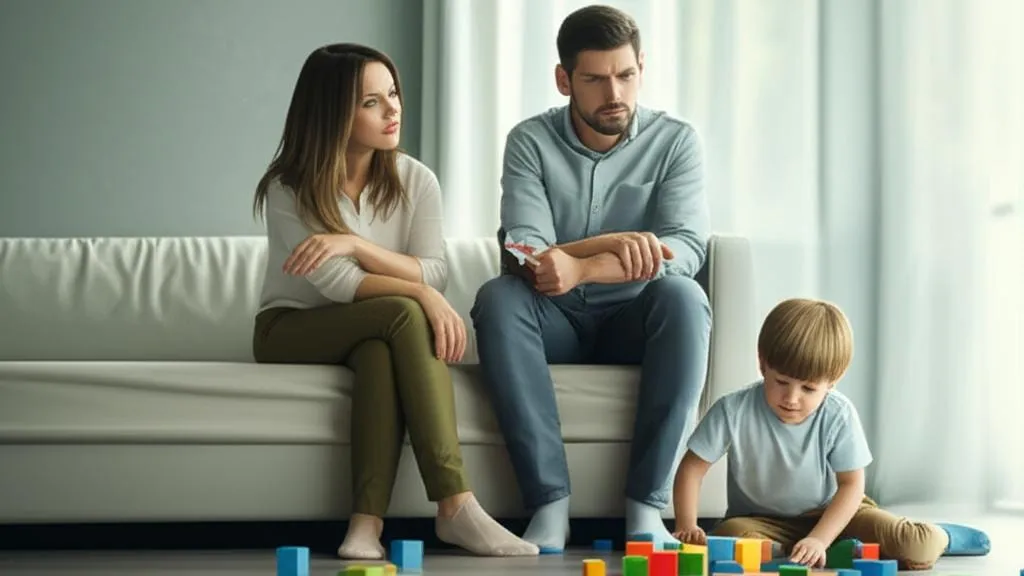
Do you sometimes feel like your child's mischievousness is a bit too much? They don't stay still, they don't listen, they fight all the time, they're very stubborn... Are these just normal childhood behaviors, or is there something we need to pay special attention to? If your child has attention problems, that is, ADHD, there is a chance that they also have other conditions. We call these comorbidities. One of the most common of these is ODD, which stands for oppositional defiant disorder. In fact, experts believe that four out of ten children with ADHD may also have ODD. So let's talk about this in a little more detail.
Escala de Autoinforme de TDAH Adulto de la OMS (ASRS-v1.1 Parte A) ukan 6 jiskt’äwin validada ukan uñakipirip apsuñamawa, ukhamat jilïr jaqinakan jan yäqawipa, disfunción ejecutiva ukat hiperactividad ukanakat uñakipañataki.
What are ADHD and ODD?
Simply put, these are two different types of conditions seen in children.
ADHD (Attention-Deficit Hyperactivity Disorder) is a brain disorder that can persist into adulthood. A child with ADHD can have several main problems.
- Lack of attention : Inability to focus on one thing for a long time.
- Hyperactivity: A tendency to be restless and constantly running around.
- Impulsive behavior: Doing things on the spur of the moment, without thinking about the consequences.
ODD ( Oppositional Defiant Disorder ) is a behavioral problem that is primarily diagnosed in childhood. A child with ODD typically:
- Not working cooperatively (Uncooperative).
- Stubborn, defiant.
- Aggressive (Aggr ESS ive).
It's easy to confuse these two conditions because some of their symptoms are similar. But the causes are usually different . For example, ADHD is largely a genetic condition . This means that if someone in the family has it, your child is more likely to have it too. Children with ADHD have a really hard time controlling their behavior.
But ODD is often a learned or developmental problem . If a child is constantly angry, argues with adults, destroys things, or intentionally hurts others, it may be related to antisocial behavior.
Similarities and symptoms of these two conditions
In both of these conditions, chemical changes in the brainThis can lead to uncontrollable, impulsive, or aggressive behavior. Both of these conditions are more common in boys than girls.
The most important thing is that for a doctor to diagnose either of these conditions, the child must have had the relevant symptoms for at least 6 months continuously .
Often, parents may dismiss these behaviors as "childhood mischief." However, children with these conditions do not recover from this "time" as easily as other children. Sometimes, symptoms may lessen as they get older, especially if the condition is not as severe. However, for some children, these behaviors never go away.
See the table below to clearly distinguish and understand the symptoms of these two conditions.
| ADHD symptoms | ODD symptoms |
|---|---|
| Inability to focus on one thing | Always getting very angry |
| Easily distracted | Frequent arguing with adults |
| Making careless mistakes | Refusing to do what adults say |
| Forgetting things | Constantly questioning and not accepting rules and regulations |
| Difficulty organizing work | Doing things to annoy or annoy others |
| Inability to sit still, constantly moving around | Blaming others for one's mistakes |
| Interrupting others while they are talking, talking too much | Getting angry easily because of others |
| Acting impulsively without thinking about the consequences | Being angry, speaking harshly or meanly, trying to get revenge |
These symptoms can lead to low self-esteem , difficulty making and maintaining friends, and poor performance in school.
So what are the main differences between the two?
The main difference is that in ADHD, the child has difficulty paying attention and is hyperactive . In ODD, the child is stubborn, angry, and willful .
There are a few other changes:
- Age: ADHD symptoms usually appear before a child is 12 years old . Some children can start as early as 3 years old. However, ODD symptoms can appear even earlier, usually before age 8 , and sometimes even as early as toddlerhood.
- Reason: ADHD is often genetic . That is, it is something that runs in the family. Remember, ADHD is not caused by bad parenting or too much TV/phone use. But experts believe that ODD is a developmental problem or something that is learned . That is, a child may imitate negative behaviors, such as inconsistent or harsh discipline from others, such as parents or teachers. Sometimes, they may do so to get your attention.
How are these conditions diagnosed and treated?
There is no specific test to diagnose either of these conditions. If your child shows these symptoms for more than 6 months, be sure to talk to your child's doctor .
The doctor will first test to see if the symptoms are caused by another physical illness, an accident, or a side effect of medication. If a physical cause cannot be found, the child will be referred to a psychiatrist or psychologist who specializes in child and adolescent mental health.
They will observe the child's behavior through special interviews and questionnaires and provide an accurate diagnosis.
What are the treatment options?
If your child is diagnosed with both of these conditions, your doctor may recommend a combination of treatments.
- Parent training: Parents are taught how to strengthen their relationship with their child and how to manage their child's behavior. This is the first line of treatment. It teaches them how to praise their child's good behavior and how to ignore bad behavior.
- Family therapy: Since the child's condition affects the entire family, everyone in the family can support each other by participating in counseling together.
- School support: You can talk to the school and get the support your child needs. This includes clear rules and rewards for good behavior.
- Medication: Studies have shown that medications for ADHD (such as psychostimulants) are very effective in controlling symptoms when these two conditions coexist. These can increase a child's attention span and reduce antisocial and aggressive behavior. Medication is not a cure, but it can help make a child's daily life easier. If you notice any side effects, tell your doctor right away.
💡 Take-Home Message
- If your child is showing symptoms of ADHD and ODD, it is very important to seek medical advice as soon as possible . Don't delay in seeking help.
- Although these conditions can persist into adulthood, proper treatment can control symptoms and help the child live a successful life.
- As parents, be as aware as possible about this. It will help improve your child's life and the relationship between you and your child.
- If you feel lonely or stressed during this journey, join support groups of parents who have had similar experiences . It will give you great strength.





Janiw kuna arsuwinakas jichhakamax uñt’ayatäkiti. Aka chiqanx amuyt’awim jan ukax jiskt’awim yapxatañamawa.