

Have you ever felt a great fear or panic when you saw a chicken, a hen, or a lizard? For some people, this is not just a fear, it can be so overwhelming that it can even affect their daily activities. Today we are going to talk about such a condition, that is, the extreme fear of chickens, medically speaking (Alektorophobia) . This is different from the fear of other birds, that is, Ornithophobia, and is a fear that is felt only when it comes to chickens. In Greek, "phobos" means fear, and "alektor" means lizard. So that is where the name comes from.
This fear of chickens is a specific phobia . Like all specific phobias, the cause of the fear is not actually a major threat. Many people with phobias know that their fear is abnormal and irrational, but they have difficulty controlling their symptoms.
How common is this (Alektorophobia)?
It's hard to say exactly how common this fear of chickens, or Alektorophobia,'' is. Most people don't openly admit to having it, and some don't even realize they have it. However, surveys have found that as many as one in ten adults and one in five young children in the United States will experience a specific phobia disorder'' at some point in their lives. So, Alektorophobia'' could be one of them.
Who is more likely to get this (Alektorophobia)?
Some people may develop a fear of chickens for no apparent reason. However, you may be more likely to develop Alektorophobia if you:
- When you are under 10 years old: Childhood fears can sometimes persist into adulthood.
- If you have experienced or witnessed a scary incident involving a chicken: Imagine that when you were a child, perhaps while playing in your backyard, a large snake suddenly came after you and tried to bite you. Or you saw something like this happen to a friend. Such an incident can be deeply etched in your mind, and the fear may resurface when you see a chicken later.
- If you grew up in a village environment, or if you currently live in a village: Because chickens are common in villages. Seeing them often can reduce fear, but the chances of a bad experience are higher.
- If someone else in the family is afraid of chickens: Some phobias can run in families to some extent.
- If anyone in the family has a history of other anxiety disorders.
Why does this (Alektorophobia) occur? What is the cause?
Simply put, it is difficult for experts to find a specific cause for every phobia. This is still being researched. Perhaps a genetic factorThere may be. That means there may be some genetic predisposition.
But often, this fear can be related to a bad, scary experience involving a chicken in the past. Think about it, there is a part of our brain called the amygdala ) . This is where our emotions, especially fear, are controlled and remembered. When you have a bad experience with a chicken, the feeling you felt at that time is recorded in this (amygdala). Later, when you see a chicken, or think about a chicken, that old experience is remembered, and that fear comes up again.
What are the symptoms of someone with Alektorophobia?
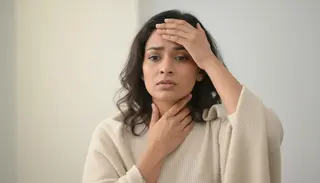
This fear can cause both physical and psychological symptoms . Sometimes it can start with just a little discomfort and progress to a severe panic attack . A panic attack is a sudden, intense fear or panic attack accompanied by physical reactions.
Physical characteristics
The main reason for the physical symptoms is that when we are afraid, our bodies produce more of a hormone called adrenaline. This is what prepares our bodies for the fight-or-flight response when we are stressed. Then you may feel things like this:
- Feeling cold and shivering.
- Dizziness, a feeling of lightheadedness.
- Excessive sweating (hyperhidrosis).
- Heart palpitations (feeling like your chest is burning).
- Feeling nauseous and like vomiting.
- Difficulty breathing (dyspnea), a feeling of suffocation.
- Body shaking, uncontrollable shaking.
- Feeling like an upset stomach, indigestion (dyspepsia).
Mental and behavioral characteristics
These are the symptoms that arise mentally and in your behavior:
- Strictly avoiding places where chickens are present. Not wanting to see even a picture or video of chickens.
- Being afraid of even the thought of seeing a chicken, or having to deal with a chicken. Even thinking about it creates a great sense of discomfort and anxiety.
- The fear of these chickens makes you feel ashamed and guilty. The feeling that "I have a fear that others don't have."
Symptoms seen in children
If young children are afraid of chickens, ducks, or snakes, they may behave like this:
- Trying to cling to parents or guardians, holding on.
- Crying so much that you can't stop.
- Uncontrollably struggling, screaming, rolling on the floor ((temper tantrums)).
How to recognize this condition (Alektorophobia)?
When you see a doctor, they will ask you a few questions to determine if your fear of chickens is actually a specific phobia, as these physical symptoms can sometimes be caused by other anxiety disorders.
The doctor may ask you things like:
- Do you strongly avoid seeing chickens or even thinking about them?
- Has this fear or anxiety been present for more than six months ?
- Does a chicken cause fear and panic in a way that is more unusual, more severe than the actual threat it poses?
- Do you feel an instant sense of fear or panic at the thought of seeing a chicken?
- Do these symptoms interfere with your daily activities and normal life (e.g., work, school, social relationships) ?
- Does anxiety increase when you know you'll see a chicken?
Well, how to treat this condition (Alektorophobia)?
This can be treated using a combination of methods. The main goal is to help you live a normal, uninterrupted life . Your doctor may recommend treatments such as:
1. Exposure therapy: This is often the first and most effective treatment for a specific phobia. This involves gradually exposing yourself to the thing you fear (in this case, chickens) in a safe environment and learning to control the anxiety that comes with that fear. For example, you might first look at pictures of chickens, then watch videos, then look at a real chicken from a distance, and gradually get closer to where a chicken is. If this treatment is done correctly and with confidence, many people's symptoms will be significantly reduced. For some people, this treatment alone may be enough.
2. Cognitive behavioral therapy (CBT): This involves talking to a therapist about your symptoms and thoughts. They will help you identify and replace your fearful, irrational thoughts with more rational, realistic ones. CBT can be used alone or in conjunction with exposure therapy.
3. Medications: Medication is rarely prescribed for a phobia, meaning it is not the primary treatment. However, in special situations where you know you will see chickens (e.g., if you have to go to a village festival), you can take some short-term medications to help you cope with the situation. However, this should only be done under medical advice.
What can I do to get over this fear of chickens?
For most people, with proper treatment, symptoms will subside or become less frequent. Some people will completely overcome their fear of chickens, while others may have to live with symptoms for a long time, but they can manage them and lead a normal life.
If you have to deal with a chicken, or go to a place where there are chickens, these things can help reduce your anxiety:
- Walking a little faster, or doing simple exercises like jumping jacks, will help reduce the stress on your body.
- Breathe deeply and mindfully. For example, counting to four as you inhale, holding your breath for a moment, and then counting to four (or more) as you exhale. There are several breathing patterns like this.
- Meditation, or guided imagery exercises, can help calm the mind.
Is there a way to prevent this (Alektorophobia) from occurring?
There is no guaranteed way to prevent specific phobias. However, it is said that living a healthy lifestyle can reduce the intensity of symptoms and the frequency of their occurrence. That is:
- Eating a balanced diet: Eat a diet that includes lean protein, whole grains, fruits, vegetables, and healthy fats.
- Regular exercise: Exercise for at least 150 minutes a week (30 minutes a day, 5 days a week).
- Prevent dehydration: Drink plenty of water, limit caffeine, and limit alcohol.
- Getting enough sleep: Make sure to get at least seven to eight hours of sleep every night.
- Maintaining social connections: To reduce the risk of social isolation, regularly talk to your loved ones and friends.
Can this (Alektorophobia) cause long-term effects?
Fortunately, for most people, symptoms improve with treatment. However, if left untreated , alexitrophobia can have a negative impact on your life. It can also increase your risk of:
- Other mental health problems: Risk of developing mood disorders, such as depression or other anxiety disorders.
- Social isolation: Because chickens avoid crowded places, they may miss out on some social opportunities.
- Substance use disorders: Some people may misuse drugs or alcohol to control their fear.
What else should I ask my doctor?
If you want to learn more about this condition, you can ask your doctor questions like these:
- What is the most likely reason why I am afraid of these chickens?
- Are there any special techniques I can use to calm myself down when I see a chicken?
- If I start treatment, when can I expect my symptoms to improve?
- Will this fear of chickens ever completely disappear?
So, what is the message we want to take home from this?
Alektorophobia is an excessive, uncontrollable fear of chickens, ducks, and roosters. It is a specific phobia. People with Alektorophobia often realize that this fear is irrational and greater than the actual threat posed by chickens. However, it is difficult to control the symptoms.
The best thing is that there are treatments for this. Treatments like (Exposure therapy) and (Cognitive behavioral therapy - CBT) can be very effective. Sometimes medication can also be used to help.
Some people completely overcome their fear of chickens, while others have to live with the symptoms for a long time, managing them and living a normal life. The most important thing is to understand that you are not alone in this problem. If you need help, don't be afraid to ask for it. Seek advice from a qualified doctor or mental health counselor .





Janiw kuna arsuwinakas jichhakamax uñt’ayatäkiti. Aka chiqanx amuyt’awim jan ukax jiskt’awim yapxatañamawa.