

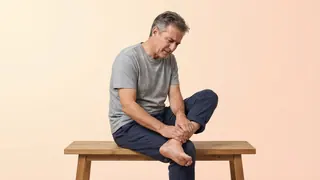
If you have Ankylosing Spondylitis, or AS for short, you may have experienced sudden increases in back and hip pain and stiffness. It feels like the disease has suddenly worsened. In medical terms, we call this a 'flare-up', or a flare-up. It can be a very distressing and frustrating experience. But you are not alone, many people with AS experience this.
What is an AS 'flare-up'? How do you feel?
In fact, even doctors don't have a definitive, book-like definition of what a flare-up is. But if you're experiencing this condition, you know what it feels like. The way you feel may be different from the way someone else feels. For some, it affects their entire body, while for others, it affects only a specific area, like their back or hips.
Imagine, some days you can't even get out of bed in the morning, your whole body feels so stiff, and your back feels so sore that you can't even straighten it. Even though the day goes by, that tiredness and stiffness don't lessen. That's the main characteristic of a 'flare-up'.
Let's take a look at the most common symptoms at this time.
| Symptom | How it feels |
|---|---|
| Severe pain | Pain that is worse than normal, especially in the back, hips, neck, and other joints. |
| Fatigue | Feeling lifeless no matter how much rest or sleep you get. Feeling sleepy all day. |
| Stiffness | Difficulty moving your body, especially when you wake up in the morning and after being in the same position for a while. This can last throughout the day. |
| Mental changes | The ongoing pain and discomfort can lead to loss of interest in anything, irritability, and sometimes depression. |
| Other features | Some people may also experience fever, chills, sweating, a burning sensation in the joints, and muscle spasms. |
Why is the disease suddenly increasing like this?
It's hard to pinpoint a single cause for this, but the main thing is that there is an increase in inflammation within the body. This inflammation increases and symptoms worsen due to certain changes in the functioning of our immune system.
In addition, several other reasons may affect this:
- Other medical conditions: If you have another medical condition in addition to AS, it can also cause flare-ups.
- Infections: Even a minor cold, fever, or urinary tract infection can increase inflammation in the body and worsen AS.
- Injury: Even a minor injury to the back, hip, or other joint can cause a flare-up.
- Skipping medication: This is very important. If you do not take the medication your doctor has prescribed on time, or if you miss the dose, there is a high chance that the disease will get out of control and worsen.
- Stress and Overwork: Many people say that this problem increases when you are under a lot of stress and overdoing it. Imagine you have a big job at home, or you are too busy at work, things like this can also be a cause.
- Weather changes: It may seem strange, but for some people, symptoms worsen with cold, wet weather.
Sometimes, for no apparent reason, the disease activity can simply increase and cause a 'flare-up'.
How to control flare-ups?
It's hard to cope with a flare-up, but there are a few things we can do to manage it.
The most important thing is to follow your doctor's instructions. It's helpful to talk to your doctor in advance and make a plan for what to do if you have a flare-up.
Here are the things you can usually do at a time like this:
Drug use
If your doctor has prescribed you painkillers, i.e. NSAID medications (e.g. Ibuprofen, Diclofenac), you may be asked to increase the dosage a little at a time like this. But remember, do not change the dosage of the medication at your own discretion. You should definitely do so only after consulting your doctor.
If you are taking a specific type of medication called a 'biologic', your doctor may decide to change the dosage of that medication or switch you to another medication.
Non-drug methods
In addition to medication, these things will also help you.
- Get enough sleep and rest: Give your body as much rest as possible. Getting a good night's sleep helps reduce inflammation.
- Gentle exercise: It's not good to just sit there because your body is stiff. Some gentle stretching exercises that you can do while sitting in bed can be very helpful at this time. It reduces stiffness in the body and makes joint movement easier.
- Hot and cold applications: Applying a hot water bottle to the painful area can help relax the muscles and reduce pain. Some people also find relief from ice packs. See what works best for you.
- Bathing in hot water: Bathing in hot water can greatly reduce stiffness and pain.
- Massage: A gentle, gentle massage can relax muscles and reduce pain.
When do you definitely need to see the doctor?
Although a flare-up can be managed at home, there are some cases where medical advice is definitely necessary.
If your pain has worsened after about 7 days, and you are not relieved by home remedies and regular medication, you should definitely see your doctor again.
Also, be aware of these things:
- If the pain is worse than usual: If the pain you have this time is much worse than usual, for example, if you have unbearable back pain, seek medical advice immediately.
- If you're having more flare-ups: If you're having more flare-ups like this, or if your flare-ups are taking longer to heal, talk to your doctor about it. It could be a sign that it's time to change your treatment.
Keeping a diary of your symptoms and when they worsen will help your doctor understand your condition more accurately.
💡 Take-Home Message
- It's common to have flare-ups, or flare-ups, of Ankylosing Spondylitis (AS). Don't worry, you're not alone.
- Stress, overwork, infections, and skipping medications can be the main reasons for this condition to worsen. Be as careful as possible about these.
- Take the medicine your doctor prescribes exactly and on time. Never change the dosage at your own discretion.
- Talk to your doctor (rheumatologist) in advance and make a plan for what to do if you have a flare-up.
- If the pain is severe, does not subside within a few days, or if you have frequent flare-ups, be sure to see a doctor.





Janiw kuna arsuwinakas jichhakamax uñt’ayatäkiti. Aka chiqanx amuyt’awim jan ukax jiskt’awim yapxatañamawa.