
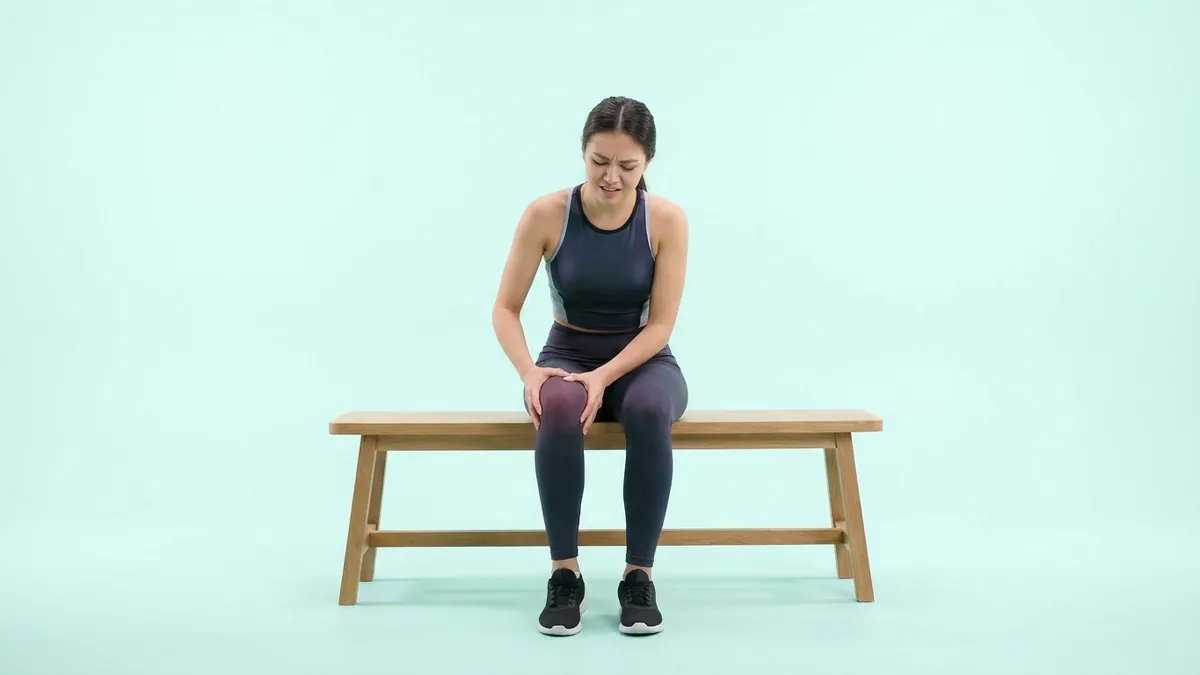
Have you ever heard a sudden 'pop' sound when your knee suddenly snapped to the side while playing, running, or jumping? Or has your knee suddenly started to hurt or swell? If this has happened to you, it could be an injury to the ACL (anterior cruciate ligament) in your knee. Many people are scared when they hear this name, especially those who play sports. But don't be. Let's talk about what it is, why it happens, and what to do.
Simply put, what is this ACL?
Think of your knee as a sturdy hinge. For this hinge to work properly, it needs strong bands to hold its parts together. Similarly, inside our knee, there are four strong bands of tissue that connect the femur and tibia, helping to keep the knee stable. We call these "ligaments."
The Anterior Cruciate Ligament , or ACL , is one of the four major ligaments. It's what stops the knee from sliding forward and keeps the knee stable when it's rotated. So it acts like a safety belt for the knee.
What are the types of ACL injuries?
When you go to see a doctor, he or she will classify your injury into three grades, depending on the severity of the injury. That is what determines the treatment.
| Danger level (Grade) | Simply description |
|---|---|
| Grade 1 | This only causes a slight stretching of the ACL ligament. That means minor damage. It doesn't have a major impact on the stability of the knee. |
| Grade 2 | This is a bit rare. Here the ligament is stretched and part of it tears. That's called a 'partial tear'. |
| Grade 3 | This is the most serious case. Here the ligament is completely torn in two, causing the knee to become unstable. |
Sometimes doctors use the words "tear" or "rupture" for this. Both mean the same thing.
Why does this kind of accident happen?
ACL injuries are most common in athletes, especially:
- Sports that involve sudden stops and changes of direction: In sports like football, netball, basketball, tennis, and volleyball, you have to stop running suddenly and turn in another direction. At that point, the knee can twist unbearably and damage the ACL.
- Landing incorrectly: There is a high chance of this accident occurring if you land incorrectly when jumping.
- Sudden impact: If you are hit directly in the knee, such as by another player.
Research has shown that women are more likely to suffer ACL injuries than men, with the reasons being body structure, muscle strength, and hormonal influences.
What are the symptoms of this?
Not everyone experiences the same symptoms when they have an ACL injury, but the most common ones include:
- Hearing a 'pop' sound: Hearing a "pop" or "tuck" sound from the inside of the knee is something that happens to many people when an accident occurs.
- Severe pain : Immediately after the accident, there is severe pain in the knee. Sometimes the pain can be so severe that you can't even stand.
- Rapid swelling: The knee begins to swell significantly within a few hours of the accident.
- Difficulty walking : It becomes difficult to put your foot down and put weight on it. When walking, your knee may feel "unsteady," "loose," or "slipping."
- Difficulty bending and extending the knee: It is common to be unable to fully bend or extend the knee.
If you experience any of these symptoms, the best thing to do is to stop playing immediately and see a doctor.
How do you find this, Doctor?
When you go to see a doctor, he will first ask you a detailed question about how the accident happened. Then, he will examine your knee.
1. Physical Examination :The doctor will have you lie down on a bed, bend your knee at different angles, and slowly move your leg back and forth. This will give him an idea of how stable your ACL is.
2. X-ray: Even if the ACL is not visible on an X-ray, you may be asked to have an X-ray to check for other fractures in the knee.
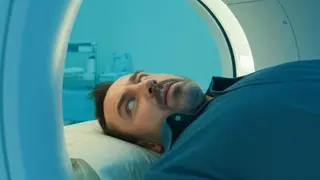
3. MRI or Ultrasound Scan: This is the best way to accurately assess the condition of the ACL. An MRI scan can clearly show whether the ligament is torn, torn, or completely torn.
4. Arthroscopy: Sometimes, if the doctor has any doubts, he or she will use a procedure called arthroscopy . This involves making a very small incision in the knee, inserting a camera through it, and viewing the inside of the knee directly on a monitor. If necessary, the damage can be treated right away.
What are the treatments?
Treatment depends on the severity (grade) of your injury, your age, and how active you are.
- First aid : For a minor injury (Grade 1), rest , ice, a bandage on the knee, and elevating the leg may help. If weight bearing is difficult, crutches may be needed.
- Medication: The doctor will prescribe medications to reduce pain and swelling.
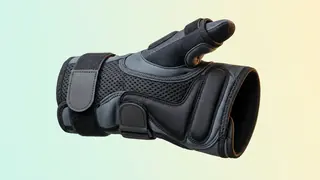
- Knee Brace: This can be used to provide extra support and increase stability to the knee.
- Physical Therapy : This is very important . Under the guidance of a physical therapist, it is essential to do exercises to strengthen the muscles around the knee, and to practice fully bending and extending the knee. Whether surgery is performed or not, physical therapy is a major part of this treatment.
- Surgery: If your ACL is completely torn (Grade 3), especially if you are an athlete or if your knee is unstable during daily activities, your doctor may recommend surgery. This involves removing the damaged ACL ligament and replacing it with a graft from another part of your body.
It can take about 9 to 12 months to return to the field of play after surgery. Physical therapy is essential throughout that time.
Can an ACL injury be prevented?
Yes, this risk can be greatly reduced with proper training and exercise.
- Doing exercises that strengthen the muscles of the trunk and legs.
- Practicing the correct technique when jumping up and landing.
- Practicing correct foot placement when suddenly changing direction (pivoting and cutting).
- Wearing good quality footwear that is appropriate for the sport being played.
It is very important to seek advice from your trainer or physical therapist about this.
💡 Take-Home Message
- An ACL injury is a common but potentially serious knee injury, especially for athletes.
- The main symptoms of an accident are a 'pop' sound, pain, and rapid swelling.
- If you experience any of these symptoms, don't ignore them. See a doctor immediately.
- The treatment method depends on the severity of the injury. Not everyone needs surgery.
- Physical therapy is an essential and very important part of the healing process.
- There is a possibility of preventing this kind of accident through proper exercise and training.


Janiw kuna arsuwinakas jichhakamax uñt’ayatäkiti. Aka chiqanx amuyt’awim jan ukax jiskt’awim yapxatañamawa.