
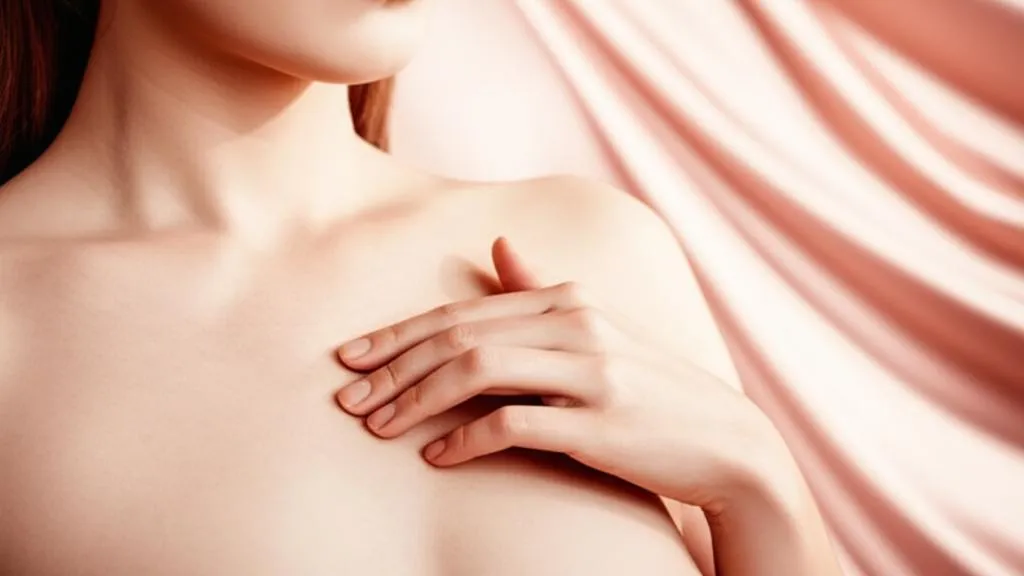
If you suddenly find a lump while examining your breast, it's normal to feel a lot of fear and anxiety. "Could this be cancer?" The question is always on your mind. But don't worry. The important thing is that not every breast lump you find is cancer . In fact, most lumps are not cancerous. So, let's get this straight.
GAD-7 ukax llakisiñ uñakipiri. 7 jiskt’awinakaru jaysaña, trastorno de ansiedad generalizada uñakipañataki. Sapa kutiw mä profesional de salud mental ukar jiskt’asiñama, ukhamat diagnostico lurañataki.
What is this breast lump?
Simply put, a breast lump is any type of thickening, swelling, or lump that develops in your breast or armpit area. These can come in different shapes, sizes, and characteristics. Some lumps can be painful, while others are painless.
Remember, it's important to have a good understanding of the normal state of your breasts so that you can quickly recognize any new changes.
Most often, these lumps are caused by noncancerous causes, such as normal changes in breast tissue, fluid-filled cysts, injuries, or infections. These noncancerous (benign) lumps usually have smooth edges and move slightly when pressed with a finger.
What are the common causes of non-cancerous (benign) lumps?
Before panicking when you see a lump in your breast, let's be aware of the common, non-dangerous causes of this.
| Type and cause of lumps | A simple explanation |
|---|---|
| Fibroadenoma | These are the most common non-cancerous lumps seen in young women. They are like a rubber ball, smooth, firm, and movable. They are usually painless. They are most common in women between the ages of 20 and 30. |
| Fibrocystic Changes | Hormonal changes that occur with your monthly menstrual cycle can cause your breasts to feel like lumps. It's common for these to become larger and more painful before your period. These could be fluid-filled cysts. They're most common in women between the ages of 35 and 50. |
| Simple Cysts | These are like little balloons filled with water. There may be one or more. The size and pain can vary with the menstrual cycle. Sometimes they go away on their own. If necessary, the doctor can remove the fluid with a fine needle. |
| Intraductal Papillomas | These are small, wart-like lumps that form inside the milk ducts near the nipple. Sometimes, blood or fluid may ooze from the nipple. These can be removed surgically. |
| Traumatic Fat Necrosis | When you have an injury or trauma to your breast (perhaps you don't remember it), fatty tissue can accumulate and form a hard, round, painless lump. This is not dangerous. |
What are the symptoms that should alert you to a cancerous lump?
Every breast is different, but there are some common signs that you may see in a lump caused by cancer. It is important to be aware of these.
- The lump is very hard, feels like a rock: it feels like a small pebble in the hand.
- Inability to move: The lump feels like it is attached to the skin or chest underneath.
- Irregular shape: It fits in the hand without a round shape or a clear edge.
- Skin changes : The skin over the bump may be sunken in, pitted like the surface of an orange peel , or may be red.
- Nipple changes: nipple inversion, bloody discharge from the nipple, or a crusty appearance of the skin around the nipple.
- Pain: Although not always, some cancerous lumps can cause localized pain.
The important thing is that a lump may be cancerous even without any of these symptoms. Therefore, it is essential to inform your doctor about any new lump you find.
Do men also get these lumps?
Yes, absolutely. Breast lumps are not limited to women. Anyone of any age and gender can develop breast lumps.
Breast cancer in men is very rare (less than 1%), but it is not impossible. A breast cancer lump in men is usually found under the nipple, as a solid mass. Since men pay less attention to this, the diagnosis of the disease can be delayed. Therefore, it is very important for men to be aware of this as well.
Men can also develop painful, rubbery lumps in their breasts due to a condition called Gynecomastia.'' This is a non-cancerous condition that can be caused by hormonal imbalances or certain medications.
When should you see a doctor?
If you notice any of the following changes in your breasts, please see your doctor without delay.
- Feeling a new lump or thickening in the breast or armpit.
- A clear change in the shape or size of a breast.
- The skin of the breast becomes dimpled, sunken, red, or scaly, like an orange peel.
- Nipple inversion.
- Blood or other fluid coming out of the nipple (unless you are a breastfeeding mother).
- Pain that does not go away in the breast or armpit.
What happens when you meet the doctor?
Don't be afraid. The doctor will first ask you a few questions and gently examine both of your breasts and your armpit area. This examination is very important to understand the nature of the lump.
Then, depending on the need, you can be referred for the following tests:
- Mammogram: This is a special X-ray test of the breasts. It can detect even very small lumps.
- Ultrasound Scan: This helps to determine exactly whether the lump is solid or fluid-filled (cyst).
- Biopsy: A very small piece of tissue (sample) is taken from the lump and sent to a laboratory to be tested for cancer cells. Only after this test can the exact nature of a lump be known .
How do you examine your breasts yourself?
After the age of 18, every woman should have a monthlyIt's a good idea to check your breasts regularly. If you're menstruating, do it on the days after your period ends. Otherwise, choose a single day of the month.
How to check:
1. In front of a mirror: Remove your clothes to the waist and stand in front of a mirror. Place your arms at your sides, then raise your arms above your head, then place your hands on your hips to see if there is any change in the shape, size, skin, or nipples of your breasts.
2. Standing (while bathing): When bathing, the skin is wet, so it is easier to feel for lumps with your fingers. Using the tips of the middle three fingers of your right hand, gently and systematically examine the left breast and armpit area in a circular motion. Start lightly and work up to a firmer touch. Then do the same on the other side.
3. Lying down: Lie down on the bed, place a pillow under your left shoulder, and place your left hand under your head. Now use your right hand to examine your left breast as described above. It is easier to examine the breast tissue when you are lying down because it is flat. Then do the same on the other side.
While self-examination is very important, getting regular mammograms after the age of 40, as recommended by your doctor, is the best way to detect cancer early.
💡 Take-Home Message
- Most lumps found in the breasts are non-cancerous (benign) and not dangerous. So don't be overly alarmed if you suddenly find a lump.
- Be aware of the normal appearance of your breasts (lumps and bumps). Monthly self-examination is the best way to do this.
- Don't ignore any new changes, lumps, or thickenings in the breast or armpit.
- If you notice any suspicious changes , don't waste time and see your doctor. Early detection is very important for successful treatment.




Janiw kuna arsuwinakas jichhakamax uñt’ayatäkiti. Aka chiqanx amuyt’awim jan ukax jiskt’awim yapxatañamawa.