
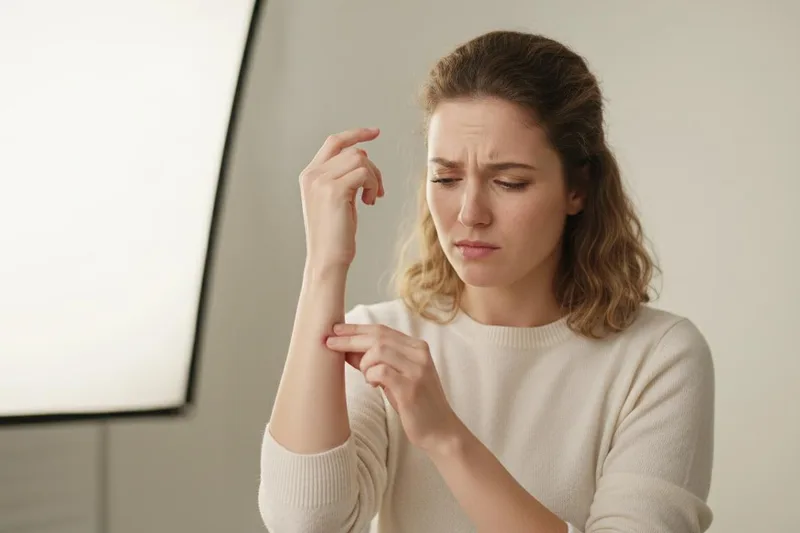
"Oh shit !" So, you've been bitten by a mosquito or an ant, right? It's important for us all to be aware of these insect bites and stings, which can range from minor to life-threatening. Because, these are very common in our country. Sometimes they seem like a small thing, but if not managed properly, they can cause problems. So, shall we talk about this in a little more detail today?
What are these insect bites and stings?
Simply put, a sting is when an insect pierces your skin. Some insects bite. This is when the insect's saliva (sometimes venom) enters your skin. The discomfort you experience depends on how your body's immune system responds to this.
Most of the time, these are minor things that can be treated at home and cured. However, sometimes your immune system can overreact, which can lead to more serious symptoms like hives , difficulty breathing , or muscle twitching .
Sometimes it's hard to tell exactly what insect bit you or stung you. But identifying it, if possible, can help you and your doctor plan treatment and be on the lookout for complications.
What are the most common insect bites and stings?
Various insects cause problems in our country and around the world. Here are some of them:
- Ant bites : Especially some types of ants, such as the deadly ``fire ants''.
- Bed bug bites : These bugs work from beds at night.
- Bee stings
- Flea bites
- Fly bites : These include types of flies like `(black flies)`, `(deer flies)`, and `(horse flies)`.
- Mosquito bites: In our country, this is not something to talk about.
- Scorpion stings
- Spider bites: There are some dangerous spider species, such as ``brown recluse spiders'' and ``black widow spiders''. However, these species are not very common in our country.
- Tick bites
- Wasp stings : Yellow jackets and hornets also fall into this category.
Most of the people on this list are insects. That's why the term "insect bites" is often used. But things like chiggers, scorpions, spiders, and ticks are not insects, they belong to the group called arachnids. So the English term "bug bites" is usually used to cover all of them.
What are the symptoms of insect bites?
These symptoms depend on the type of insect that bit you or stung you. Typically, you'll see the following at the site of the bite or sting:
- A swollen lump on your skin with redness or discoloration . There may be several lumps in a row or in a cluster.
- Itchy or inflamed skin . Bites and stings are very itchy. There may be a slight tingling or burning sensation.
- Slight swelling . This means that the area around the bite looks a little swollen.
- Pain or discomfort . There may be a sharp pain when the bite or sting is first applied.
Severe symptoms
Some spiders (e.g. black widow spiders, brown recluse spiders) and scorpion bites can cause more severe symptoms. If you suspect you have been bitten by one of these animals, go to the nearest hospital or call an ambulance immediately if you have any of the following symptoms :
- Stomach pain or cramping
- Excessive salivation
- Excessive sweating
- Heart palpitations
- Headache (headache)
- Nausea and vomiting
- Muscle aches, stiffness, or tingling throughout the body
- Numbness of the whole body
- Insensitivity to light (inability to see)
- Difficulty speaking (stuttering)
- Difficulty breathing or swallowing
Allergic reaction to insect bites
An allergy to an insect bite is when your immune system overreacts to the insect's saliva or venom. Most allergic reactions are mild. They cause symptoms only at the site of the bite (doctors call these ``localized symptoms'').
However, some insect bites and stings can cause a condition called anaphylaxis . This is a severe, life-threatening allergic reaction . The most common causes are stings from bees, wasps, and fire ants. Symptoms can start out mild and quickly escalate to anaphylaxis.
These are the symptoms of an insect bite allergy:
- Dizziness or fainting
- Heart palpitations
- Hives (red, itchy bumps on the skin)
- Muscle twitching
- Nausea, vomiting, or diarrhea
- Seizures
- Excessive swelling at the bite/sting site
- Swelling of the tongue or throat
- Difficulty breathing or swallowing
- Wheezing is a whistling sound when breathing.
In an allergic reaction, the swelling at the bite site can be much larger than expected. It can even spread over 4 inches (10 centimeters).
Allergic reactions usually occur within 15 minutes of being bitten/stung.It starts. But sometimes it can be delayed for up to six hours (rarely even longer). The most severe reactions often start very quickly . There are also cases where allergic symptoms appear later (which are not common). Doctors call this serum sickness . It can start several days after the bite/sting.
If you have had a minor allergic reaction to an insect bite/sting in the past (e.g., a large swelling at the site of the bite), you are more likely to have a severe reaction in the future . Tell your doctor about any reactions you have had. They will be able to give you the best advice on how to protect yourself and provide first aid.
Why do insect bites itch?
Insect bites cause itching because of a chemical called histamine that your body produces. When an insect bites you, its saliva enters your skin. Your immune system recognizes this saliva as something that does not belong to your body. So, the immune system sends histamine to the appropriate place to fight off this invader. That is what causes itching.
Bites from animals such as mosquitoes, some flies, bed bugs, and fleas often cause itching.
How do these insect bites and stings happen? What things increase your risk?
This problem can happen anytime you are in a place where insects or similar animals live. You are more likely to come into contact with insects when working or playing outdoors. Similarly, insects can also live inside your home. Especially in attics, basements, and woodsheds.
Insect bites or stings often occur in:
- Stepping on an insect while walking outside without sandals.
- When you are in a forest, a garden, or a well-vegetated place, especially when there is high humidity.
- Unintentionally damaging an insect nest built underground, in a tree, bush, or wall.
You are at higher risk if you are in these situations:
- If you live near a lake, river, pond, or swamp.
- If you spend a lot of time in forests or grassy areas.
- If you work on a farm or are frequently around animals (especially dogs, cats, horses).
- If you are a plantation worker or a beekeeper.
What are the complications of insect bites and stings?
Some insects, such as mosquitoes and ticks, carry diseases. You can get them when they bite or sting you. These are called bug-borne diseases / vector-borne diseases . Here are some examples:
- `Dengue fever`
- `Chikungunya`
- `Malaria`
- `Babesiosis`
- `Ehrlichiosis`
- `Encephalitis`
- `Lyme disease` (not common in our country)
- `Rocky Mountain spotted fever` (Not common in our country)
- `Typhus`
- `West Nile virus`
- `Yellow fever`
- `Zika virus`
Not all of these diseases are common in all parts of the world. Some diseases are specific to each region. Your doctor can tell you which diseases are common in your area. If you are going somewhere, it is a good idea to know in advance what diseases are common there.
How do you recognize insect bites and stings?
Most of the time, you don't need to see a doctor for a diagnosis. But if you do, they may ask questions like these:
- When did the bite/sting occur?
- How many bites/stings are there?
- How soon did the symptoms start?
- What first aid or treatment have you done so far?
- What kind of bites/stings have you had before? How did your body react to them?
If you have a severe reaction to an insect bite/sting, your doctor may recommend allergy testing . He or she may prescribe an epinephrine auto-injector (Epi-Pen®) and teach you how to use it.
How do you treat insect bites?
You can treat most insect bites and stings yourself. What exactly to do depends on the type of insect and your symptoms. If your doctor has prescribed an EpiPen® to treat an allergic reaction, use it as directed and then go to the emergency room. Also, if you suspect a scorpion sting, brown recluse spider, or black widow spider, you should seek emergency treatment immediately.
Here are some general first aid tips:
- If there is a stinger, remove it as soon as possible. If an animal, such as a bee, stingers are embedded in the skin, they can be removed carefully. Try to remove them by pushing them aside with a fingernail or the edge of a card. If you grab them with pliers, you may be able to get more venom in.
- Remove the insect. It may be okay to just rub the shirt. If it's a tick, you should grab it with tweezers and carefully remove it.
- Wash the wound thoroughly with soap and water. If there is a break in the skin, bacteria can enter. Washing reduces the risk of infection.
- Apply an ice pack to reduce swelling and pain. Do not apply the ice directly to the skin, wrap it in a cloth.
- Take a painkiller like Paracetamol to reduce pain. Seek medical advice before taking NSAIDs (non-steroidal anti-inflammatory drugs) , as they are not suitable for everyone.
In some cases, a doctor may provide treatment like this:
- Treat infectionsAntibiotics or antiparasitic drugs.
- An antivenom is an antidote for a black widow spider bite or scorpion sting.
- Treat anaphylaxis with IV fluids and medications.
- Reduce the risk of anaphylaxis with venom immunotherapy (this is a long-term treatment).
How do you stop the itching of insect bites?
Itching can be reduced by using skin creams and lotions. Examples:
- Creams containing antihistamines (e.g., there are also tablets like Piriton, but the cream can be applied directly to the wound).
- Hydrocortisone cream (this is also best used under medical advice).
- Applying pure aloe vera .
The most important thing is to stop scratching. That means, don't scratch! You may feel the urge to scratch. But if you scratch, you will damage the skin and increase the risk of infection.
What do you do for a swollen insect bite?
An ice pack can help reduce minor swelling from an insect bite/sting. Remember to wrap the ice or ice pack in a thin piece of cloth.
See a doctor in these cases:
- If the swelling is severe, or if it is accompanied by other symptoms, such as difficulty breathing.
- If the swelling gradually increases and spreads over a large area of the skin.
- If swelling occurs in other parts of the body besides the bite/sting site.
How long do insect bites last?
Itching and minor swelling usually subside within a few days. However, some bites and stings may take a week or two to fully heal. A severe allergic reaction or an insect bite may take longer to heal.
How to prevent insect bites and stings?
You may not be able to completely avoid every bite or sting, but here are some things you can do to reduce your risk:
- Use bug spray when going to places where insects are likely to be present (whether for work, a hike, or camping). Sprays containing DEET help repel mosquitoes, ticks, some flies, and fleas.
- When going into forests or other areas where insects are common, wear long-sleeved shirts, long pants, and shoes. Tuck your pants into your shoes for added protection.
- When traveling, check the beds at the places you stay for signs of bed bugs.
- Do not use floral perfumes when spending time outdoors.
- When hosting parties in the fields or outdoors, keep food covered. This will make it less likely that bees will be attracted to it.
- Don't go swatting bees.Then they may get agitated and attack. If someone approaches, don't get agitated and stay calm, and most of the time they will leave without bothering you.
- Check for spiders before bringing firewood into the house.
- Avoid walking outdoors without sandals.
- Keep your garden and surroundings clean. Eliminate mosquito breeding grounds (places where water stagnates).
When should you see a doctor?
See a doctor if you have any of the following:
- If you have been stung by several bees or wasps.
- If there is a bite or sting very close to the eye.
- If there is severe itching or swelling.
- If the skin has been damaged due to scratching and open wounds have formed.
- If symptoms do not improve within a few days and get worse, or if they do not start to improve.
- If you see signs of a skin infection (cellulitis) (e.g., red streaks spreading from the affected area, blisters, pus draining).
Also, you should see a doctor if you have symptoms of an insect-borne disease. These can appear within two weeks of being bitten. These symptoms include:
- Body pain
- Chills
- Fever
- Joint pain
- Nausea and vomiting
- Pain behind the eyes
- A bull's eye rash (a circular rash) around the bite site (this is a sign of Lyme disease, but is not common in our country)
- Swollen lymph nodes
A few final words (Take-Home Message)
"Oh, pee !" There you go again, right? Insect bites and stings have become a part of our lives. It's hard to avoid them completely. You probably think, "Oh, that's normal," when you're camping, hiking, or playing outside.
However, if you are allergic to insects or have had severe reactions in the past, those minor bites or stings can be very dangerous. Even if you are not allergic, some insects carry diseases that can be serious.
So, it's really worth taking some time to educate yourself about these different types of bites and stings. Talk to your doctor about ways to protect yourself both at home and when traveling. Staying healthy is the most important thing!
👩🏽⚕️ Additional questions (FAQs)
💬 How dangerous are insect bites or stings (Bug Bites & Stings)?
It's very common for an insect bite to cause redness, swelling, and itching (it heals on its own without medication). But the only time it's dangerous is if your body has a 'severe allergic reaction' (anaphylaxis) to that venom! Even if you get stung by a wasp or hornet, it's only when you get bitten by a venomous spider that it's life-threatening for an average person.
💬 How do you know if a fatal accident is about to happen after a seizure?
The biggest warning is that the rash is not only on the bite site, but also on other parts of the body, that is, it turns red and itches all over the body. The lips, tongue, and face swell. What is even more dangerous is the headache, along with difficulty breathing and dizziness and loss of consciousness.
💬 What is the first aid that can be done at home for a common insect bite?
If you are stung by a bee, first scrape the stinger off with your fingernail (do not squeeze). Then wash the wound thoroughly with soap and water. Apply a cold compress for about 10 minutes to reduce swelling and pain. If the itching is severe, use an antihistamine (such as Cetirizine) or calamine lotion.
` Insect bites, insect stings, allergies, first aid, skin diseases, insect-borne diseases, itching


💬 Comments (0)
No comments have been posted yet. Add your comment here for the first time.
Add your comment