
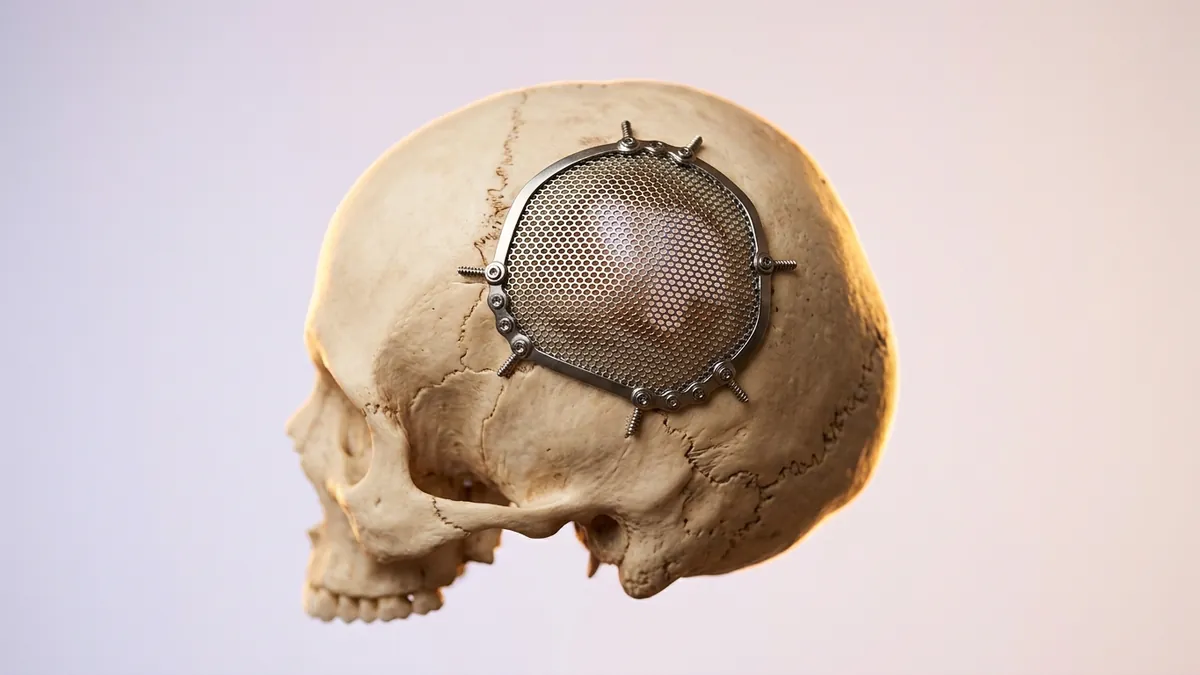
The most valuable and sensitive organ in our body is the brain. This brain is protected by our skull, which is like a helmet. But imagine, what happens if a part of this skull is damaged or has to be removed, either due to some serious accident or due to other brain-related surgery? In such a case, a special surgery called cranioplasty is performed to repair the gap or damage in the skull. Today, we will talk about this in detail and very simply.
What exactly does a cranioplasty surgery do?
Simply put, this surgery corrects a defect in your skull. This can be done for a variety of reasons. The main ones are:
- Skull reattachment: Reattaching a piece of skull that was removed in a previous surgery.
- Skull fracture repair: Repairing a skull fracture or fracture caused by an accident.
- Skull reshaping: Sometimes, if there are any abnormalities in the shape of the skull, this surgery is also performed to correct it.
This surgery is often done after other brain surgery (such as a craniectomy). Your surgeon will explain to you whether you need this surgery and when it is best to have it.
In what cases is this surgery necessary?
There are several reasons why a cranioplasty may be performed. Let's take a look at what they are.
| Reason | Description |
|---|---|
| Due to a previous surgery | In cases like brain swelling, a portion of the skull is temporarily removed to relieve pressure. Later, when the swelling goes down, this surgery is performed to close the gap. |
| Traumatic Injury | When the skull is damaged in an accident, this surgery is necessary to repair the damage and protect the brain. |
| Congenital Conditions | Some children may be born with certain skull defects. This surgery is also used to correct these. |
| Cosmetic Reasons | This is also done to correct changes in appearance caused by abnormalities in the shape of the skull. |
Is cranioplasty a major surgery?
Yes, this is considered a major surgery . The reason is that this surgery is performed very close to the brain, which is the control center of our body. Therefore, there is a certain level of risk. But there is nothing to fear, skilled surgeons and medical teams with specialized knowledge perform this surgery very successfully and safely.
How do you prepare before surgery?
It is very important to be well prepared before surgery.
- Doctor's appointment: Your surgeon will talk to you, take your complete medical history, and perform a physical examination.
- Tests: Before the surgery, you will be given several tests to determine your exact condition.
- Blood tests
- X-ray
- MRI scan
- CT scan
3. Be careful with medications: If you are taking certain medications, such as blood thinners, you may need to stop them temporarily before surgery. But remember, never start or stop any medication without your doctor's advice. You may also be advised to start taking medications, such as antibiotics, to prevent infection.
4. Lifestyle changes: If you smoke or drink alcohol, you will need to stop or reduce your intake at least a week before surgery, as these habits can delay recovery after surgery.
What happens during the surgery?
On the day of surgery, you will first be taken to an anesthesiologist, who will give you medication to help you sleep soundly throughout the procedure, so you won't feel any pain.
Then the surgical team:
- A section of hair is removed from the surgical site and the skin is thoroughly cleaned.
- An incision is made in the skin. If you have had previous surgery, the new incision is often made along the same line as the old incision.
- The skin and muscle are carefully separated, exposing the part of the skull that needs to be repaired.
- Next, the previously selected material (implant) is placed in the gap or damaged area of the skull and fixed. It is secured with titanium plates and screws to prevent it from moving and to ensure a secure fit.
- Finally, the muscles and tissues are brought back into place and the skin incision is sewn up.
This surgery usually takes about three hours, but the time may vary depending on the nature of the repair to be done.
What materials are used to make the skull?
Different types of materials are used to repair the skull. Your doctor will decide which material is best for you and has the lowest risk.
| Material type | Description |
|---|---|
| Part of your own skull | The part of the skull that was removed in a previous surgery is being preserved and reused. |
| Another bone in the body (Bone graft) | A piece of bone taken from another part of the body, such as a rib, is used. |
| Synthetic materials | Artificial materials similar to bone (e.g., calcium phosphate, hydroxyapatite) are used. |
| Metal | A mesh or plate made of titanium metal is used. |
| Customized implant | Using a CT scan, a specially designed implant (e.g. PEEK - Polyetheretherketone, PMMA - Polymethyl methacrylate) is used to fit the gap in your skull. |
Recovery and precautions after surgery
After the surgery, you will usually be kept in a monitored unit for about a day, where your condition will be closely monitored. If there are no complications, you will be transferred to a regular ward. You will usually stay in the hospital for about 5 days.
It is normal to feel a headache or aches after surgery. Your medical team will give you painkillers for this. It is also very important to keep your head slightly elevated with pillows while you rest.
Before you go home, you will have another scan to make sure everything is healing well. After you go home, it is essential to get plenty of rest and avoid strenuous activities. Don't drive until your doctor gives you permission. It can take one to three months to fully recover.
Emergency situations requiring a visit to the doctor
Watch for these symptoms while you're at home after surgery. If you have any of these, let your doctor know right away.
- Severe, persistent headache
- Fever
- Swelling at the surgical site
- A liquid flows from the cut.
Most importantly: If you have a seizure or show signs of a stroke (e.g., drooping of the mouth, numbness in an arm or leg, difficulty speaking), call an ambulance immediately and go to the nearest hospital Emergency Department (ETU).
💡 Take-Home Message
- Cranioplasty is a major surgery that repairs a damage or gap in the skull, restoring the protection your brain needs.
- It is very important to follow the doctor's instructions (medication, smoking/alcohol cessation) exactly before surgery for successful results.
- It takes time to recover after surgery. During this time, it is essential to get plenty of rest and avoid strenuous activities.
- Be on the lookout for warning signs like fever, severe headache, and swelling at the surgery site. If you notice any of these, seek medical advice immediately.
- Talk openly with your doctor about any questions or concerns you have.






Janiw kuna arsuwinakas jichhakamax uñt’ayatäkiti. Aka chiqanx amuyt’awim jan ukax jiskt’awim yapxatañamawa.