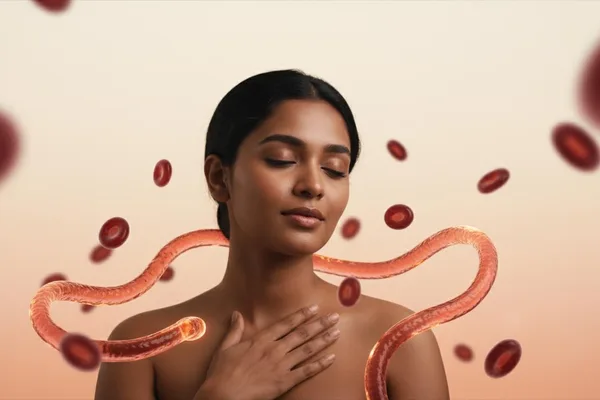
How are red blood cells formed in our body? Let's learn about (Erythropoiesis) in simple terms

How are red blood cells formed in our body? Let's learn about (Erythropoiesis) in simple terms

Have you ever thought that the blood inside our body is constantly being renewed? Our body is actually an amazing factory. The most important job that happens in this factory all day long is the production of red blood cells, that is, the red cells in the blood. If you are always feeling tired and lifeless, the reason may be a lack of red blood cell production. So today we will talk about this amazing process, which is 'erythropoiesis'.

Simply put, what is erythropoiesis?

Erythropoiesis is the process by which our body produces red blood cells, or erythrocytes in medical terms. This is like when our mother cooks a new meal when we run out of food. The old red blood cells in our body die after a while. So, this process is what makes new red blood cells instead.

This maintains the red blood cell count in our body at a proper level, neither increasing nor decreasing excessively.

So why are red blood cells so important to us?

Imagine a delivery service that delivers goods throughout your body. Red blood cells do exactly that.

  • Oxygen Delivery: When we breathe, the oxygen that enters our lungs is carried to every cell and tissue in our body by these red blood cells. From the brain to the toes, everything needs oxygen to survive.
  • Removing carbon dioxide: Also, carbon dioxide, a waste product released from our cells, is collected and brought back to the lungs so that we can remove it from the body when we exhale.

Simply put, without red blood cells, our body cells cannot survive.

Erythropoiesis is just one part of the overall process of blood formation in our body, called 'hematopoiesis.' This overall process produces all three types of blood cells: red blood cells, white blood cells, and platelets.

Where does this process take place in the body?

The place where these red blood cells are made changes over time.

While a baby is in the womb (Fetal Erythropoiesis)

Blood begins to form in our bodies even before we are born.

  • At 3 weeks: Blood begins to form in the structure called the 'yolk sac', which provides the embryo with its first nourishment.
  • At 2-3 months: Blood formation occurs in the fetus' liver and spleen.
  • After 5 months: Blood begins to form in the fetus's bone marrow.

Children and adults

After we are born, our bone marrow becomes the main factory for making red blood cells. This is the soft, spongy part inside our bones.

  • During childhood: Blood is made from the bone marrow of many of the body's large bones.
  • In adulthood: Blood is mainly made in the bone marrow of a few specific bones, such as the hip bones, vertebrae of the spine, ribs, and the flat bone in the middle of the chest (breastbone).

The journey of a red blood cell

This doesn't happen overnight. A single red blood cell must go through several stages to become fully mature, that is, to become functional. The entire journey takes about a week .

It all starts with a special cell called a 'Hematopoietic Stem Cell' (HSC). This is like a seed. This seed can develop into anything from red blood cells, white blood cells, and platelets. To become a red blood cell, this stem cell goes through a number of stages.

The table below can help you understand this journey more clearly.

Stage Simple explanation
Stem cell (Hematopoietic Stem Cell - HSC) This is the origin of every blood cell, like the seed from which a plant grows.
Proerythroblast The first definitive step in the journey to becoming a red blood cell.
Erythroblast The cell gradually shrinks and begins to produce hemoglobin, the protein that carries oxygen.
Normoblast During this stage, the cell's nucleus is removed, allowing the cell to fill with more hemoglobin.
Reticulocyte These are immature red blood cells. This is when they are released from the bone marrow into the blood.
Erythrocyte A fully mature red blood cell, ready to transport oxygen.

The lifespan of a red blood cell produced in this way is about 120 days . Like a battery, these cells die after 120 days of use. That's why our bodies have to constantly make new red blood cells.

How does the body know to make blood?

This is a very amazing control system. Our body controls the production of red blood cells based on the level of oxygen in the body.

Imagine that you are going to a high mountainous area like Nuwara Eliya. As you go up, you feel a little difficult to breathe, right? This is because the oxygen concentration in the air is low. Then the amount of oxygen that reaches our body tissues becomes insufficient. We call this condition hypoxia .

This is when our kidneys are activated.

The kidneys are the ones that constantly monitor the oxygen levels in our blood. When they sense that the oxygen levels are low, the kidneys release a special hormone (chemical messenger) called Erythropoietin (EPO) into the blood.

Here's how this process works:

1. Your tissues are not getting enough oxygen.

2. In response to that 'signal', the kidneys release more of the hormone `(EPO)`.

3. This hormone `(EPO)` travels through the blood and "talks" to the bone marrow, saying, "Urgent, make more red blood cells!"

4. Accelerates the production of red blood cells in the bone marrow.

5. The newly formed red blood cells return the oxygen level in the blood to normal.

6. Once oxygen levels return to normal, the kidneys reduce the release of EPO.

Our bodies are very good at keeping everything in balance (homeostasis) in this way. They maintain the right level, neither allowing it to go too high nor too low.

What happens if this process goes awry?

Sometimes this process of making red blood cells can go awry. Then two main problems can arise. Either too few red blood cells are produced, or too many are produced.

Condition Simply meaning Affected mode/characteristics
Anemia Low red blood cell count (anemia). The body loses enough red blood cells to carry oxygen. This can cause symptoms such as frequent fatigue, weakness, paleness, shortness of breath, and feeling unusually cold .
Erythrocytosis Increased red blood cell count (increased blood thickness). As the blood thickens, blood flow can be impeded. Symptoms such as headache, fatigue, and dizziness may occur. In some cases, there is a risk of dangerous blood clots .

If you have symptoms like these, it is very important to see a doctor and seek advice without making any decisions on your own.

Things that can affect red blood cell production

This process can be affected by various disease conditions and other factors.

When you have long-term respiratory diseases like asthma and COPD, the amount of oxygen your body gets is reduced. The body tries to make more red blood cells to compensate.

Blood and bone marrow cancers

In cancer conditions like leukemia and lymphoma, the normal functioning of the bone marrow is disrupted. As a result, red blood cell production may decrease or abnormal cells may be produced.

Other reasons

  • Nutritional deficiencies: To make good blood, you need good ingredients. Iron, vitamin B12, and folate are essential nutrients. If you don't get enough of these through your diet, your body can't make red blood cells properly, leading to anemia.
  • Kidney disease:Since the hormone `(EPO)` is produced by the kidneys, if the kidneys are damaged, the production of `(EPO)` may decrease and the production of red blood cells may also be impaired.

Take-Home Message

  • The process of making red blood cells, or erythropoiesis, is an amazing thing that happens constantly and automatically in our bodies.
  • This process is controlled mainly by a hormone called EPO, which is released by the kidneys.
  • If you are constantly experiencing symptoms such as fatigue, paleness, and shortness of breath, it could be a sign of anemia . In such a case, be sure to see your doctor for advice.
  • Eating a balanced diet rich in iron (meat, fish, legumes, spinach), vitamin B12 (milk, eggs), and folate (green vegetables, legumes) is very important to maintain healthy red blood cell levels.

Erythropoiesis, red blood cells, how blood is formed, Anemia, anemia, Erythropoietin, EPO, bone marrow, kidney, blood cells

Frequently Asked Questions (FAQ)

So why are red blood cells so important to us?

Imagine a delivery service that delivers goods throughout your body. Red blood cells do exactly that.

⚠️ Important: The medical articles and information on Nirogi Lanka are for general awareness only, and are by no means a substitute for professional medical advice, diagnosis, or treatment. For any medical problem you have, consult a qualified physician immediately.

💬 Comments (0)

No comments have been posted yet. Add your comment here for the first time.

Add your comment

Please calculate: 5 + 6 =
How are red blood cells formed in our body? Let's learn about (Erythropoiesis) in simple terms
How the Body WorksJuly 7, 2026

How are red blood cells formed in our body? Let's learn about (Erythropoiesis) in simple terms

Have you ever thought that the blood inside our body is constantly being renewed? Our body is actually an amazing factory. The most important job that happens in this factory all day long is the production of red blood cells, that is, the red cells in the blood. If you are always feeling tired and lifeless, the reason may be a lack of red blood cell production. So today we will talk about this amazing process, which is 'erythropoiesis'.

Simply put, what is erythropoiesis?

Erythropoiesis is the process by which our body produces red blood cells, or erythrocytes in medical terms. This is like when our mother cooks a new meal when we run out of food. The old red blood cells in our body die after a while. So, this process is what makes new red blood cells instead.

This maintains the red blood cell count in our body at a proper level, neither increasing nor decreasing excessively.

So why are red blood cells so important to us?

Imagine a delivery service that delivers goods throughout your body. Red blood cells do exactly that.

  • Oxygen Delivery: When we breathe, the oxygen that enters our lungs is carried to every cell and tissue in our body by these red blood cells. From the brain to the toes, everything needs oxygen to survive.
  • Removing carbon dioxide: Also, carbon dioxide, a waste product released from our cells, is collected and brought back to the lungs so that we can remove it from the body when we exhale.

Simply put, without red blood cells, our body cells cannot survive.

Erythropoiesis is just one part of the overall process of blood formation in our body, called 'hematopoiesis.' This overall process produces all three types of blood cells: red blood cells, white blood cells, and platelets.

Where does this process take place in the body?

The place where these red blood cells are made changes over time.

While a baby is in the womb (Fetal Erythropoiesis)

Blood begins to form in our bodies even before we are born.

  • At 3 weeks: Blood begins to form in the structure called the 'yolk sac', which provides the embryo with its first nourishment.
  • At 2-3 months: Blood formation occurs in the fetus' liver and spleen.
  • After 5 months: Blood begins to form in the fetus's bone marrow.

Children and adults

After we are born, our bone marrow becomes the main factory for making red blood cells. This is the soft, spongy part inside our bones.

  • During childhood: Blood is made from the bone marrow of many of the body's large bones.
  • In adulthood: Blood is mainly made in the bone marrow of a few specific bones, such as the hip bones, vertebrae of the spine, ribs, and the flat bone in the middle of the chest (breastbone).

The journey of a red blood cell

This doesn't happen overnight. A single red blood cell must go through several stages to become fully mature, that is, to become functional. The entire journey takes about a week .

It all starts with a special cell called a 'Hematopoietic Stem Cell' (HSC). This is like a seed. This seed can develop into anything from red blood cells, white blood cells, and platelets. To become a red blood cell, this stem cell goes through a number of stages.

The table below can help you understand this journey more clearly.

Stage Simple explanation
Stem cell (Hematopoietic Stem Cell - HSC) This is the origin of every blood cell, like the seed from which a plant grows.
Proerythroblast The first definitive step in the journey to becoming a red blood cell.
Erythroblast The cell gradually shrinks and begins to produce hemoglobin, the protein that carries oxygen.
Normoblast During this stage, the cell's nucleus is removed, allowing the cell to fill with more hemoglobin.
Reticulocyte These are immature red blood cells. This is when they are released from the bone marrow into the blood.
Erythrocyte A fully mature red blood cell, ready to transport oxygen.

The lifespan of a red blood cell produced in this way is about 120 days . Like a battery, these cells die after 120 days of use. That's why our bodies have to constantly make new red blood cells.

How does the body know to make blood?

This is a very amazing control system. Our body controls the production of red blood cells based on the level of oxygen in the body.

Imagine that you are going to a high mountainous area like Nuwara Eliya. As you go up, you feel a little difficult to breathe, right? This is because the oxygen concentration in the air is low. Then the amount of oxygen that reaches our body tissues becomes insufficient. We call this condition hypoxia .

This is when our kidneys are activated.

The kidneys are the ones that constantly monitor the oxygen levels in our blood. When they sense that the oxygen levels are low, the kidneys release a special hormone (chemical messenger) called Erythropoietin (EPO) into the blood.

Here's how this process works:

1. Your tissues are not getting enough oxygen.

2. In response to that 'signal', the kidneys release more of the hormone `(EPO)`.

3. This hormone `(EPO)` travels through the blood and "talks" to the bone marrow, saying, "Urgent, make more red blood cells!"

4. Accelerates the production of red blood cells in the bone marrow.

5. The newly formed red blood cells return the oxygen level in the blood to normal.

6. Once oxygen levels return to normal, the kidneys reduce the release of EPO.

Our bodies are very good at keeping everything in balance (homeostasis) in this way. They maintain the right level, neither allowing it to go too high nor too low.

What happens if this process goes awry?

Sometimes this process of making red blood cells can go awry. Then two main problems can arise. Either too few red blood cells are produced, or too many are produced.

Condition Simply meaning Affected mode/characteristics
Anemia Low red blood cell count (anemia). The body loses enough red blood cells to carry oxygen. This can cause symptoms such as frequent fatigue, weakness, paleness, shortness of breath, and feeling unusually cold .
Erythrocytosis Increased red blood cell count (increased blood thickness). As the blood thickens, blood flow can be impeded. Symptoms such as headache, fatigue, and dizziness may occur. In some cases, there is a risk of dangerous blood clots .

If you have symptoms like these, it is very important to see a doctor and seek advice without making any decisions on your own.

Things that can affect red blood cell production

This process can be affected by various disease conditions and other factors.

When you have long-term respiratory diseases like asthma and COPD, the amount of oxygen your body gets is reduced. The body tries to make more red blood cells to compensate.

Blood and bone marrow cancers

In cancer conditions like leukemia and lymphoma, the normal functioning of the bone marrow is disrupted. As a result, red blood cell production may decrease or abnormal cells may be produced.

Other reasons

  • Nutritional deficiencies: To make good blood, you need good ingredients. Iron, vitamin B12, and folate are essential nutrients. If you don't get enough of these through your diet, your body can't make red blood cells properly, leading to anemia.
  • Kidney disease:Since the hormone `(EPO)` is produced by the kidneys, if the kidneys are damaged, the production of `(EPO)` may decrease and the production of red blood cells may also be impaired.

Take-Home Message

  • The process of making red blood cells, or erythropoiesis, is an amazing thing that happens constantly and automatically in our bodies.
  • This process is controlled mainly by a hormone called EPO, which is released by the kidneys.
  • If you are constantly experiencing symptoms such as fatigue, paleness, and shortness of breath, it could be a sign of anemia . In such a case, be sure to see your doctor for advice.
  • Eating a balanced diet rich in iron (meat, fish, legumes, spinach), vitamin B12 (milk, eggs), and folate (green vegetables, legumes) is very important to maintain healthy red blood cell levels.

Erythropoiesis, red blood cells, how blood is formed, Anemia, anemia, Erythropoietin, EPO, bone marrow, kidney, blood cells

Frequently Asked Questions (FAQ)

So why are red blood cells so important to us?

Imagine a delivery service that delivers goods throughout your body. Red blood cells do exactly that.

⚠️ Important: The medical articles and information on Nirogi Lanka are for general awareness only, and are by no means a substitute for professional medical advice, diagnosis, or treatment. For any medical problem you have, consult a qualified physician immediately.

💬 Comments (0)

No comments have been posted yet. Add your comment here for the first time.

Add your comment

Please calculate: 5 + 6 =