

Have you ever thought, “This is made in a way that is fair to the farmers” when you were choosing a coffee ? Have you ever taken money from a big bank and deposited it in a small bank near you? Or have you ever bought something like a dress or a book from a small shop run by someone in your own country, rather than buying a dress from a big supermarket chain? If you have done something like this, you have already engaged in what is called “ethical consumerism.” So, what is ethical consumerism? How can we incorporate it into our lives?
Simply put, it's like voting with your money. Think about it, we all spend a lot of money every year on goods and services. Every rupee we spend is a message that says, "This is the world I want." In other words, using the power of your money to support the values you care about is what we call ethical consumption.
Why should we think about this? What are these values?
Of course, these values can vary from person to person. But in general, those interested in ethical consumption focus on a few key issues. Some buy with the environment in mind, others think about small businesses in our country. All of these fall under the same umbrella. That is, trying to influence the behavior of companies through the way we buy.
Let's see what the main areas of focus are.
| Area of focus | Simply put… |
|---|---|
| Human rights | Support companies that do not use child labor, treat their employees well, pay fair wages, and provide a safe working environment (e.g., Fair Trade certified products). |
| Environment | Choosing companies that reduce pollution, recycle, practice sustainable farming, and use renewable energy. |
| Animal welfare | Support places that treat animals kindly, make cruelty-free products, and protect animal habitats. |
| Community participation | Supporting small businesses, family businesses, and farms in our own area, instead of large international companies. |
| Social justice | Supporting companies that do not discriminate against anyone based on race, religion, gender, age, etc., and that do not engage in unethical practices. |
Okay, so how do we start?
Now you might be thinking, “Do I need to research every company I buy from?” That’s actually the worst advice you can give. It’s like putting yourself in a difficult situation. Because even experts who have been working in this field for years can’t easily find accurate information about every company. So how can we research every place we buy from? It’s impossible.
Therefore, rather than thinking "look into everything," it's best to start with the easiest places where we can have the greatest impact.
First step: switch your bank!
You might be surprised to hear this. Your bank is a very important place . Many of the big banks in Sri Lanka may look good to their employees and be environmentally friendly from the outside. But the problem is, when your money is in those accounts, what kind of things are those banks investing that money in around the world? It's hard for us to find out. That's where bad things often happen.
If possible, switch to a smaller, local bank or cooperative society. For example, switching to a place like the cooperative banks and rural banks in our country is a big change. True, switching banks is a bit of a hassle. But it has to be done once.
Do we shop wisely at the supermarket?
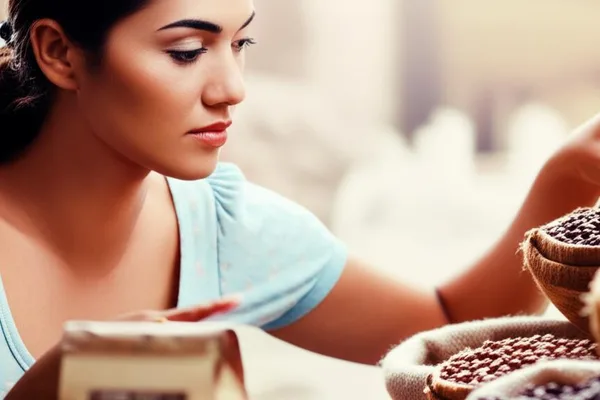
Many people start this journey at the supermarket. Because they don't want their family to eat food contaminated with pesticides , many people buy organic vegetables and fruits.They start buying. That's when they learn about concepts like "Fair Trade," which means products that are fair to farmers and workers and provide them with a sustainable livelihood.
How do I find good products? Can I trust the labels?
Choosing products at the supermarket can sometimes be a challenge. There are labels we can look for. For example, things like ``Fair Trade Certified`` and ``organic certifications.`` These mean that the products have been made according to certain standards.
But here's a little problem. Sometimes, the standards behind these labels have weakened over time. Especially with the "organic" label, some experts say, "It's probably pointless to just look at the organic label these days." Because there are times when some big companies use that label just for name sake.
So, without spending hours of research , is there a label at the supermarket that we can trust?
Yes. One that experts recommend is B Corp certification . It's shown on the product label with a simple 'B' inside a circle. ``B Corp certification'' is short for "Benefit Corporation." This is a certification that is given by a non-profit organization that goes through a rigorous process to verify companies. It's the current gold standard. If you want to make the right choice at the supermarket, look for products with the letter 'B' inside a circle. Companies with this certification are proven to balance profit and social mission, and to be socially and environmentally responsible.
The value of putting 'our own' first
Another good way that doesn't require much research is to buy locally produced items and goods from local businesses . Our country's economic system is structured in a way that often favors large companies. This makes it difficult for small businesses to compete.
Think of the little bookstore, the clothing store, the auto repair shop in your village, or the lady selling vegetables at the weekly market… all of these people are fighting hard to survive. By buying from them, you are directly helping those people and our own economy. It is important to give your money to any local business that you like and that you think should continue to exist in your area.
It doesn't have to be perfect, even a small step is a big deal!
If you decide to be an ethical consumer in this way, don't think, "I have to be 100% right." Don't do it thinking that way. Even the expert who commented on this article admits that he uses large online stores like Amazon.
Being an ethical consumer is not a quest for perfection. It's like a score on a test. Getting your ethical GPA from an F to a C is a big improvement. It's like voting. While our individual votes may not seem like a big deal, it's when all of us join together that democracy is preserved.
So, don't feel guilty unnecessarily or try to be a perfect customer. Do one thing at a time. Take small steps in the right direction. Because when all of us do those small things together, it adds up to a big impact.
Take-Home Message
- Every rupee you spend is like a vote for the kind of world you want.
- Start small. Even switching your bank to a local bank or supporting one local store is a great start.
- When purchasing goods, look for reliable certification labels. Pay particular attention to high-quality certifications such as B Corp certification .
- Whenever possible, prioritize local businesses, farmers, and 'our thing.' It directly helps strengthen our own community.
- Don't try to be perfect. Every small, conscious choice matters. Move step by step in the right direction, without feeling guilty.
ethical consumerism, ethical consumerism, shopping, buying, local business, local businesses, fair trade, B Corp, organic, aape de, sustainable, wellness, wellness




💬 Comments (0)
No comments have been posted yet. Add your comment here for the first time.
Add your comment