
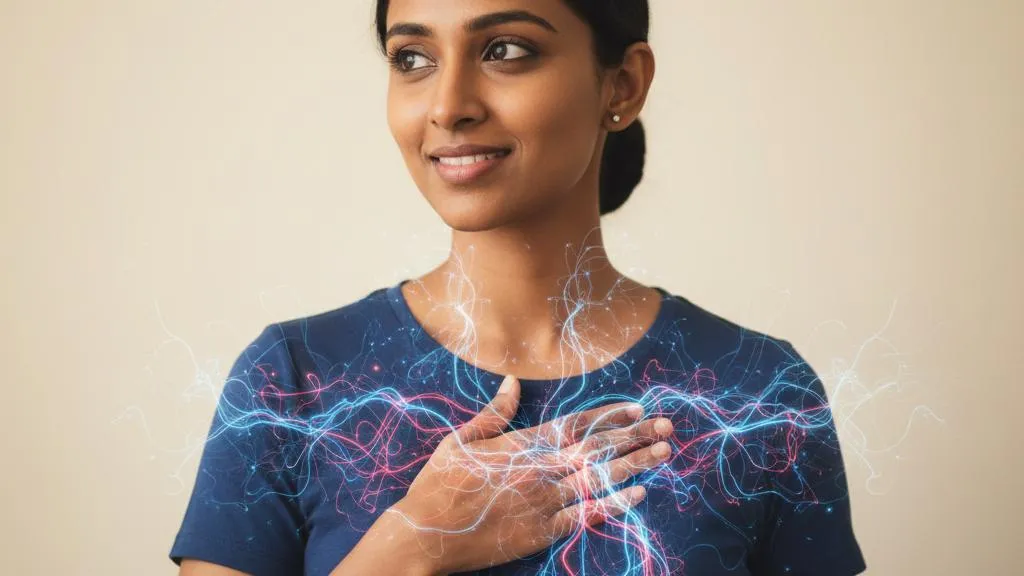
Have you ever wondered how your heart beats without any rest, at the right time, in the same rhythm? When we sleep, when we work, when we run, all this time, the heart is doing its job perfectly. The reason for this is the amazing electrical system inside the heart. Just like the wiring system in a house, this is what gives the heart the signal to beat, that is, the electrical signal. Today we will talk about this electrical conduction system of the heart.
Framingham Chuyma usunaka Riesgo Calculadora. Colesterol, presión arterial, edad ukat cigarro pitañ tuqitxa, 10 maranakax chuyma usuchjasiña jan ukax accidente cerebrovascular ukanakat amuytʼañamawa.
What is this electrical system of the heart?
Simply put, your heart's electrical conduction system is a special network of cells that controls the heartbeat. It contains nerve cells as well as muscle cells. The electrical signals sent by this system are what cause the heart to contract and then relax.
Think of the wiring system in our home. Just as current flows through wires to turn on the lights or turn on the fan, this electrical system in the heart also sends signals to the heart muscles, telling them "it's time to contract," and "it's time to pump blood."
There are two main types of cells that control this process:
- Conducting cells: These are like the 'wires' that carry electrical signals throughout the heart.
- Muscle cells: When these cells receive an electrical signal, they contract. That is, the heart beats because of these cells. Just like a light bulb lights up when current flows through a wire.
These signals are what command the heart to pump blood throughout the body.
What is really happening with this system?
The heart's electrical system's main function is to send the signal to start a heartbeat. It also controls when the different parts of the heart (the upper and lower chambers called the atria and ventricles) should contract and when they should relax.
This process of contraction and recovery is precisely controlled, which is why blood flows through the heart and from there to the entire body.
The electrical system of a healthy heart maintains a steady, even heart rate. It also helps to speed up your heart rate when you need more oxygen and blood, such as when you exercise or run, and to slow it down when you are at rest.
How a heart attack occurs, step by step
With each heartbeat, this electrical signal travels along a specific path in the heart. Think of it like a train traveling on a specific track.
1. Beginning - The heart's generator: First, the sinoatrial node (SA node) in the heart.An electrical signal starts at the part called. This is the heart's "natural pacemaker." It's like the main switch in a house.
2. Upper chamber contraction: This electrical signal spreads to the two upper chambers of the heart, the atria . Then, those two chambers contract, sending the blood in them to the lower chambers of the heart.
3. The traffic light: Next, this signal reaches a place called the atrioventricular node (AV node) . This is like a traffic light. Here, the signal is delayed by a fraction of a second. The reason for this is to give all the blood in the upper two chambers time to empty into the lower chambers.
4. Travel along the main cord: Then, the delayed signal travels down through special nerve fibers called the Bundle of His .
5. Contraction of the lower chambers: Finally, this signal spreads through a network of fine wires called Purkinje fibers to the two lower chambers of the heart, the ventricles . These two lower chambers then contract forcefully, pumping blood to the lungs on one side and to the rest of the body on the other.
When all these steps come together, a heartbeat is complete. Imagine, your heart's electrical system sends thousands of these signals a day to keep you alive.
| Part of the electrical system | The task is simple. |
|---|---|
| Sinoatrial node (SA node) | The heart's natural pacemaker. It sends out the electrical signal to start the heartbeat. |
| Atrioventricular node (AV node) | The electrical signal is delayed for a moment, giving the upper chambers (atria) time to completely empty. |
| Bundle of His | The signal from the AV node is divided into two branches and carried towards the lower chambers (cells). |
| Purkinje fibers | The electrical signal spreads very quickly along the walls of the rooms below, causing them to shrink. |
How is this system controlled?
Your heart rate isn't always the same, is it? It's not the same rate you get when you're running after a bus, but it is the same rate you get when you're reading a book. This rate is controlled by a part of your body called your Autonomic Nervous System . This is what tells the SA node to "work faster" or "work slower."
- Sympathetic nervous system: This is what controls the 'fight or flight' response. This system is activated when you feel scared, in an emergency, or during exercise, and it speeds up your heart rate.
- Parasympathetic nervous system: This controls the 'rest and digest' response. When you are sleeping and resting, this system is activated and keeps your heart rate slow.
What are the possible diseases that can occur in this electrical system?
Sometimes, there can be some errors in the electrical system of the heart. Then, problems with the heart rhythm occur. We usually call these heart rhythm disorders.
| Medical condition | Simply put... |
|---|---|
| Arrhythmia | An irregular heartbeat. It can be fast, slow, or irregular. An example is (Atrial Fibrillation - Afib). |
| Bundle Branch Block | An interruption in the signal path on one side (right or left) of the main wires carrying the electrical signal. |
| Heart Block | The transmission of electrical signals between the upper chambers (atria) and lower chambers (mitral valves) of the heart is impaired or completely stopped. |
| Long QT Syndrome (LQTS) | The lower chambers of the heart contract and take longer than normal to recover. This can cause fainting (syncope) or sudden cardiac arrest. |
| Premature Ventricular Contractions | An extra, premature beat from the lower chambers of the heart. It may feel like the chest is 'pounding' or like a skipped beat. |
| Cardiac Arrest | This is a very serious defect in the heart's electrical system. This causes the heart to suddenly stop beating. This is a very serious emergency and can lead to death if not treated immediately. |
Symptoms that can help you know if you have this type of problem
If there is a problem with your heart's electrical system, you may experience some of the following symptoms:
- Difficulty breathing
- Chest pain
- Palpitations (feeling like your chest is beating fast)
- Dizziness
- Loss of consciousness or fainting
- Feeling unusually tired
Most importantly: If you have one or more of these symptoms, do not ignore them. See a doctor immediately. If the symptoms are severe, go to the nearest hospital Emergency Department (ETU) immediately.
A doctor can check your heart rhythm with an ECG (electrocardiogram) . You may also be asked to wear a small device (heart monitor) to monitor your heart rhythm for a few days or weeks. There are treatments for these problems, such as medications and the implantation of a device such as a pacemaker .
How to keep the heart's electrical system healthy?
Some heart rhythm problems can be caused by genetic factors. We can't change them. However, following a healthy lifestyle can go a long way in keeping your entire heart healthy.
- Maintain a healthy weight: Try to maintain a healthy body weight that is appropriate for your height.
- Avoid smoking: If you smoke, stop immediately. Being around people who smoke (secondhand smoke) is also harmful.
- Take your medication correctly: Take your prescribed medication for other medical conditions, such as diabetes and high blood pressure, on time.
- Limit alcohol and caffeine: Limit alcohol and caffeinated beverages such as coffee.
- Eat nutritious foods: Eat a nutritious diet, such as vegetables, fruits, legumes, and whole grains.
- Exercise: Engage in at least 150 minutes of vigorous exercise per week.
- Manage stress: Reduce stress through things like meditation, yoga, and talking to a trusted friend.
We usually become aware of the heart's electrical system only when something goes wrong with it. But this invisible system is what gives the heart the energy and rhythm it needs to keep us alive. Therefore, being aware of this, paying attention to the above symptoms, and adopting a healthy lifestyle are the biggest help you can do for your heart.
💡 Take-Home Message
- Your heartbeat is controlled by a special electrical system (Cardiac Conduction System) inside the heart.
- This system has a 'natural pacemaker' (SA node) and a system of 'wires' that carry signals.
- When defects occur in this electrical system, heart rhythm irregularities (arrhythmias) can occur.
- Don't ignore symptoms like chest tightness, dizziness, or difficulty breathing. See your doctor immediately.
- By following a healthy lifestyle, you can keep your entire cardiovascular system, including your heart's electrical system, healthy.





Janiw kuna arsuwinakas jichhakamax uñt’ayatäkiti. Aka chiqanx amuyt’awim jan ukax jiskt’awim yapxatañamawa.