
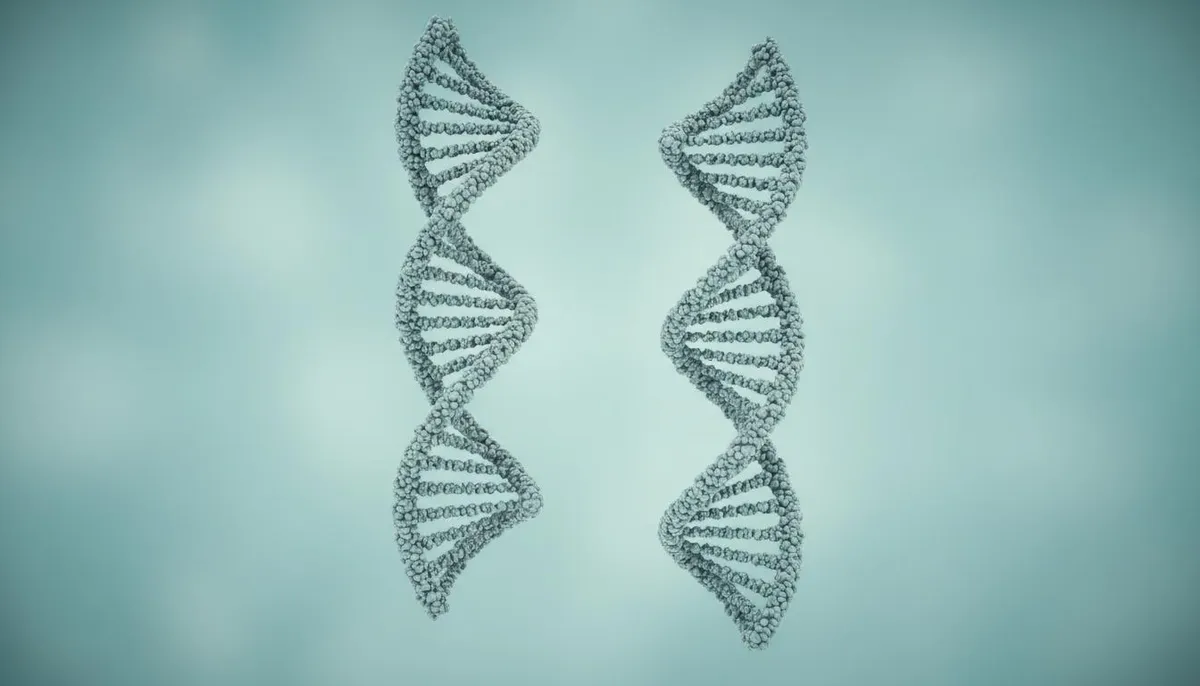
Today we're going to talk about something very important about our genes. You've probably heard the word 'homozygous'. Simply put, this means that you have the same copy of a particular gene from both your mother and father. This may sound a bit scientific, but it's actually quite simple. Let's explain this further.
What is an allele then?
Think about it, we get two copies of each gene, one from our mother and one from our father. Most of the genes in our bodies are the same for everyone. But a very small number (less than 1%) of genes have slight variations. Alleles are different forms of the same gene with slight variations. These small variations in DNA sequences are what give you your unique traits. It's like different flavors of the same recipe, right?
What is the difference between homozygous and heterozygous?
Now you have some idea about alleles. Homozygous means that you have inherited two identical alleles of the same gene from both of your parents. This means that the copy of the gene from your mother and the copy of the gene from your father are both identical.
On the other hand, being heterozygous means that you have inherited two different alleles of the same gene from your parents. This means that the DNA sequence of the copy of the gene you got from your mother is slightly different from the one you got from your father. 'Hetero' means 'different', 'Homo' means 'same'. Simple, right?
So what is this homozygous genotype?
Genotype sounds a bit scientific, doesn't it? Don't worry, I'll keep it simple. Genotype refers to the type or form of DNA sequence that you inherit. So, a homozygous genotype means that you have inherited two alleles of the same type. That means, the DNA sequences of a particular gene that both your parents gave you are exactly the same, no difference.
How are dominant and recessive traits related to homozygous genes?
Some alleles are dominant , meaning they are very strong. Others are recessive , meaning they are slightly suppressed. Now imagine that you have a heterozygous genotype, meaning one dominant allele and one recessive allele. What happens then? The dominant allele suppresses the recessive allele, and the dominant trait comes out. It's like the naughty kid in class suppressing the others.
However, in a homozygous genotype, this is not the case. You can have two dominant alleles for a trait (homozygous dominant). Or, you can have two recessive alleles (homozygous recessive).Either way, the trait of the two matching alleles is expressed. In genetics, a dominant homozygous trait is indicated by two capital letters (for example, BB). A recessive homozygous trait is indicated by two lowercase letters (for example, bb).
What are examples of homozygous traits?
When you inherit the same alleles from your parents, they can lead to homozygous traits. These can include your appearance, your skeletal system, and whether or not you develop certain diseases. Let's look at a few examples.
Characteristics related to appearance
- Eye color: A homozygous gene can affect the color of your eyes. Brown is the dominant trait for eye color. This is denoted BB. All other eye colors are blue. These are denoted bb. So, a person with brown eyes who has a homozygous gene has the BB gene. A person with blue eyes who has a homozygous gene has the bb gene. Imagine, if both of a blue-eyed person's parents have copies of the gene (bb) that contributes to blue eyes, then a blue-eyed person is likely to have blue eyes.
- Freckles: Freckles are also a dominant autosomal trait. A person with freckles has more melanin in their body. This is indicated by FF. A person without freckles has the dominant autosomal gene, which is indicated by ff.
- Dimples: Dimples are also a dominant autosomal trait. This is indicated by DD. People with the dominant autosomal trait (dd) do not have dimples.
- Curly hair: Curly hair is also a dominant autosomal trait. It is denoted by HH. The dominant autosomal trait is straight hair. It is denoted by hh.
Characteristics related to the skeletal system
- Unattached earlobes: If you have unattached earlobes, you have the dominant UU gene. If your earlobes are attached to the body, you have the recessive uu gene.
How are some health conditions linked to homozygous genes?
- Hearing and speaking: The dominant trait is the ability to hear and speak normally. This is represented by the dominant gene SS. If you have both the recessive genes ss, you may not be able to speak or hear normally. This means you may be deaf and dumb.
- Resistance to Poison Ivy: Resistance to poison ivy is another dominant trait. This dominant trait is represented by the symbol PP. If you have both of the PP genes, you will not be resistant to poison ivy.
What genetic conditions can be caused by homozygous genes?
Now let's talk about something a little more serious. You have a mutated gene from both of your parents., that is, if you have two alleles of the same type that don't work properly, you are homozygous for that genetic mutation. This means that you are more likely to develop the genetic condition caused by that gene. Here are some of the genetic conditions that can be inherited:
- Cystic Fibrosis: A protein that moves fluids around in our body's cells is made by a gene called CFTR. If you inherit two mutated copies of this CFTR gene, you will develop a disease called Cystic Fibrosis. This causes thick mucus to build up in places like the lungs and digestive system.
- Sickle Cell Anemia: The HBB gene, which is part of the hemoglobin in our red blood cells, helps carry oxygen throughout the body. If you inherit two mutated copies of the HBB gene, you will develop sickle cell anemia. In this condition, the red blood cells change shape and take on a sickle shape, hence the name. This can interfere with blood flow.
- Phenylketonuria: The gene PAH tells cells to make an enzyme that breaks down the amino acid phenylalanine. If you inherit two mutated copies of the PAH gene, you will develop a disease called phenylketonuria. In this condition, phenylalanine builds up in the body and can damage the brain.
The important thing is that if you are homozygous for a particular gene, it means that you have inherited the same copies (alleles) of that gene from both your parents. Because of these homozygous genes, you can have many of your own unique physical characteristics.
So, what are the most important things we need to remember from this story?
Okay, we've talked a lot about this 'Homozygous' story. Here are a few things to remember in short:
- Homozygous means that you have two identical alleles for a particular gene, from both your mother and father.
- Both of these alleles can be dominant or recessive, which determines your traits.
- Sometimes, if two mutated alleles of the same type are inherited in this way, certain genetic conditions can occur. For example, cystic fibrosis or sickle cell anemia.
- However, homozygous genes are not always the cause of diseases. Many common characteristics, such as the color of your eyes, the texture of your hair, and whether or not you have dimples in your cheeks, are also caused by these homozygous genes.
So, this is the simple story about homozygous genes. Knowing things like this helps us a lot to understand our bodies, doesn't it? If you have any more questions about this, don't hesitate to ask a doctor or a genetic counselor.






Janiw kuna arsuwinakas jichhakamax uñt’ayatäkiti. Aka chiqanx amuyt’awim jan ukax jiskt’awim yapxatañamawa.