
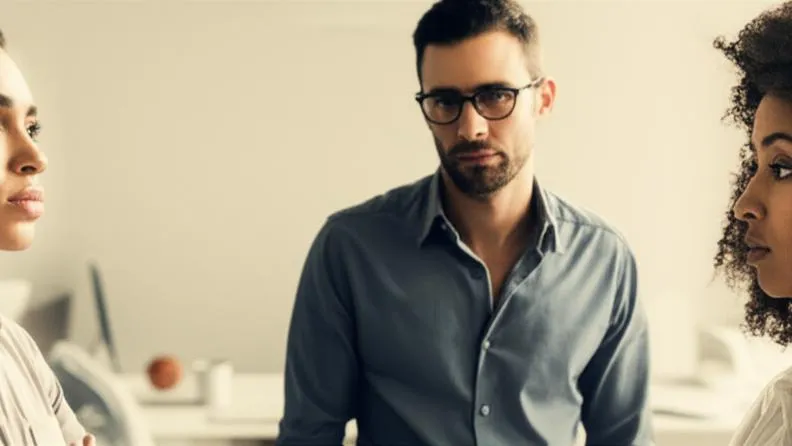
Have you ever seen someone on the street, on the bus, or in the office and made a mental decision about them? Maybe you looked at the way they dressed, the way they spoke, the way they used their phone , and thought, "Oh... this person must be like this." This is not just for us, it's common to all of us. Today we're going to talk about this wonderful thing that lurks deep in our hearts and influences our decisions.
What is this Unconscious Bias?
Simply put, Unconscious Bias refers to the attitudes, beliefs, and ideas that are stored in our subconscious, which bias us without us even realizing it. This is also called (Implicit Bias). Think of our brain as a big file room. Everything we see, hear, and experience throughout our lives is stored in the files in this room. Everything we have heard about a person, a race, a religion, a job, what we have seen on TV, everything that has been in our heads since childhood is in these files.
When we meet someone new, or face a situation, our brains quickly go to this file room, search for relevant information, and make a quick decision in a matter of seconds without us even realizing it. That's how thoughts like "This person is like this," "This thing isn't right," come to mind.
Not all of these tendencies (bi AS ) are bad. For example, imagine that you really like white, big-furred dogs. Wherever you see a dog like that, you automatically feel a sense of love in your heart. That is also a positive tendency in the subconscious.
However, these biases that we form in our minds based on things like people's race, age, sexual identity, religion, or occupation are a bit more complex. Sometimes these are based on outdated, incorrect, or overly generalized information (stereotypes). At times like these, our reactions are likely to be negative. When you choose someone for a job, when you meet new people in society, and in everyday activities, these unconscious biases can lead to making wrong decisions and even hurting people.
Do I have biased views like this too?
Actually, yes. We all have these. Because they're deep in our subconscious, it's not easy for us to identify them. We can't just think and ask, "Hmm... what are my biases?"
The important thing is that having these thoughts in your subconscious mind doesn't mean you're consciously biased or a bad person. It's just part of the normal way the human brain processes information .
Imagine, you consciously, with your conscious mind, strongly believe that everyone should be treated equally. But when you're on the bus, and someone dressed a little shabbily comes to sit next to you, you might unknowingly flinch and feel a little upset. That's how subconscious bias works. There may be a conflict between your conscious thought and your subconscious response.
The good news is that these subconscious ideas are not set in stone. They can change with new experiences and new knowledge.
So how do you change these subconscious thoughts?
This takes some effort and time. But it is definitely possible. Experts have found several ways to do this. Let's see what they are.
| Method to follow | Simply put... |
|---|---|
| Look for people who break stereotypes. | Pay attention to characters and examples that contradict the stereotypes we have in our minds. For example, if you have a deep-seated belief that "women can't drive well," look specifically at women who drive well on the road. Be aware of such characters in TV dramas and newspapers. |
| Meet new people. | Meeting and talking to people from different backgrounds can change our old beliefs. Rather than just laughing and joking around, it's much more effective to work together for a common goal in a place like the office. Then you can really understand their abilities and characteristics. |
| Be aware of this. | Knowing that something like this exists is a big step. Your reading this article is part of that step. When we become aware of this, it becomes easier for us to recognize the little biased thoughts that arise in our own minds every second. |
| Think with empathy. | Before you make a decision about someone based on the first thought that comes to mind, stop for a moment and think, "What if I were in their shoes?" Before you get angry at someone who is yelling and talking on the phone on the bus, you can change your initial attitude by thinking, "Maybe they just got urgent news from home." |
| Practice mindfulness. | Mindfulness is a meditation technique. It means simply observing the feelings and thoughts that come to mind in that moment without any judgment (without labeling them as good or bad). Through this practice, we become less dependent on automatic responses that arise in our minds and are able to respond mindfully. |
💡 Take-Home Message
- Unconscious biases are common to all of us. They are built on experiences and information accumulated over a lifetime.
- Having these thoughts doesn't mean you're a bad person. It's just part of how the human brain works.
- These are not things that cannot be changed. With awareness, effort, and patience, we can change these subconscious tendencies.
- The important thing is to take a moment to pause before acting on your first knee-jerk reaction to a person or situation. Ask yourself , "Is this my first thought really reasonable? Is this how I should act?" This will allow your conscious mind to make a more accurate and reasonable decision.






Janiw kuna arsuwinakas jichhakamax uñt’ayatäkiti. Aka chiqanx amuyt’awim jan ukax jiskt’awim yapxatañamawa.