
Your doctor may have ordered a special test to confirm a diagnosis. Have you ever heard of the term "immunostaining"? It may sound a bit complicated and difficult. But it is actually a very advanced laboratory test that helps us to accurately diagnose diseases such as cancer and various infections. Today, we will talk about it in a very simple way.
Simply put, what is Immunostaining?
Immunostaining is a special technique used to identify a specific protein molecule that the doctor wants to look for among the many proteins in your blood, tissue sample, or bone marrow sample.
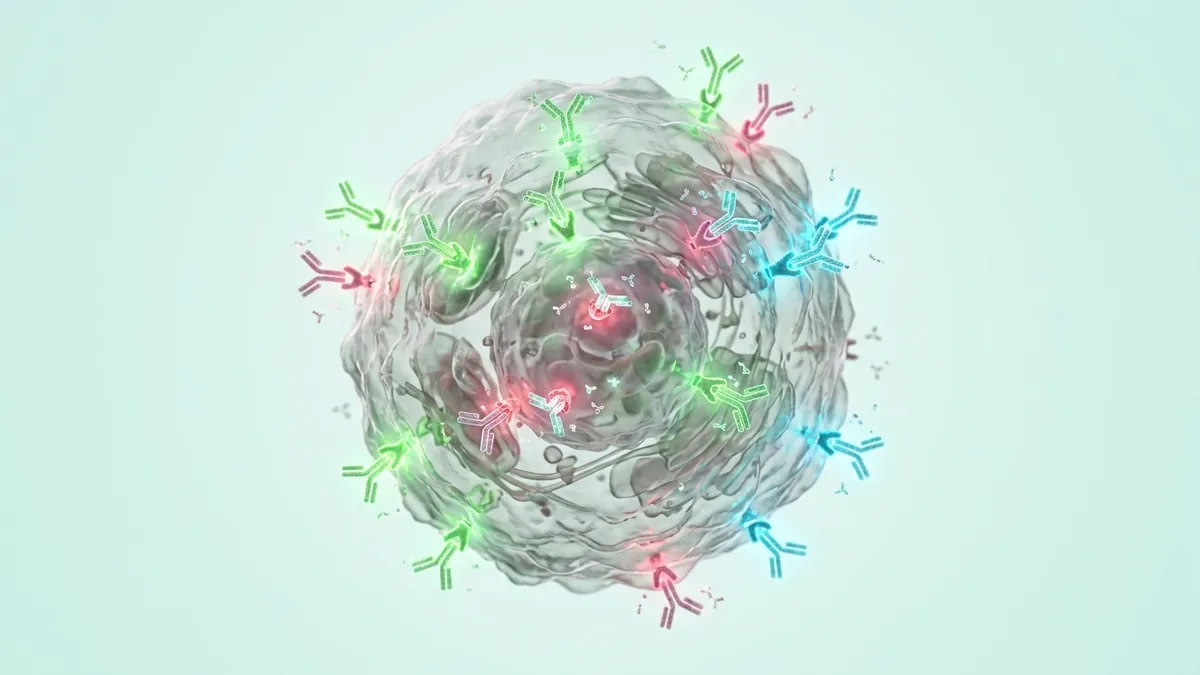
Imagine you are reading a book. You use a highlighter pen to highlight the most important sentences in the book so that you can see them more easily. That's what this method does. Out of the thousands of proteins inside our body's cells, this method helps us identify specific proteins (we call these antigens ) that are related to a certain disease by "coloring them."
This "staining" is done using special substances called antibodies . To be precise, an antibody that can only bind to a specific antigen is used. This antibody is attached to a special pigment, enzyme, fluorescent molecule, or gold particles. So when that antibody binds to the antigen in question, when we look at it under a microscope, it turns into a beautiful color and we can see it clearly.
The important thing is that this test is done by pathologists in a laboratory. Even though a sample (such as blood or tissue) is taken from you at the hospital, the test takes place in the lab.
What are the main types of immunostaining tests?
There are several methods used to perform this test. Your doctor will choose the most appropriate method based on your medical condition. Let's look at some of the main methods.
| Test method | What does this do and what is it used for? |
|---|---|
| Immunohistochemistry | This is the most commonly used method. Here, a tissue sample taken from you is placed on a glass slide, the appropriate antibody is added, and a special dye is used to stain it. It is then examined under a microscope. This is very helpful in identifying different types of cancer , classifying neurological conditions, and blood disorders. |
| Flow cytometry | Think of it like scanning groceries at a supermarket. In this method, your cells are passed through a laser beam, one by one, using colored antibodies. The machine can then count, sort, and separate the cells. This is used to detect cancers like leukemia and lymphoma, various infectious diseases, and autoimmune diseases . |
| Immuno-electron microscopy (EM immunolabeling) | This allows a sample to be viewed at very high magnification, in a very detailed manner. Here, colloidal gold particles are attached to antibodies. When viewed under an electron microscope, these gold particles are clearly visible as black dots. Therefore, once an antibody has attached to an antigen, it can be easily detected. This method is also used to detect viral infections and to find the locations of viral antigens in vaccines. |
How should I prepare for this test?
Generally, you don't need to prepare anything special for an immunostaining test.
However, before taking a sample (i.e., taking blood or a piece of tissue, such as a biopsy), your doctor will give you clear instructions about what to do. For example, if you are having a biopsy, you may be told not to eat or drink anything before the procedure. It is important to follow those instructions exactly.
How long does the test take? When will the results be available?
The time it takes for this to happen varies depending on the method used.
- Some methods can produce results in a few hours .
- Some other methods can take up to 10 days .
On the day your sample is taken, the doctor or a member of staff will give you a rough idea of how long it will take to get the results, so don't worry about that.
What do the results say?
The pathologist at the laboratory will examine your sample and send a full report of the findings to your treating doctor. Your doctor will then relate the findings in the report to your condition and explain to you in simple terms what it means.
What happens next if the results are abnormal?
If the test confirms a medical condition, don't panic. Your doctor will explain the results to you in full and discuss your treatment options.
In some cases, a team of physicians from different fields may come together to discuss the best treatment plan. Everyone's goal is to provide you with the best treatment. So, talk to your doctor about any questions or concerns you may have.
💡 Take-Home Message
- Immunostaining is a specialized laboratory test that uses antibodies to accurately diagnose diseases such as cancer and infections.
- There are different types of this test, and your doctor will choose the most appropriate method based on your medical condition.
- Your doctor will inform you of the instructions to follow before providing a sample for testing.
- The time it takes to receive test results can vary, and once the results are available, your doctor will explain them to you and discuss next steps, if necessary.
- Discuss any questions you have about your test results or medical condition openly with your doctor.






Janiw kuna arsuwinakas jichhakamax uñt’ayatäkiti. Aka chiqanx amuyt’awim jan ukax jiskt’awim yapxatañamawa.