
We all know that food is essential for survival. But have you ever just thought, in 20 or 30 years, will there be enough food for everyone in this world? This is something we all need to think about. Because the world's population is increasing day by day. So will our earth be able to feed everyone? We are talking about this very important topic today.
Why are current farming methods not enough?
Simply put, the problem is between demand and supply. According to experts, by 2050, we will have to produce 56% more food than we did in 2010, or more than half. Imagine how big that is.
It's not impossible to achieve this goal using current farming methods. However, it comes at a huge environmental cost. That is, if we continue farming in this way, we will cause unbearable damage to our environment, water resources, and the earth.
The impact of global food production on the environment is already significant. 70% of the world's freshwater use goes to agriculture. Similarly, 26% of the world's greenhouse gas emissions are caused by the food production process.
If we continue like this, in a few years we will be left with a polluted environment, with no fertile soil to cultivate, no clean water to drink. So, the solution to this problem is to change the way we farm. We have to innovate with technology, rather than being stuck with the old methods.
So what's the solution? The agriculture of the future is here!
But there's no need to fear. Scientists and agricultural experts around the world are finding new, sustainable ways to meet this challenge. Some of these may sound like the stuff of science fiction, but they are the future of our planet.
1. Vertical Farming
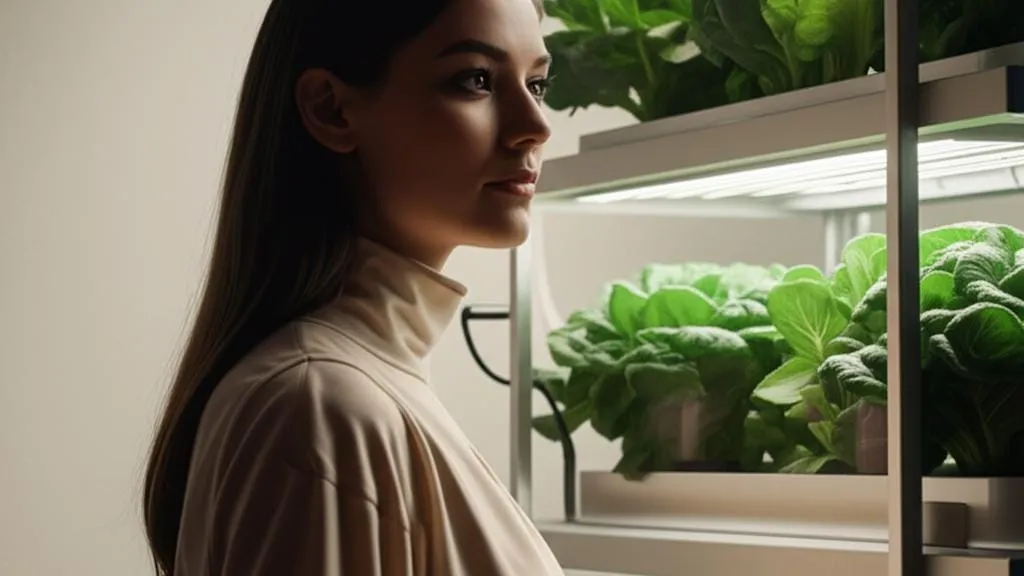
Imagine... instead of thousands of acres of rice fields or vegetable plots, crops are grown inside a large building in the middle of the city, shelf after shelf, like shelves in a supermarket.
In this method, the environment is completely controlled.
- Instead of sunlight: Special LED bulbs provide the necessary light for the plants.
- Fertilizer and water: Each plant is given the required amount drop by drop. This reduces water waste by about 95%.
- Pesticides: Due to a controlled environment, pest damage is very low. Therefore, the use of pesticides is often not necessary.
Another advantage of this method is that it can be grown all year round, without worrying about the weather. Also, since these can be grown close to cities, transportation costs and environmental pollution are reduced.
2. Precision Agriculture
This is the future of farming. Simply put, it means treating each part of the field, and sometimes each plant, separately, instead of treating the entire field the same way.
Cutting-edge technology comes to the rescue in this.
- Drones: Drones are sent over the fields to take high-resolution images of the health of the field, soil moisture, and nutrient levels.
- Sensors: Sensors installed throughout the field and on machinery such as tractors collect real-time data about soil conditions and crop growth.
- Artificial Intelligence (AI): By analyzing this collected data, the AI tells you exactly what type of water is needed in the field, which areas need a little more fertilizer, and where a disease is likely to develop.
Then, using automated machines, they apply what is needed, where it is needed, and in the right amount . Imagine, a little herbicide is sprayed only where there are some weeds. Not on the entire field. Because of this, the use of fertilizer, water, and pesticides is greatly reduced. The yield increases. And the damage to the environment is also minimized.
| Characteristic | Traditional farming | Precision Agriculture |
|---|---|---|
| Water and fertilizer use | It is applied evenly to the entire cropland. Often there is a lot of waste. | Based on data, only the amount needed is applied where needed. Waste is minimal. |
| Harvest | The yield may vary from place to place in the cultivated land. | Every part is managed optimally, resulting in high and uniform yields. |
| Environmental impact | Excessive use of fertilizers and pesticides can pollute water sources and soil. | The use of unnecessary chemicals is minimal, so the damage to the environment is minimal. |
| decision making | Based on the farmer's experience and general observations. | Based on real-time data and technical analysis. |
3. Stop food waste!
No matter how much food we produce, it doesn't matter if a significant amount of it ends up in the trash. A huge amount of food is wasted on its way from the farm to our plate. As a solution to this, "smart packaging" is set to come in the future.
These packages can tell us when the food inside is about to spoil by changing color. Some packaging materials can keep food fresh for longer. Innovations like these can reduce food waste, which is like increasing food production.
💡 Take-Home Message
- With the world's population increasing, we will need more food in the future than we do now.
- Existing traditional agricultural methods are not sustainable in the long term because they cause great damage to the environment.
- New technology-based methods such as vertical farming and precision agriculture can yield higher yields using fewer resources.
- These new methods will minimize damage to the environment and provide us all with healthy food.
- Reducing food waste and increasing production are just as important for future food security.





Janiw kuna arsuwinakas jichhakamax uñt’ayatäkiti. Aka chiqanx amuyt’awim jan ukax jiskt’awim yapxatañamawa.