
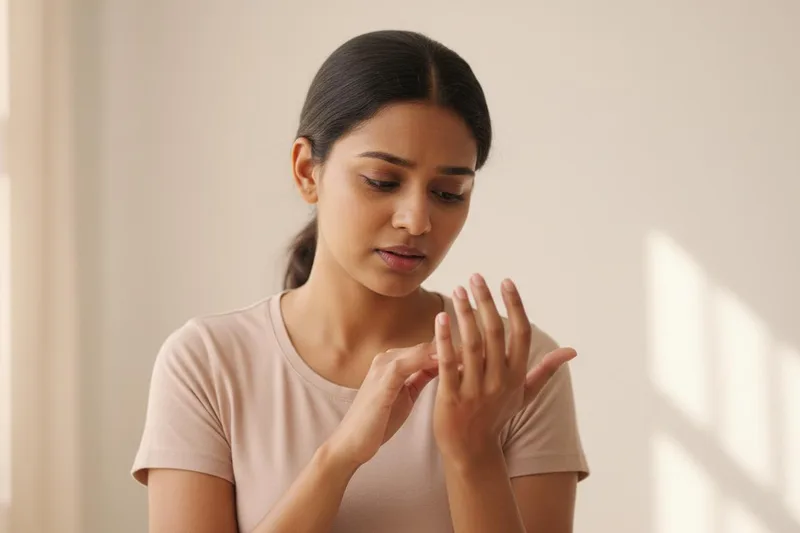
Have you had a minor burn? Let's talk about this (First-Degree Burn) in detail!

Have you had a minor burn? Let's talk about this (First-Degree Burn) in detail!

Oh, it's hard to get a small burn when you don't expect it, isn't it? Sometimes, when you're cooking in the kitchen, or using the iron, or after playing in the sun, you can get small burns. This is what we call a first-degree burn . Don't worry, these are usually not that serious. But if you know about this, you can heal quickly and prevent it from becoming a big problem. Let's talk about it all today.

What is a burn? What is a first-degree burn?

Simply put, a burn is damage to our skin caused by excessive heat, fire, electricity, chemicals, or radiation (like sunlight). Our skin is a very sensitive thing.

Now, what is a First-Degree Burn ? Think of our skin as an onion. It has several layers. In a first-degree burn, only the top, thinnest layer of skin is damaged. This is what we medically call the `epidermis` . This is the mildest and least damaging type of burn. That's why we also call it a ``minor burn.''

How does a first-degree burn occur? (Common causes)

We all encounter so many little accidents in our daily lives, don't we? There are several main causes of first-degree burns. See if these sound familiar to you:

  • Sunburn: This is something that many people have experienced. After spending time at the beach, playing sports, or working outside during the day, your skin turns red and feels burnt, right? That's the most common type of first-degree burn. This is especially likely to happen if you're out in the sun without using sunscreen .
  • Scalds: These can happen while working in the kitchen. A hot cup of tea or a glass of milk can spill on your hand. Or if you put the bath water on your body without checking the temperature, if there are small children in the house, they can unknowingly touch the hot water and get a little burned. We also call burns from such liquids ``Scalds``. If the amount of spill is small, most of the time these are first-degree burns.
  • By touching hot objects: If you touch a hot iron, if you touch a pot while taking it off the stove, or if you touch the edge of a hot stove... you can also get a minor burn. These usually happen when the skin is exposed to something hot for only a few seconds.
  • From some chemicals:If some of the mild chemicals in some household cleaning products come into contact with your skin, it can sometimes cause a small burn-like redness and irritation. But remember, harsh chemicals are very dangerous , and the burns they cause can be much more severe.
  • Minor friction burns: Sometimes, when the skin is rubbed quickly on a rough surface (e.g., a carpet, floor), the heat can burn the top layer of the skin. These are often superficial burns.

What are the symptoms of a first-degree burn? (How does it feel and look to you?)

Okay, so let's say you have a minor burn. How do you know if it's a first-degree burn? Here are the main symptoms:

  • Redness of the skin: The burned area becomes red, like a sunburn.
  • Pain: The burn site will hurt. Sometimes it may feel like a sharp burning sensation. Even if it is a minor burn, there may be some pain.
  • Slight swelling: The burned area may swell slightly.
  • Dry skin: The skin at the burn site appears dry. Blisters do not form. This is one of the main signs of first-degree burns.
  • Turns pale when pressed: When you press a finger on a burned, reddened area and then release it, the area will turn white for a moment, then turn red again. This is called ``blanching''.
  • Skin peeling after a few days: Especially after sunburn, the skin may peel off after a few days. This is normal.

Remember, first-degree burns do not have blisters . If there are blisters, it may be a second-degree burn.

Is this a first-degree burn? How do you tell it apart from the others?

Burns are mainly divided into three levels. We are talking about the first level. It is good to know a little about the others as well.

  • First-Degree Burns: As we just discussed, only the top layer of skin is affected. It's red, painful, and slightly swollen, but it doesn't blister.
  • Second-Degree Burns: This involves damage to both the top layer of skin and the second layer underneath (dermis). The main symptom is the formation of blisters. The skin becomes dark red, very painful, and may feel wet.
  • Third-Degree Burns: This is the most severe type of burn. All layers of the skin are destroyed, and the underlying tissue and flesh may also be damaged. The burn may be white, brown, or black. Sometimes, you may not feel any pain because the nerves are damaged. If you have a burn like this, you should go to the hospital immediately.

Now you understand how a first-degree burn is different from others.

What are the first things you should do if you get a minor burn? (First aid)

Okay, now imagine that you spill some hot water on your hand. Don't panic. Here are some quick things to do:

1. Cool the burn: Immediately hold the burned area under cold (but not ice) running water for 10 to 20 minutes . Or, immerse it in a bowl of cold water. This will reduce pain and stop the burn from spreading further into the skin.

2. Remove jewelry and tight clothing: If you have rings, bracelets, or watches on the burn, carefully remove them. These can become trapped when the burn begins to swell. Also, if you are wearing tight clothing, change them.

3. Cover with a clean, dry cloth (if necessary): If the burn is small, you can leave it outside. However, if it is in a dusty area or if it gets on your clothes, gently cover it with a clean, non-stick bandage or a clean cloth. Do not place cotton wool directly on the wound.

4. Take a painkiller: If the pain is too much, you can take a painkiller like `Paracetamol` or `Ibuprofen`. However, if you are giving it to children, ask a doctor or pharmacist for the exact amount to give.

Don't mention these things!

There are some things that some people unknowingly do wrong when they get a minor burn. These can make the burn worse and lead to infection.

  • Don't put ice directly on the burn: Putting ice directly on the burn can further damage the skin. Cold water is best.
  • Don't apply things like butter, oil, toothpaste, or coffee grounds: These won't help. They can even cause infection and make the burn worse.
  • Do not break blisters (if any): First-degree burns do not blister. However, if blisters form on other types of burns, do not break them. The fluid inside the blister protects the skin. Breaking it can easily lead to infection.
  • Do not place cotton wool directly on the burn: The fibers of the cotton wool can stick to the wound.

How do you take care of a burn until it heals?

A first-degree burn usually heals in a few days. In the meantime, here's how to care for it:

  • Keep it clean: Wash it gently with lukewarm water and soap (a mild, unscented soap) once or twice a day. Then gently pat it dry with a clean cloth. Do not rub vigorously.
  • Moisturize: If the burn is dry and itchy, apply aloe vera gel (unsweetened or fragrance-free) or a gentle, unscented moisturizing cream. This will help cool the skin and help it heal faster.
  • Protect yourself from the sun: Avoid exposing the burned area, especially a sunburn, to the sun until it is completely healed. If you do go outside, cover the area or apply sunscreen.
  • If you scratch, don't scratch: Sometimes, people scratch the burn as it heals. However, scratching can damage the skin and cause infection. If scratching is excessive, seek medical advice.

Are there times when you need to see a doctor, even for a minor burn?

Most first-degree burns can be treated at home, but it's best to see a doctor in these cases:

  • If the burn is spread over a large area: If the burn is larger than the size of your palm.
  • If the burn is in a sensitive area: face, hands, feet, groin area, buttocks, or over a major joint (e.g. elbow, knee).
  • If the burn is on a baby or an elderly person: Since the skin of babies and the elderly is very sensitive, it is best to show even a minor burn to a doctor.
  • If you see signs of infection: if the burn becomes more painful, if the redness spreads, if the swelling increases, if there is pus, or if you develop a fever, it may be an infection.
  • If the pain cannot be controlled: If the pain does not subside even after taking regular painkillers.
  • If you are in doubt about the degree of the burn: If you cannot tell if it is a first-degree burn or something more severe.
  • If the burn was caused by a chemical or electrical substance: These types of burns may be more damaging than they appear on the surface. Therefore, it is important to seek medical advice.
  • If you don't see signs of improvement in a few days.

Don't be afraid to see a doctor. If you have any doubts, it's wise to get them cleared up.

How long will it take for these burns to heal? Will there be scars?

This is a problem that many people have. First-degree burns usually heal completely within 3 to 6 days. Because only the top layer of skin is damaged, it repairs itself quickly.

Another good news is that first-degree burns usually don't leave scars. However, sometimes, the burned area may be slightly different in color from the rest of the body for a while. This will also go away in a few days.

A few tips to avoid burns

"Prevention is better than cure," they say. So, there are things we can do to protect ourselves from minor burns like these:

  • Protect yourself from the sun: If you are going to be in the sun during the day (10 am to 4 pm), wear a hat, cover up, and use sunscreen.
  • Be careful in the kitchen:Be careful when cooking and handling hot things. Do not leave hot pot handles turned away from the stove, out of reach of small children. Do not leave hot things like tea and coffee in places where small children can reach them.
  • Check the temperature of the water: When bathing young children, or when bathing yourself, check the temperature of the water carefully.
  • Be careful with hot appliances: When you're finished using things like irons and heaters, turn them off and keep them out of reach of small children.
  • Do not let children touch things like matches and lighters.

Finally, I have to say... (Take-Home Message)

So, a first-degree burn is nothing to be afraid of. It is usually a minor condition that heals quickly and leaves no scars. The most important thing is to not panic when a burn occurs, to apply the correct first aid, and to keep the burn area clean and moist.

However, if the burn seems a bit large, is in a sensitive area, or if you feel like there are signs of infection, definitely don't hesitate to seek medical advice. Always remember, your health is the most important thing. Take care!


` Burns, First-Degree Burn, Skin Burns, First Aid, Sunburn, Skin Care, Burn Wounds, Skin Inflammation

⚠️ Important: The medical articles and information on Nirogi Lanka are for general awareness only, and are by no means a substitute for professional medical advice, diagnosis, or treatment. For any medical problem you have, consult a qualified physician immediately.

💬 Comments (0)

No comments have been posted yet. Add your comment here for the first time.

Add your comment

Please calculate: 8 + 1 =
Have you had a minor burn? Let's talk about this (First-Degree Burn) in detail!
Root of the MatterMay 29, 2026

Have you had a minor burn? Let's talk about this (First-Degree Burn) in detail!

Oh, it's hard to get a small burn when you don't expect it, isn't it? Sometimes, when you're cooking in the kitchen, or using the iron, or after playing in the sun, you can get small burns. This is what we call a first-degree burn . Don't worry, these are usually not that serious. But if you know about this, you can heal quickly and prevent it from becoming a big problem. Let's talk about it all today.

What is a burn? What is a first-degree burn?

Simply put, a burn is damage to our skin caused by excessive heat, fire, electricity, chemicals, or radiation (like sunlight). Our skin is a very sensitive thing.

Now, what is a First-Degree Burn ? Think of our skin as an onion. It has several layers. In a first-degree burn, only the top, thinnest layer of skin is damaged. This is what we medically call the `epidermis` . This is the mildest and least damaging type of burn. That's why we also call it a ``minor burn.''

How does a first-degree burn occur? (Common causes)

We all encounter so many little accidents in our daily lives, don't we? There are several main causes of first-degree burns. See if these sound familiar to you:

  • Sunburn: This is something that many people have experienced. After spending time at the beach, playing sports, or working outside during the day, your skin turns red and feels burnt, right? That's the most common type of first-degree burn. This is especially likely to happen if you're out in the sun without using sunscreen .
  • Scalds: These can happen while working in the kitchen. A hot cup of tea or a glass of milk can spill on your hand. Or if you put the bath water on your body without checking the temperature, if there are small children in the house, they can unknowingly touch the hot water and get a little burned. We also call burns from such liquids ``Scalds``. If the amount of spill is small, most of the time these are first-degree burns.
  • By touching hot objects: If you touch a hot iron, if you touch a pot while taking it off the stove, or if you touch the edge of a hot stove... you can also get a minor burn. These usually happen when the skin is exposed to something hot for only a few seconds.
  • From some chemicals:If some of the mild chemicals in some household cleaning products come into contact with your skin, it can sometimes cause a small burn-like redness and irritation. But remember, harsh chemicals are very dangerous , and the burns they cause can be much more severe.
  • Minor friction burns: Sometimes, when the skin is rubbed quickly on a rough surface (e.g., a carpet, floor), the heat can burn the top layer of the skin. These are often superficial burns.

What are the symptoms of a first-degree burn? (How does it feel and look to you?)

Okay, so let's say you have a minor burn. How do you know if it's a first-degree burn? Here are the main symptoms:

  • Redness of the skin: The burned area becomes red, like a sunburn.
  • Pain: The burn site will hurt. Sometimes it may feel like a sharp burning sensation. Even if it is a minor burn, there may be some pain.
  • Slight swelling: The burned area may swell slightly.
  • Dry skin: The skin at the burn site appears dry. Blisters do not form. This is one of the main signs of first-degree burns.
  • Turns pale when pressed: When you press a finger on a burned, reddened area and then release it, the area will turn white for a moment, then turn red again. This is called ``blanching''.
  • Skin peeling after a few days: Especially after sunburn, the skin may peel off after a few days. This is normal.

Remember, first-degree burns do not have blisters . If there are blisters, it may be a second-degree burn.

Is this a first-degree burn? How do you tell it apart from the others?

Burns are mainly divided into three levels. We are talking about the first level. It is good to know a little about the others as well.

  • First-Degree Burns: As we just discussed, only the top layer of skin is affected. It's red, painful, and slightly swollen, but it doesn't blister.
  • Second-Degree Burns: This involves damage to both the top layer of skin and the second layer underneath (dermis). The main symptom is the formation of blisters. The skin becomes dark red, very painful, and may feel wet.
  • Third-Degree Burns: This is the most severe type of burn. All layers of the skin are destroyed, and the underlying tissue and flesh may also be damaged. The burn may be white, brown, or black. Sometimes, you may not feel any pain because the nerves are damaged. If you have a burn like this, you should go to the hospital immediately.

Now you understand how a first-degree burn is different from others.

What are the first things you should do if you get a minor burn? (First aid)

Okay, now imagine that you spill some hot water on your hand. Don't panic. Here are some quick things to do:

1. Cool the burn: Immediately hold the burned area under cold (but not ice) running water for 10 to 20 minutes . Or, immerse it in a bowl of cold water. This will reduce pain and stop the burn from spreading further into the skin.

2. Remove jewelry and tight clothing: If you have rings, bracelets, or watches on the burn, carefully remove them. These can become trapped when the burn begins to swell. Also, if you are wearing tight clothing, change them.

3. Cover with a clean, dry cloth (if necessary): If the burn is small, you can leave it outside. However, if it is in a dusty area or if it gets on your clothes, gently cover it with a clean, non-stick bandage or a clean cloth. Do not place cotton wool directly on the wound.

4. Take a painkiller: If the pain is too much, you can take a painkiller like `Paracetamol` or `Ibuprofen`. However, if you are giving it to children, ask a doctor or pharmacist for the exact amount to give.

Don't mention these things!

There are some things that some people unknowingly do wrong when they get a minor burn. These can make the burn worse and lead to infection.

  • Don't put ice directly on the burn: Putting ice directly on the burn can further damage the skin. Cold water is best.
  • Don't apply things like butter, oil, toothpaste, or coffee grounds: These won't help. They can even cause infection and make the burn worse.
  • Do not break blisters (if any): First-degree burns do not blister. However, if blisters form on other types of burns, do not break them. The fluid inside the blister protects the skin. Breaking it can easily lead to infection.
  • Do not place cotton wool directly on the burn: The fibers of the cotton wool can stick to the wound.

How do you take care of a burn until it heals?

A first-degree burn usually heals in a few days. In the meantime, here's how to care for it:

  • Keep it clean: Wash it gently with lukewarm water and soap (a mild, unscented soap) once or twice a day. Then gently pat it dry with a clean cloth. Do not rub vigorously.
  • Moisturize: If the burn is dry and itchy, apply aloe vera gel (unsweetened or fragrance-free) or a gentle, unscented moisturizing cream. This will help cool the skin and help it heal faster.
  • Protect yourself from the sun: Avoid exposing the burned area, especially a sunburn, to the sun until it is completely healed. If you do go outside, cover the area or apply sunscreen.
  • If you scratch, don't scratch: Sometimes, people scratch the burn as it heals. However, scratching can damage the skin and cause infection. If scratching is excessive, seek medical advice.

Are there times when you need to see a doctor, even for a minor burn?

Most first-degree burns can be treated at home, but it's best to see a doctor in these cases:

  • If the burn is spread over a large area: If the burn is larger than the size of your palm.
  • If the burn is in a sensitive area: face, hands, feet, groin area, buttocks, or over a major joint (e.g. elbow, knee).
  • If the burn is on a baby or an elderly person: Since the skin of babies and the elderly is very sensitive, it is best to show even a minor burn to a doctor.
  • If you see signs of infection: if the burn becomes more painful, if the redness spreads, if the swelling increases, if there is pus, or if you develop a fever, it may be an infection.
  • If the pain cannot be controlled: If the pain does not subside even after taking regular painkillers.
  • If you are in doubt about the degree of the burn: If you cannot tell if it is a first-degree burn or something more severe.
  • If the burn was caused by a chemical or electrical substance: These types of burns may be more damaging than they appear on the surface. Therefore, it is important to seek medical advice.
  • If you don't see signs of improvement in a few days.

Don't be afraid to see a doctor. If you have any doubts, it's wise to get them cleared up.

How long will it take for these burns to heal? Will there be scars?

This is a problem that many people have. First-degree burns usually heal completely within 3 to 6 days. Because only the top layer of skin is damaged, it repairs itself quickly.

Another good news is that first-degree burns usually don't leave scars. However, sometimes, the burned area may be slightly different in color from the rest of the body for a while. This will also go away in a few days.

A few tips to avoid burns

"Prevention is better than cure," they say. So, there are things we can do to protect ourselves from minor burns like these:

  • Protect yourself from the sun: If you are going to be in the sun during the day (10 am to 4 pm), wear a hat, cover up, and use sunscreen.
  • Be careful in the kitchen:Be careful when cooking and handling hot things. Do not leave hot pot handles turned away from the stove, out of reach of small children. Do not leave hot things like tea and coffee in places where small children can reach them.
  • Check the temperature of the water: When bathing young children, or when bathing yourself, check the temperature of the water carefully.
  • Be careful with hot appliances: When you're finished using things like irons and heaters, turn them off and keep them out of reach of small children.
  • Do not let children touch things like matches and lighters.

Finally, I have to say... (Take-Home Message)

So, a first-degree burn is nothing to be afraid of. It is usually a minor condition that heals quickly and leaves no scars. The most important thing is to not panic when a burn occurs, to apply the correct first aid, and to keep the burn area clean and moist.

However, if the burn seems a bit large, is in a sensitive area, or if you feel like there are signs of infection, definitely don't hesitate to seek medical advice. Always remember, your health is the most important thing. Take care!


` Burns, First-Degree Burn, Skin Burns, First Aid, Sunburn, Skin Care, Burn Wounds, Skin Inflammation

⚠️ Important: The medical articles and information on Nirogi Lanka are for general awareness only, and are by no means a substitute for professional medical advice, diagnosis, or treatment. For any medical problem you have, consult a qualified physician immediately.

💬 Comments (0)

No comments have been posted yet. Add your comment here for the first time.

Add your comment

Please calculate: 8 + 1 =