
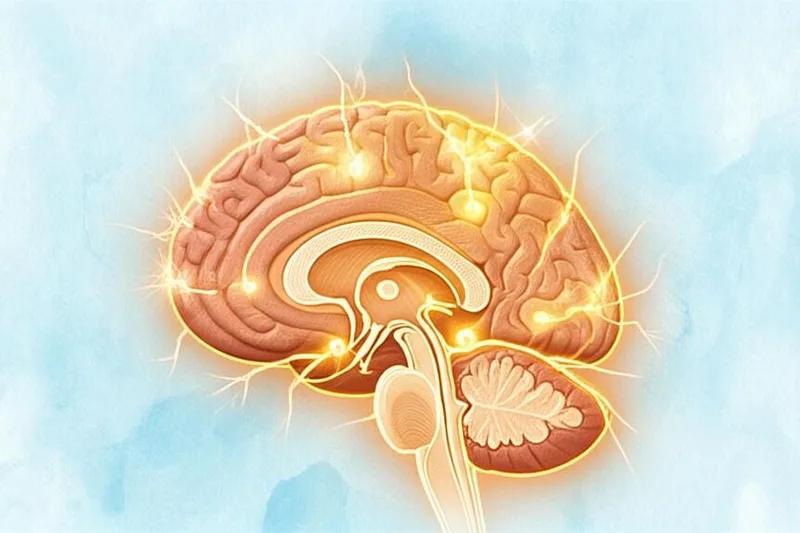
Have you ever wondered how you experience emotions like sadness, happiness, and anger? Or why you remember some things well while forgetting others? Sometimes things just come to mind for no reason, right? Today we are going to talk about a very special, small, and yet very powerful system deep in our brain that is connected to almost all of these. This is called the limbic system.
What is the Limbic System? Simply put...
Simply put, the limbic system is a collection of interconnected parts of our brain that work together like a team. The main function of this team is to control our emotions and behaviors . Not only that, but it also controls our memory, our way of thinking, our motivation, and how our bodies respond to it. Isn't it amazing?
Think about it, this limbic system is one of the oldest parts of our brain. It's where the natural instincts that our ancestors used to survive come from. That is:
- The feeling of wanting to eat when you're hungry and drinking water when you're thirsty.
- Creating the need to reproduce one's own kind.
- The desire to take care of and protect small children and babies.
- When we see something in our environment, for example, danger, we are immediately prompted to either fight or run away (fight or flight response).
The limbic system has many responsibilities. For example, it helps us manage our memories, learn from them, and keep us motivated.
Why is the limbic system also called the "emotional nervous system"?
Because of this deep connection between our physical and mental well-being, the limbic system is sometimes called the "emotional nervous system ."
Think about it this way. When you are hungry, you want to eat, right? When you eat your favorite food, you feel incredibly happy and satisfied, don't you? The limbic system is what helps you feel that happiness. Another thing, when you suddenly get a lot of stress, maybe because of an exam or a problem at work, your heart rate increases, your blood pressure rises , right? At that time, the limbic system, which controls our emotions, is also activated. That is, what is in our mind affects the body, and what is in the body affects the mind. The limbic system works like a bridge between these two.
What is the relationship between the limbic system and higher mental functioning?
Do you know what "higher mental function" is? It means that we need several parts of the brain to work together to perform some complex task. For example, when we speak, when we remember something, when we control our emotions, when we plan for the future, when we make decisions, this higher mental function is needed. So, it is because parts of the limbic system work together with other parts of the brain that we are able to do these things every day.
So what are the main functions of the limbic system?
Let's look at some of the main things the limbic system does:
- Identifying, processing, and managing our emotions (e.g., happiness, sadness, fear, anger)
- Controlling our behaviors .
- Creating motivations within us to do something.
- Remembering new things (memory) and storing old memories.
- Helping the autonomic nervous system, which controls automatic functions in our body. This includes things like our heart rate, blood pressure, and body temperature .
What exactly does the limbic system control?
We now know that the limbic system plays a big role in controlling our emotions and behavior, right? It does this based on information from the environment. That is, the limbic system takes in information, analyzes it, learns from it, and then responds. This helps us control the following:
- How we respond emotionally to certain situations or things that our senses perceive. (For example, getting scared when hearing a loud noise all of a sudden)
- Feeling hungry and thirsty .
- Feeling pain and pleasure responses.
- Sexual arousal.
Where is the limbic system located in our brain?
The limbic system is located deep in our brain. It's shaped like a fist in the middle of our brain. It's located at the border between our brainstem and the cerebral cortex (the outermost layer of the brain). The word "limbic" comes from a Latin word meaning "border."
What are the four main parts of the limbic system and what are their functions?
There are four main structures, or parts, of the limbic system, each with specific functions:
1. Hypothalamus: This is a very small part but very important. It is the hormone producer in our body.It helps produce hormones, controls our sleep, and manages many things like our mood , hunger, thirst, sexual desire, blood pressure, body temperature , and heart rate.
2. Amygdala: This is like our emotional center. It is where we experience and experience emotions like anxiety, anger, and fear. It also helps with memory and social information (information about other people). This is probably why we get a strange feeling when someone looks at us.
3. Thalamus: The thalamus is like a relay station for information coming into our brain. Information from our senses (hearing, taste, sight, touch - except for smell) first goes here. The thalamus then sends that information to the relevant parts of the brain. It is also involved in memory, planning, and emotions.
4. Hippocampus: The main function of the hippocampus is to form new memories. It is this part that helps us remember when we learn something new or go to a new place. If the hippocampus is not working properly, it becomes very difficult to remember new things.
How is the limbic system related to our sense of smell?
Our sense of smell is detected by the olfactory bulb, located at the top of our nose. This is not actually part of the limbic system itself. However, unlike signals from other senses, signals related to smell are directly connected to certain parts of the limbic system. This is why when we smell certain smells, we suddenly remember old memories, or we experience certain emotions (like happiness or sadness). Imagine, when we smell a perfume used by an old friend, we immediately think of that friend, right? That's because of this connection.
What are the common conditions that affect the limbic system?
Many of the conditions that affect our mental health and memory are related to the limbic system. Here are some of the most common ones:
- Alzheimer's disease: This causes memory loss, mainly due to damage to the hippocampus.
- Anxiety disorders: These conditions, which cause excessive fear and restlessness, are associated with the activity of the amygdala.
- Depression: Depression, which is characterized by prolonged sadness and loss of interest in anything, is also affected by limbic system dysfunction.
- Post-traumatic stress disorder (PTSD): This condition, which occurs after a traumatic event, is also associated with the limbic system. Schizophrenia : This complex mental illness that causes difficulty recognizing reality is also affected by changes in the limbic system.
- Stress:Long-term stress can negatively affect the functioning of the limbic system.
- Substance use disorders (SUD): Drugs can be addictive because they stimulate the "pleasure" pathways of the limbic system.
What are the symptoms of this condition?
When any part of the limbic system is affected, symptoms such as:
- Mood changes: Frequent anger, irritability, frequent feelings of fear and sadness.
- Memory loss: Difficulty remembering new things and forgetting old things.
- Sleep disorders: It's okay to sleep too much, it's okay to not sleep at all.
- Behavioral changes: Showing strange behavior patterns that were not present before.
How to check the health of the limbic system?
If you have these symptoms, tell your doctor and they will examine you. Tests such as these may be done to confirm the diagnosis:
- Neurological exam: This tests the function of your nervous system.
- Neuropsychological exam: This tests your mental functions, such as memory, attention, and language ability.
- Psychological evaluation: An assessment of your mental state.
- MRI scan (magnetic resonance imaging): This takes detailed images of the brain to look for any changes in the brain's structure.
What are the treatments for limbic system problems?
Treatment options vary depending on the diagnosis, but may typically include:
- Taking medication: Medications that help control symptoms.
- Attend counseling or therapy: Talk to a psychiatrist or counselor to resolve issues.
- Relaxation techniques: Things like doing yoga and deep breathing exercises.
- In some severe cases, there are also specialized treatments such as deep brain stimulation (DBS) .
How do I keep my limbic system healthy?
As we've talked about before, the limbic system is like a bridge between our physical and mental health. So, to keep it healthy, here are some things you can do:
- Eat a nutritious, balanced diet .
- Exercise regularly.
- Spend time with the people you love .
- Engage in activities you enjoy .
- Avoid using drugs or other harmful substances .
- Take a break when you feel stressed or overwhelmed.
- If there is any other underlying medical condition, get it treated properly .
- If necessary, don't be afraid to seek advice from a mental health professional .
Remember, your mental well-being is just as important as your physical well-being!
What are the controversies about the limbic system?
There is some disagreement among scientists about the limbic system. Some researchers say that in addition to the four main parts we have discussed, other parts belong to the limbic system. For example:
- Basal ganglia: These are like our "reward processing center." They are involved in emotions, movement, and learning.
- Cingulate gyrus: Important for emotional and social behavior.
- Insula cortex: Important for our body's internal sensations (e.g., heart palpitations when we are afraid).
- Orbitofrontal cortex: The reward center is associated with actions and determines whether those actions are appropriate or not.
- Entorhinal cortex: Contributes to the formation of memories.
There is no consensus on whether these parts actually fit the current definition of the "limbic system".
There is also debate about whether the name "limbic system" accurately describes the entire function of this group of parts. Some doctors and scientists now prefer to use the term less frequently, preferring to use the names of each part of the brain separately.
Finally, the most important thing
However, the limbic system is an amazing system that plays a very important role in our bodies, connecting our emotions, memory, and behavior. Researchers are still learning more about the limbic system and how it works inside the brain. If you have any questions about this part of the brain or how to keep it healthy, talk to a doctor to learn more. Because our brains are incredibly complex and amazing!
` Limbic system, brain function, emotions, memory, mental health, nervous system, emotions


💬 Comments (0)
No comments have been posted yet. Add your comment here for the first time.
Add your comment