
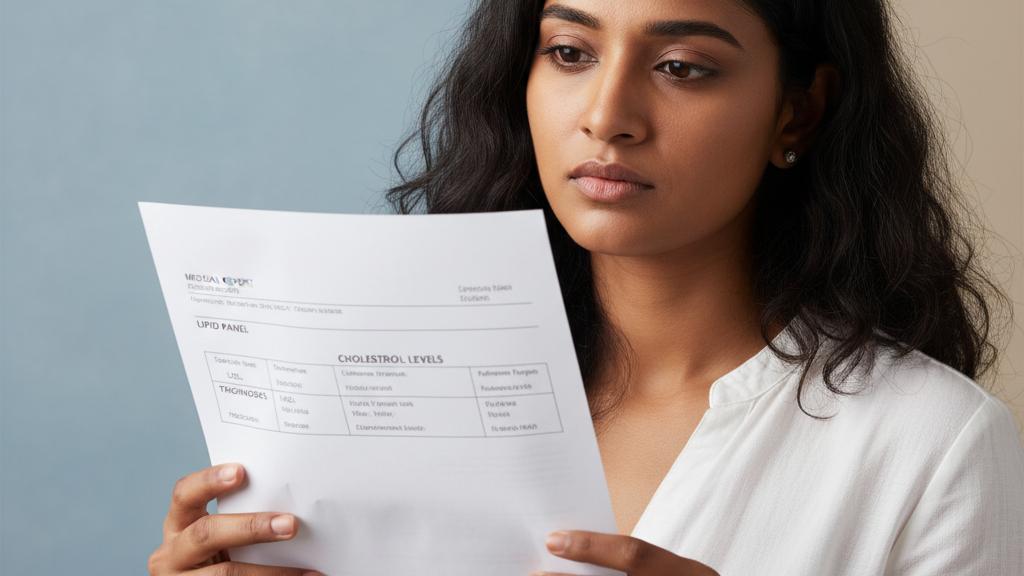
Nowadays, many people cringe a little when they hear the word "cholesterol," right? We all know that it is directly related to things like heart disease, heart attack, and stroke. So, a very important blood test called a Lipid Panel is done to find out exactly how much of these fats (Lipids), that is, cholesterol, are in your body and whether they are at a good level. Today, let's learn everything about this simply, as if we were talking to a friend.
Heart disease risk
Check the risk of developing a heart disease within the next 10 years with the Framingham Score
Simply put, what is this Lipid Panel?
A lipid panel is a simple blood test that measures the amount of fat particles (which we call lipids) in your blood. Typically, this test mainly measures several types of cholesterol and another type of fat called triglycerides.
Think of our blood vessels as pipes. When these types of fats in the blood, that is, cholesterol, increase, just like dirt gets stuck inside a water pipe and gradually gets clogged, fat starts to accumulate inside our blood vessels (arteries). We call this Atherosclerosis''. Over time, when blood vessels become clogged in this way, blood flow to the heart and brain is impaired, increasing the risk of serious conditions like heart attack and stroke .
So, doctors use this Lipid Panel test to assess your risk of developing cardiovascular disease. This is a test that is done for both children and adults.
What does this test primarily measure?
A Lipid Panel provides information about 5 main types of fats. It is very important to understand these.
| Lipid Type | Simply put... |
|---|---|
| Total Cholesterol | This is the sum of all the types of cholesterol in your blood. This gives us a complete picture. |
| LDL cholesterol (Low-Density Lipoprotein) | This is the "bad character" in the story (Bad Cholesterol)This is what deposits on the walls of blood vessels and clogs them. The lower this value, the better. |
| HDL cholesterol (High-Density Lipoprotein) | This is the "good hero" of our story (Good Cholesterol) . What it does is remove the bad LDL cholesterol that is deposited in the blood vessels, take it to the liver and help it be excreted from the body. It's like a cleanser. So the higher this value, the better. |
| Triglycerides | This is another type of fat that is produced in the body from the food we eat. This is how the body stores the extra calories we eat. An increase in these levels is a risk factor for heart disease and pancreatitis. |
| VLDL cholesterol (Very Low-Density Lipoprotein) | This also falls into the category of bad cholesterol. It is produced especially from the food we have recently eaten. If this value is elevated during a fasting test, it may mean that the body is not controlling cholesterol properly. |
Could you also need this test?
Yes, maybe. If you have one or more of the following heart disease risk factors, your doctor may recommend a lipid panel on a regular basis.
- Age: If you are a man, you are over 45 years old, if you are a woman, you are over 50 years old.
- Previous reports: If your cholesterol level was elevated in a previous test.
- Smoking: If you are a smoker.
- Obesity: If the body weight is excessively high.
- Lack of exercise: If the body does not get enough exercise.
- High Blood Pressure: If you have high blood pressure.
- Diabetes: If you have diabetes or are at risk for diabetes (prediabetes).
- Family history: If your mother, father, brother, or sister has had heart disease at a young age.
Don't be surprised, sometimes even young children need to have this test. The doctor may recommend this test, especially if the parents have high cholesterol or if the child is obese.
How to prepare for the test? (Especially about fasting)
This is a very important point. In most cases , you will be advised to fast for 10 to 12 hours before having a Lipid Panel test.
What does it mean to fast?
Simply put, you can't eat or drink anything except water during that time. It's not even a good idea to chew gum. Because what we eat and drink can affect values, especially triglycerides. Therefore, fasting is essential to get an accurate reading.
However, the most important thing is to follow your doctor's instructions exactly . Some modern testing methods do not require fasting. So before the test, ask your doctor exactly "Do you need to fast? For how many hours?"
Don't be afraid of having your blood drawn. It takes less than five minutes. A trained person will take a small sample of blood from a vein in your arm just below your elbow. It will feel like a small ant bite, that's all.
Let's understand the report: What are these healthy levels?
When your report arrives, compare the values on it with these. These are values that are generally considered healthy levels (measured in milligrams per deciliter - mg/dL).
| Test | Very good / healthy level (Ideal Level - mg/dL) |
|---|---|
| Total Cholesterol | Less than 200 mg/dL |
| "Good" HDL cholesterol | Greater than 60 mg/dL |
| "Bad" LDL cholesterol | More than 100 mg/dLLow (less than 70 mg/dL is best for people with conditions like diabetes) |
| Triglycerides | Less than 150 mg/dL |
Should I be worried if the values in the report are different?
No. Don't panic right away. Just because a value in your report is different from the healthy range in this table, it doesn't necessarily mean that you have a disease or need to take medication.
Remember, it's not just the numbers in the report that matter. The doctor will make a decision after considering your entire health condition.
When discussing your results, your doctor will also consider these things:
- your age
- Your overall health status
- Your family health history
- Other medications you are currently taking
- Your risk factors for heart disease (e.g., diabetes, high blood pressure)
Taking all of this into account, your doctor will talk to you and decide whether you need treatment or whether lifestyle changes will be enough.
If the values are abnormal, what happens next?
If your cholesterol levels are high, your doctor may recommend one or more of the following:
1. Continued monitoring: You may be asked to retest in a few months.
2. Lifestyle changes: This is the most important thing.
- Changing your diet: Reduce foods high in oil, sugar, and flour, and eat more vegetables, fruits, and whole grains.
- Exercise: Do at least 30 minutes of exercise a day, such as walking, running, or cycling.
3. Starting medication: If lifestyle changes alone cannot control levels, or if your risk is very high, it is recommended to start taking cholesterol-lowering medications (e.g., statins).
All of this happens after a discussion with your doctor, to come up with the best plan for you . So if you have any questions about the report, don't be afraid to ask your doctor.
💡 Take-Home Message
- A Lipid Panel is a simple, yet very important blood test that measures the levels of cholesterol and triglycerides in your blood.
- LDL is the "bad" cholesterol, which clogs blood vessels. HDL is the "good" cholesterol, which cleans blood vessels.
- You may need to fast for 10-12 hours before the test. Always follow your doctor's instructions exactly.
- Don't panic if the values in the report are abnormal. Your doctor will consider your overall health before deciding on treatment.
- A healthy lifestyle (good diet, adequate exercise, and avoiding smoking) can go a long way in keeping your cholesterol levels at a healthy level.






No comments yet. Be the first to share your question or experience below.